

We collaborate with clients and medical professionals to develop customised prosthetic, orthotic and medical-support components. Contact us to discuss the application, required fit and available reference data.
Client: Pieter-Jan Strydom
Industry: Medical & Sports Rehabilitation
Service: 3D Scanning • Digital Design • Custom Orthotic Fabrication
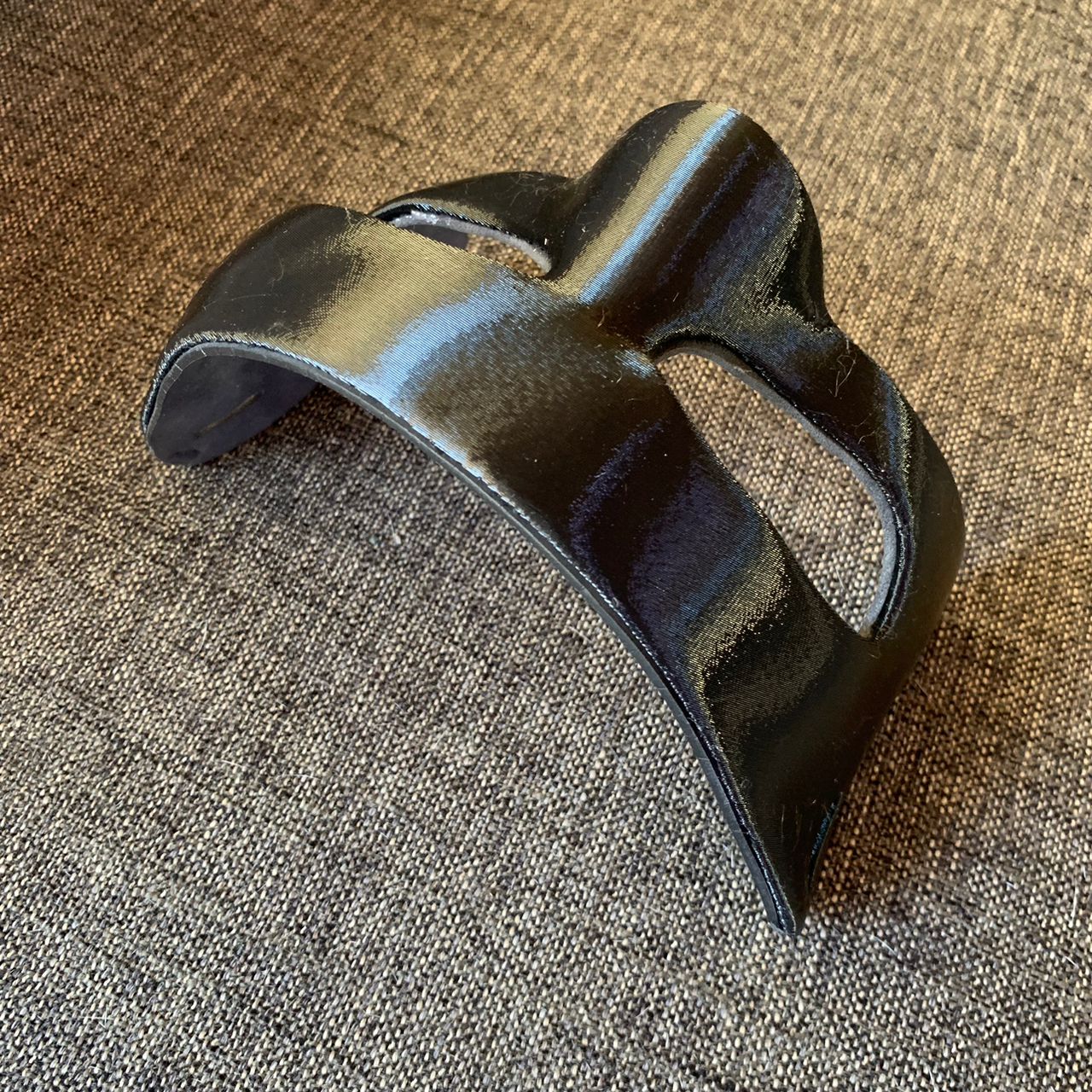
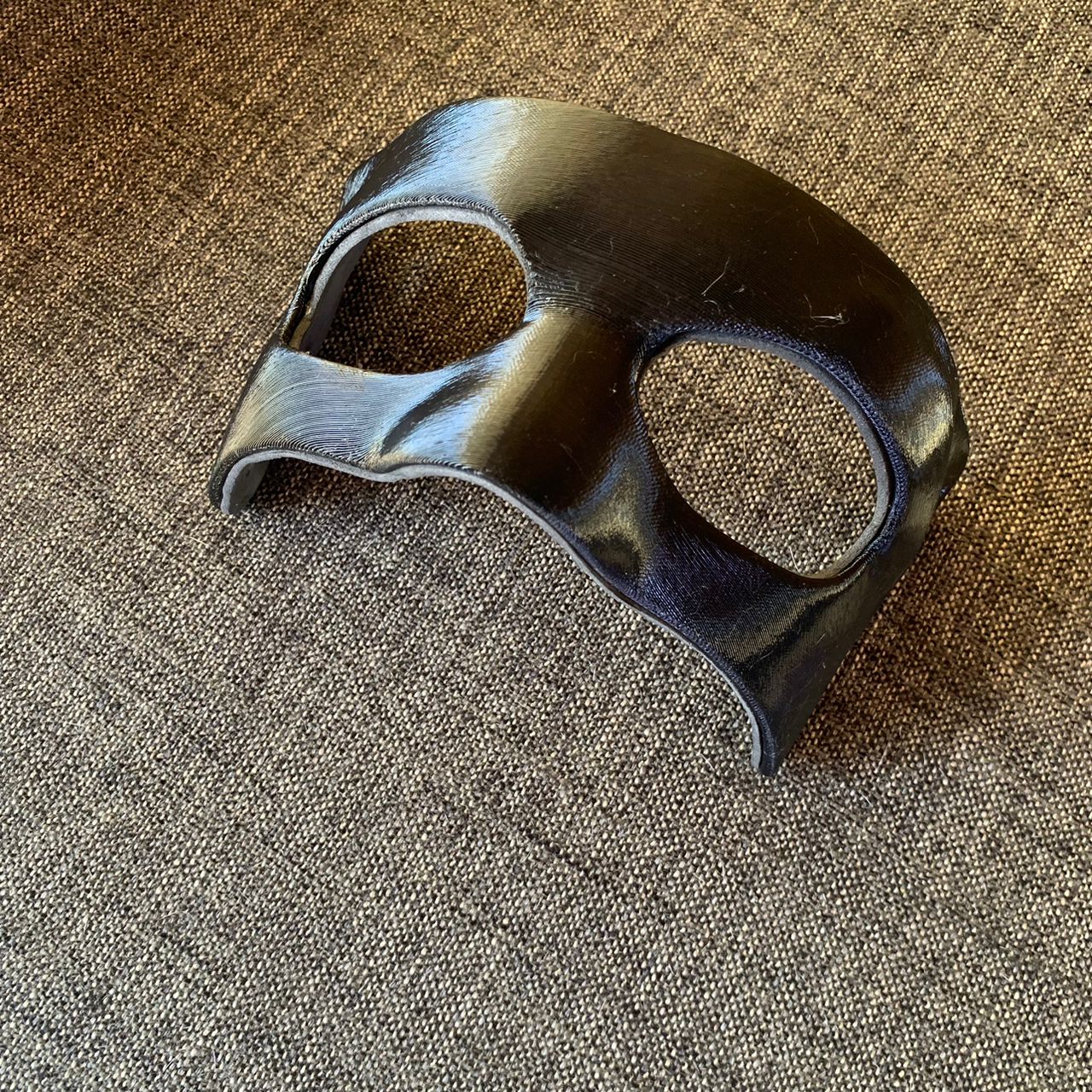
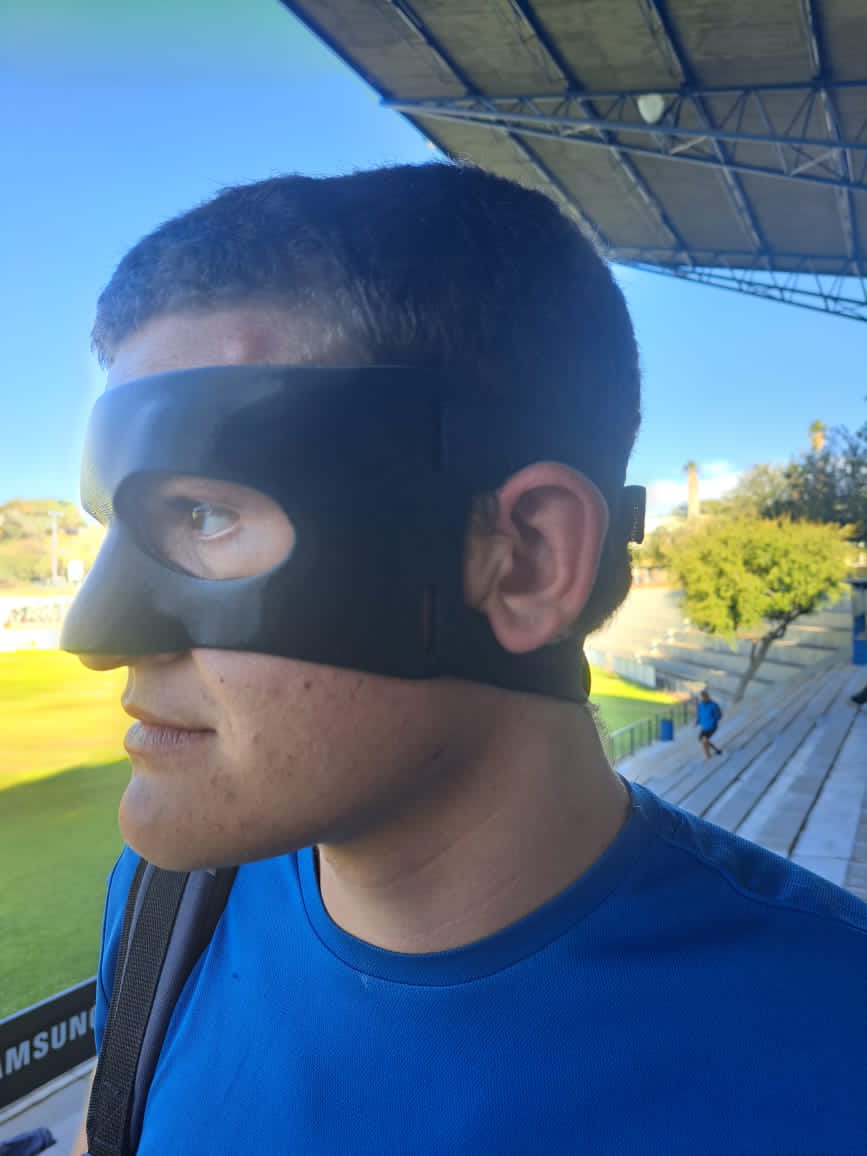
Ahead of the 2023 Craven Week Rugby Tournament and the Namibian National Rugby Games, Printhoek 3D was approached to develop a custom facial orthotic mask for young rugby player Pieter-Jan Strydom.
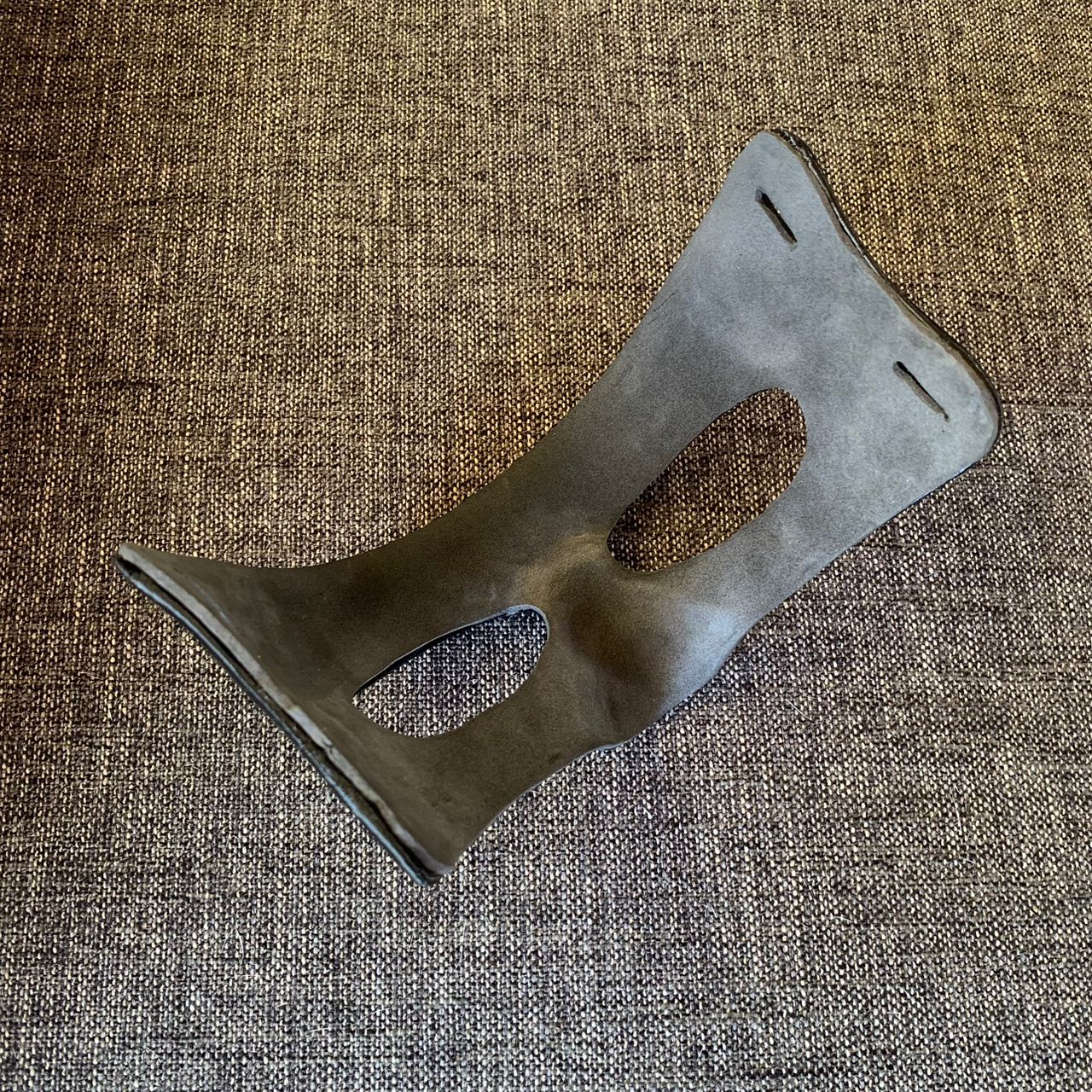
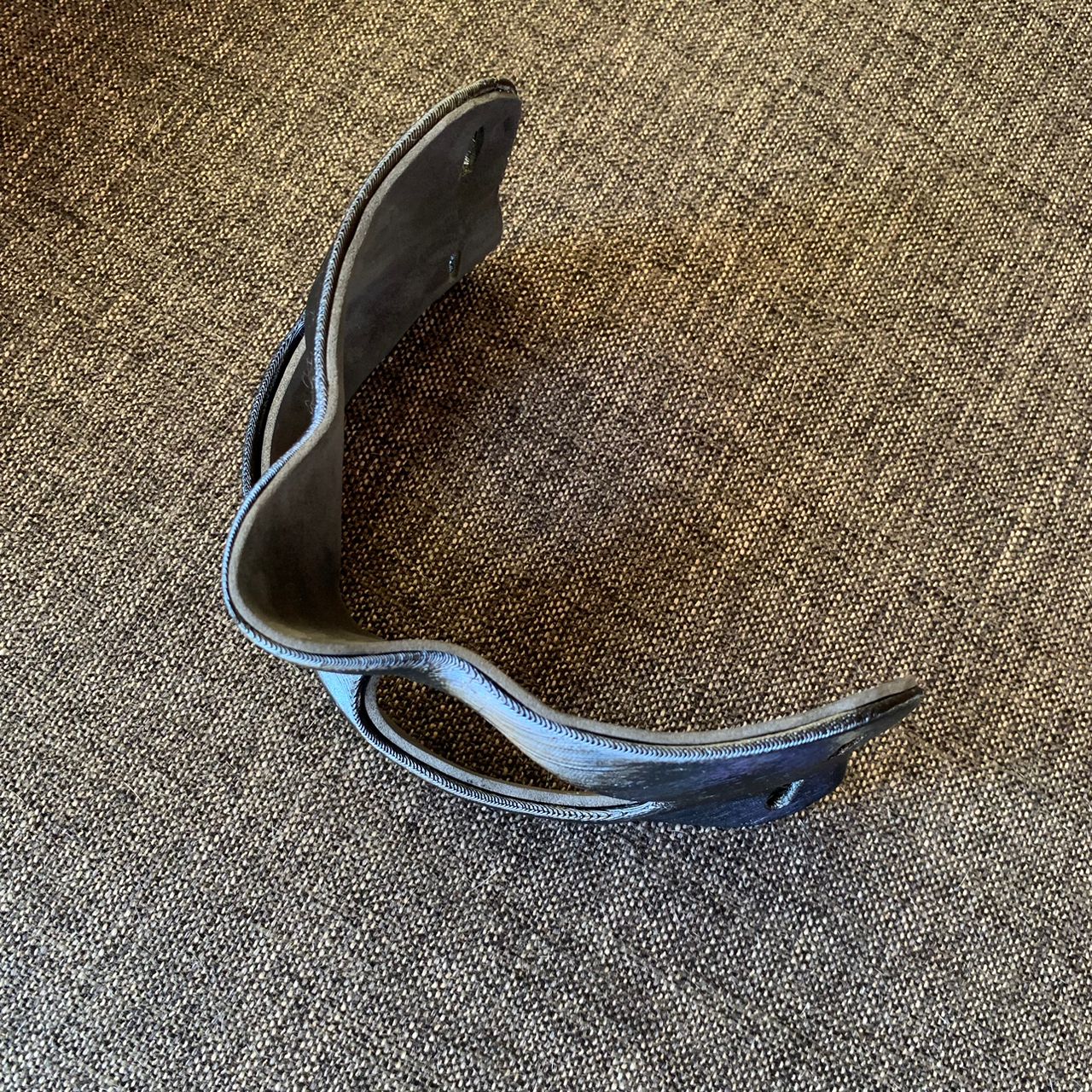
Following a skull injury, his maxillofacial specialist recommended protective facial support to allow him to safely return to play. Working closely with both the doctor and the client’s family, our team captured precise 3D facial scans and used the data to design a custom-fitted protective mask that met the doctor’s criteria for coverage, comfort, and impact resistance.
The final design was 3D printed in a carbon-fiber composite for strength and lightweight performance, with a soft internal lining for comfort and flexible straps for secure fitment. Two identical masks were produced one primary and one backup both successfully used throughout his recovery and competition period.
3D facial scanning and data-driven orthotic design
Doctor-approved medical fit for protective use during sports
Carbon-fiber composite fabrication for strength and flexibility
Dual-mask production ensuring uninterrupted athletic use
Custom comfort lining and flexible strap integration
This project highlights how digital design and additive manufacturing can be applied beyond industrial and engineering contexts delivering personalized, medically guided protection for athletes.
Through precision scanning, collaborative design, and advanced materials, Printhoek 3D enabled safe, confident performance for a young player returning to competitive rugby.
Client: Tanya Liebenberg
Industry: Medical & Lifestyle Design
Service: Metrology-Grade 3D Scanning • Product Design • Additive Manufacturing
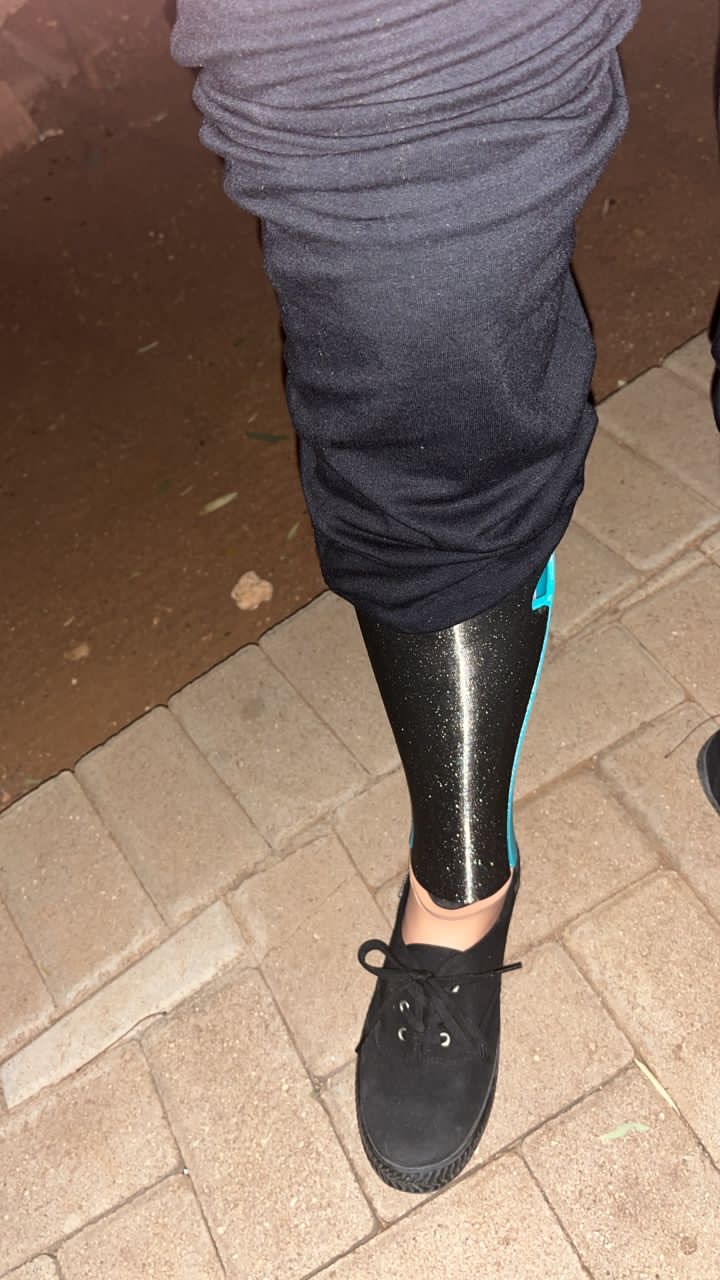
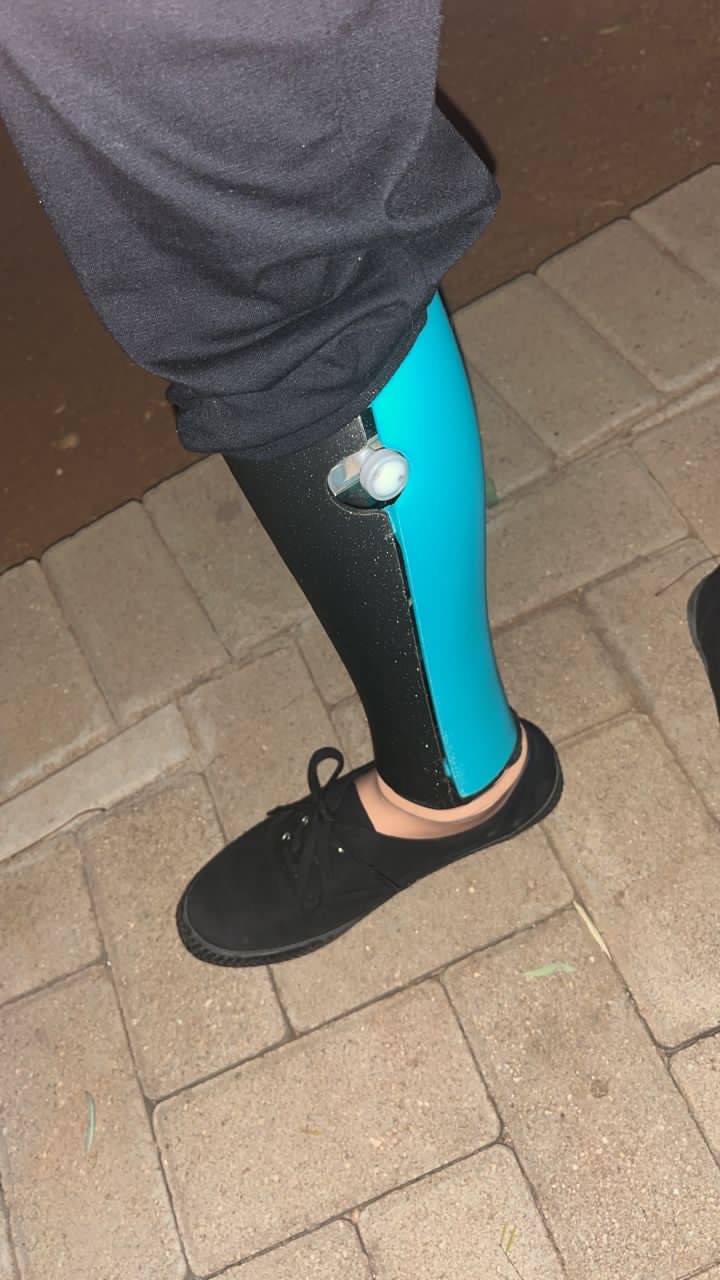
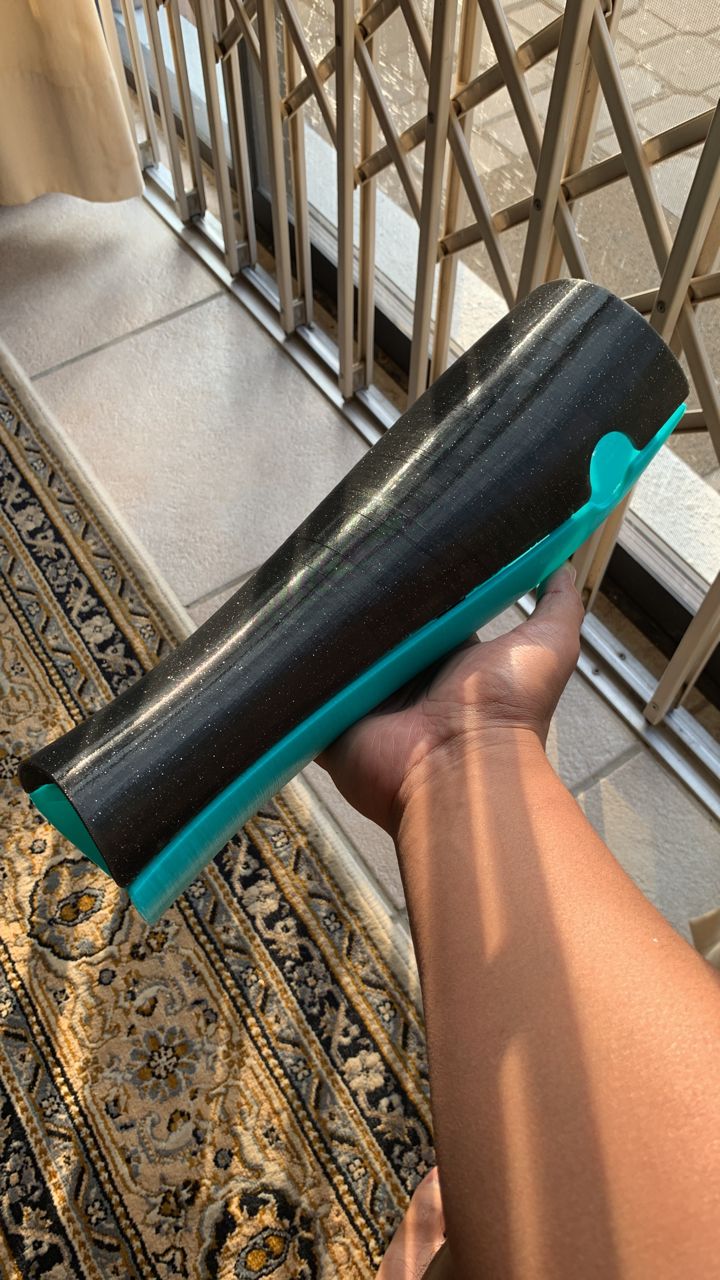
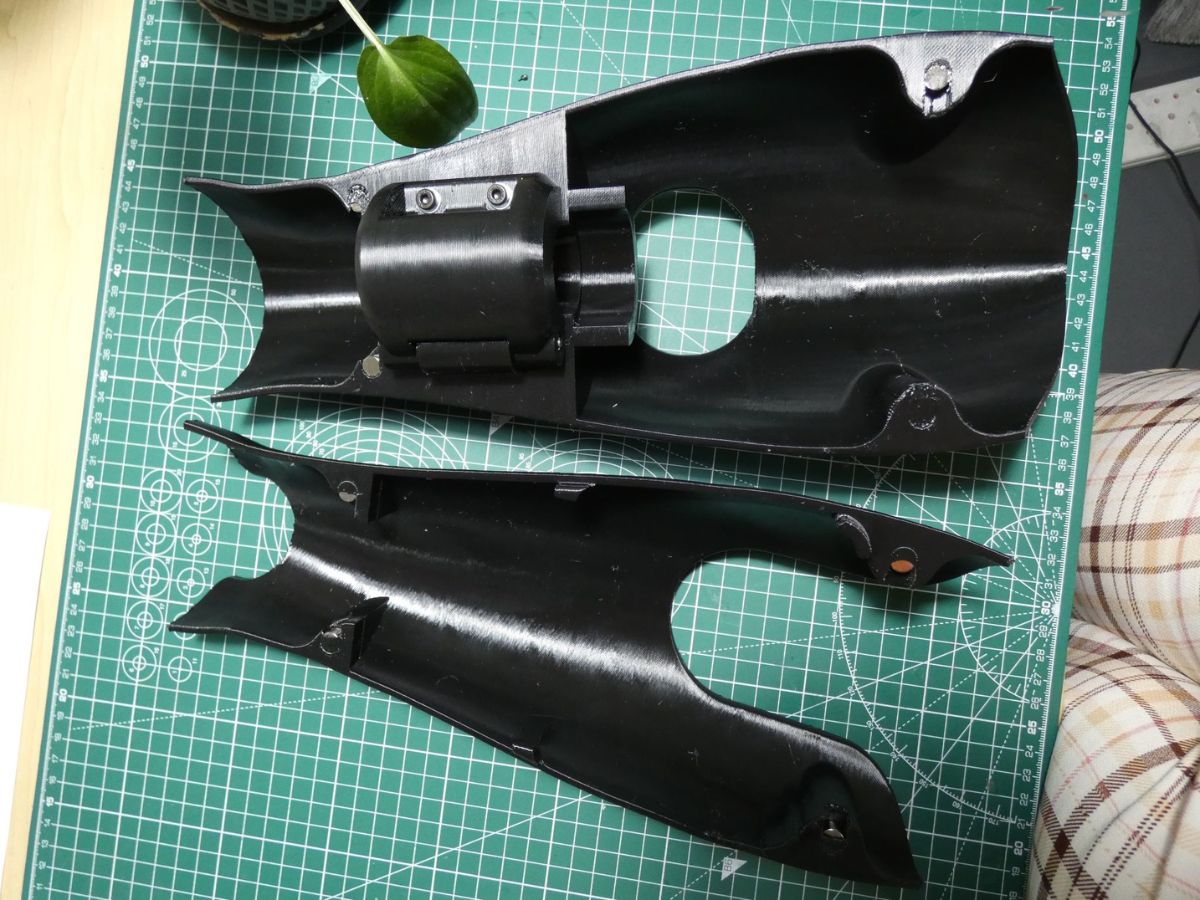
Printhoek 3D was commissioned by Tanya Liebenberg to create a custom prosthetic leg cover that would enhance both the aesthetic appeal.
Using metrology-grade 3D scanning, our team captured precise measurements of the prosthetic leg to design a lightweight, form-fitting cover that improves the visual silhouette under clothing and provides a more natural appearance in motion.
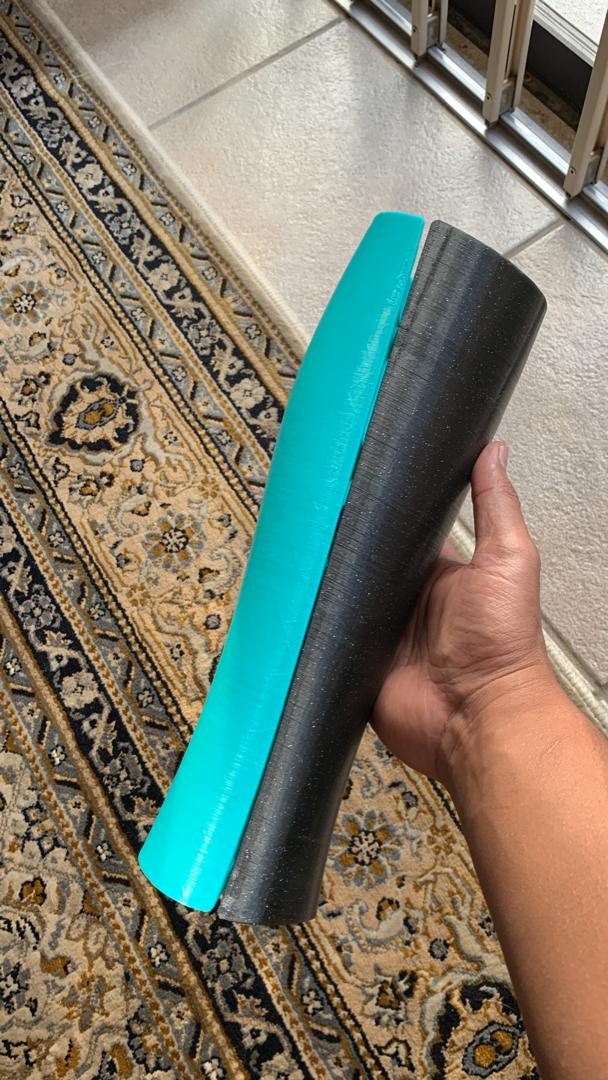
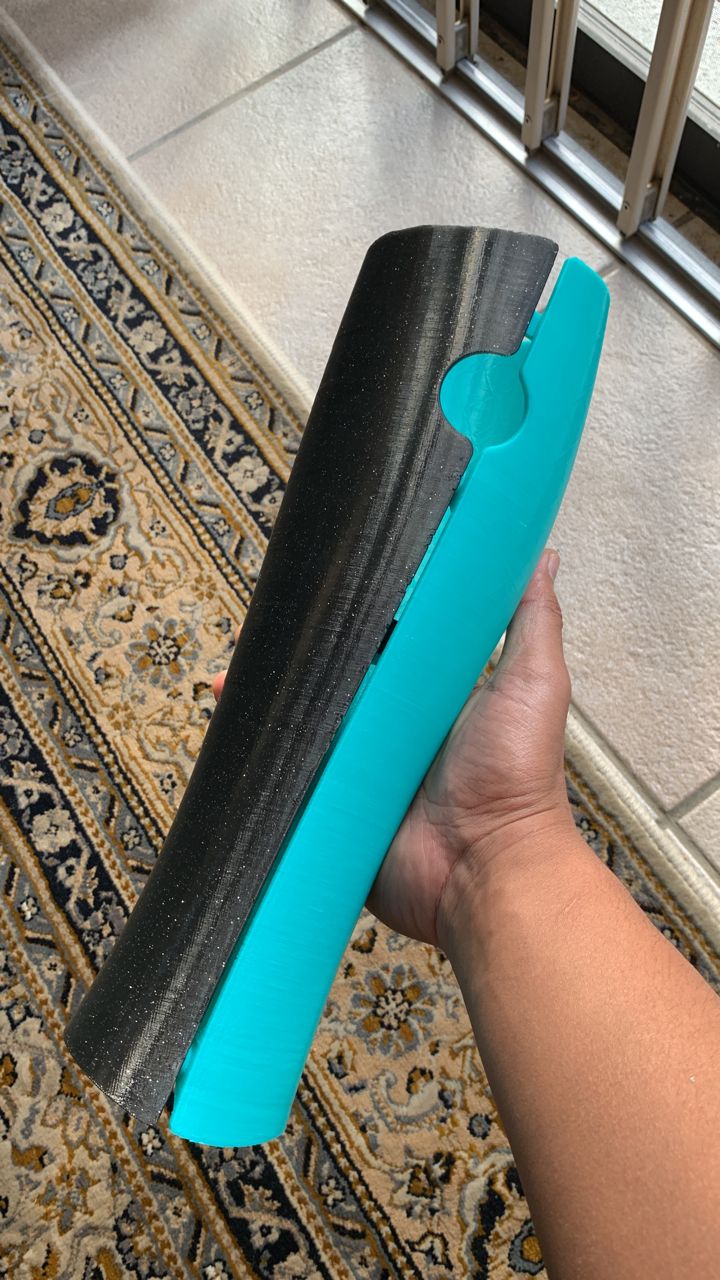
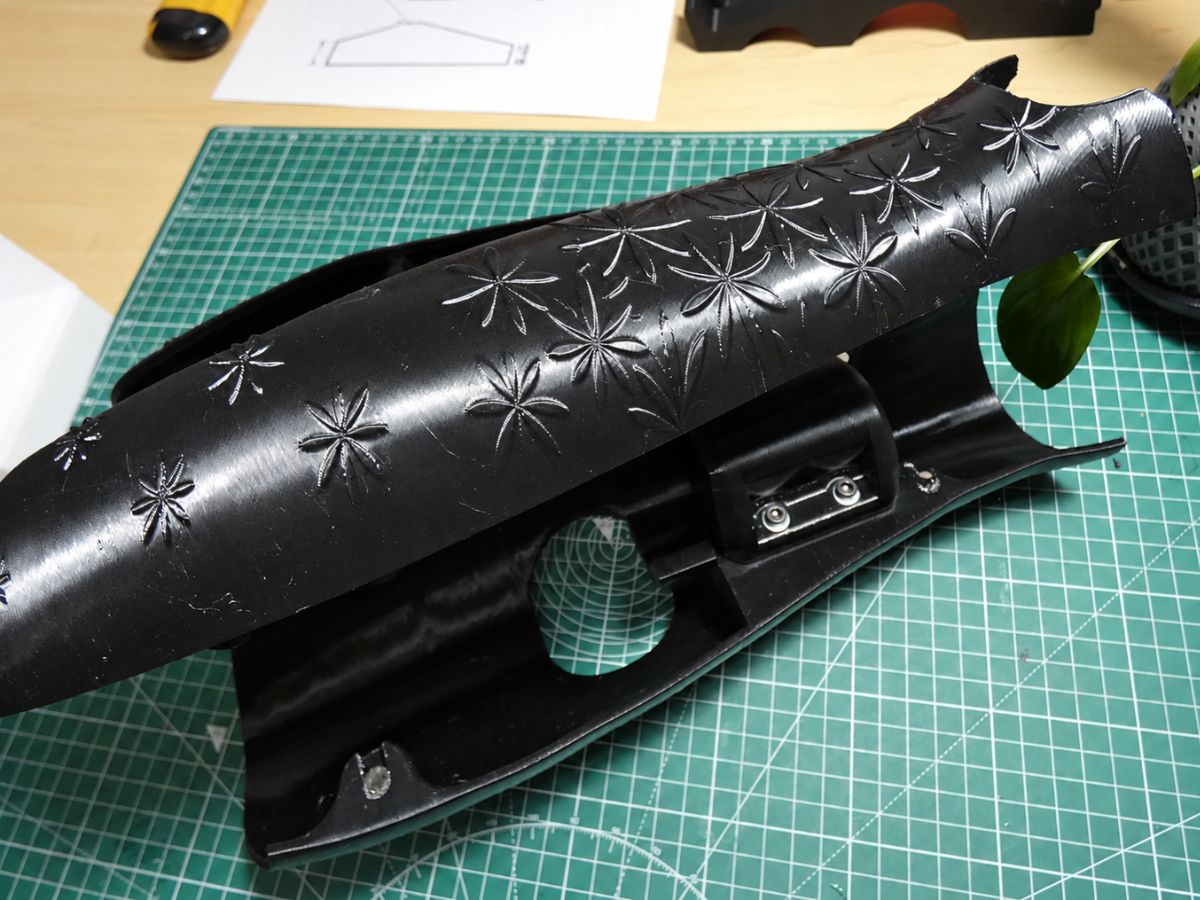
Inspired by the design approach of the Spanish company UNYQ, known for their stylish and functional prosthetic covers, we developed a two-part magnetic design. One half was fixed to the prosthesis, while the other attached magnetically using neodymium magnets for easy removal and maintenance.
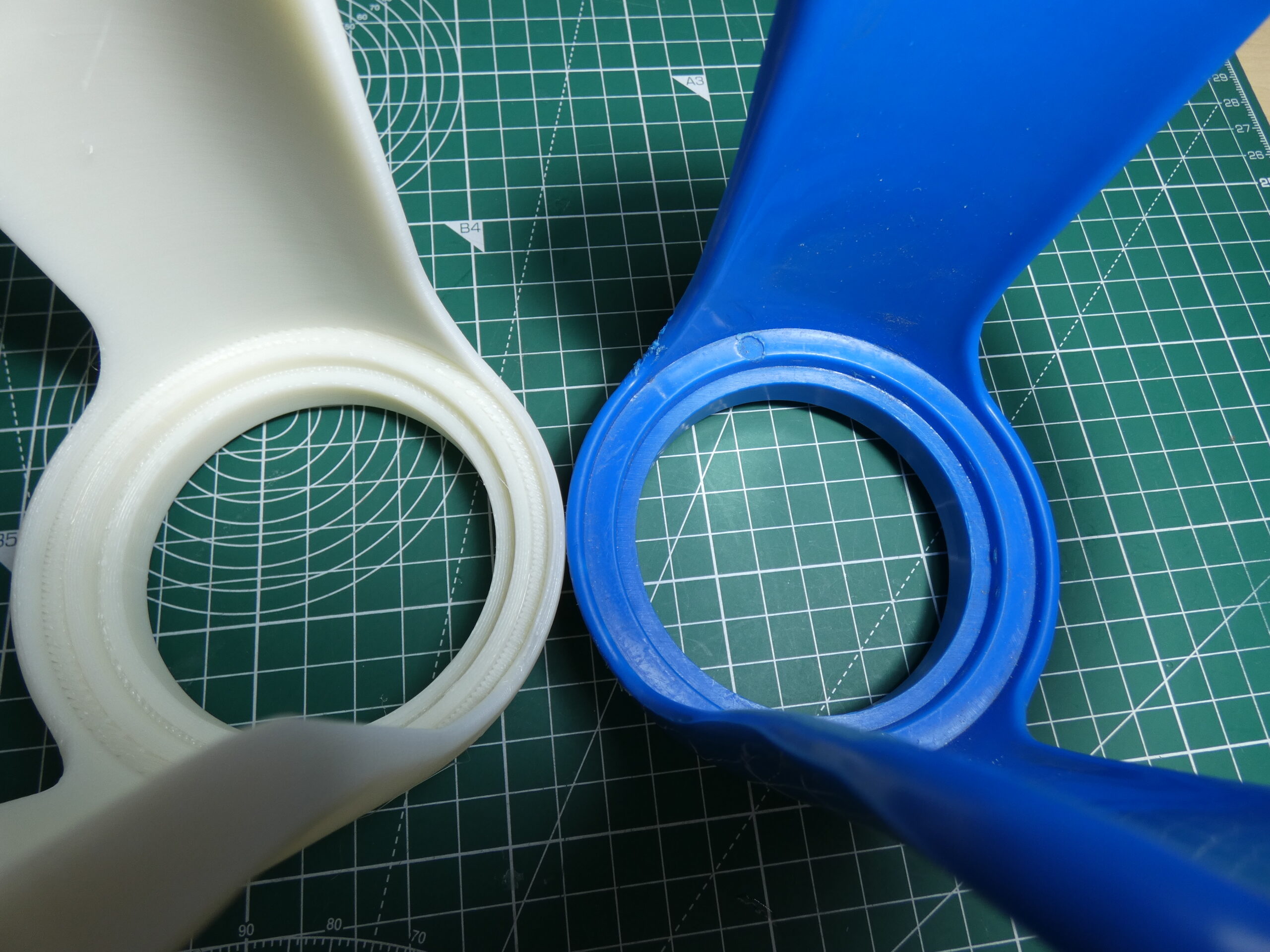
The first prototype was printed in cyan blue, followed by a second iteration incorporating a custom patterned surface as requested by the client balancing durability, design expression, and personal comfort.
Metrology-grade 3D scanning for accurate data capture and custom design
Magnetic two-part assembly using neodymium magnets
Lightweight 3D-printed cover customized for daily wear
Aesthetic pattern design for personalization
Iterative prototyping process incorporating client feedback
This project showcases how 3D technology can merge functionality and self-expression in prosthetic and aesthetic design.
By applying precision scanning, advanced materials, and human-centered design, Printhoek 3D helped Tanya Liebenberg achieve a prosthetic cover that reflects individuality and confidence – a perfect blend of engineering and empathy.
Client: Private Medical Case (via Occupational Therapy Consultation)
Industry: Medical orthotics & Rehabilitation
Service: 3D Scanning • Digital Modelling • Custom Orthotic Fabrication
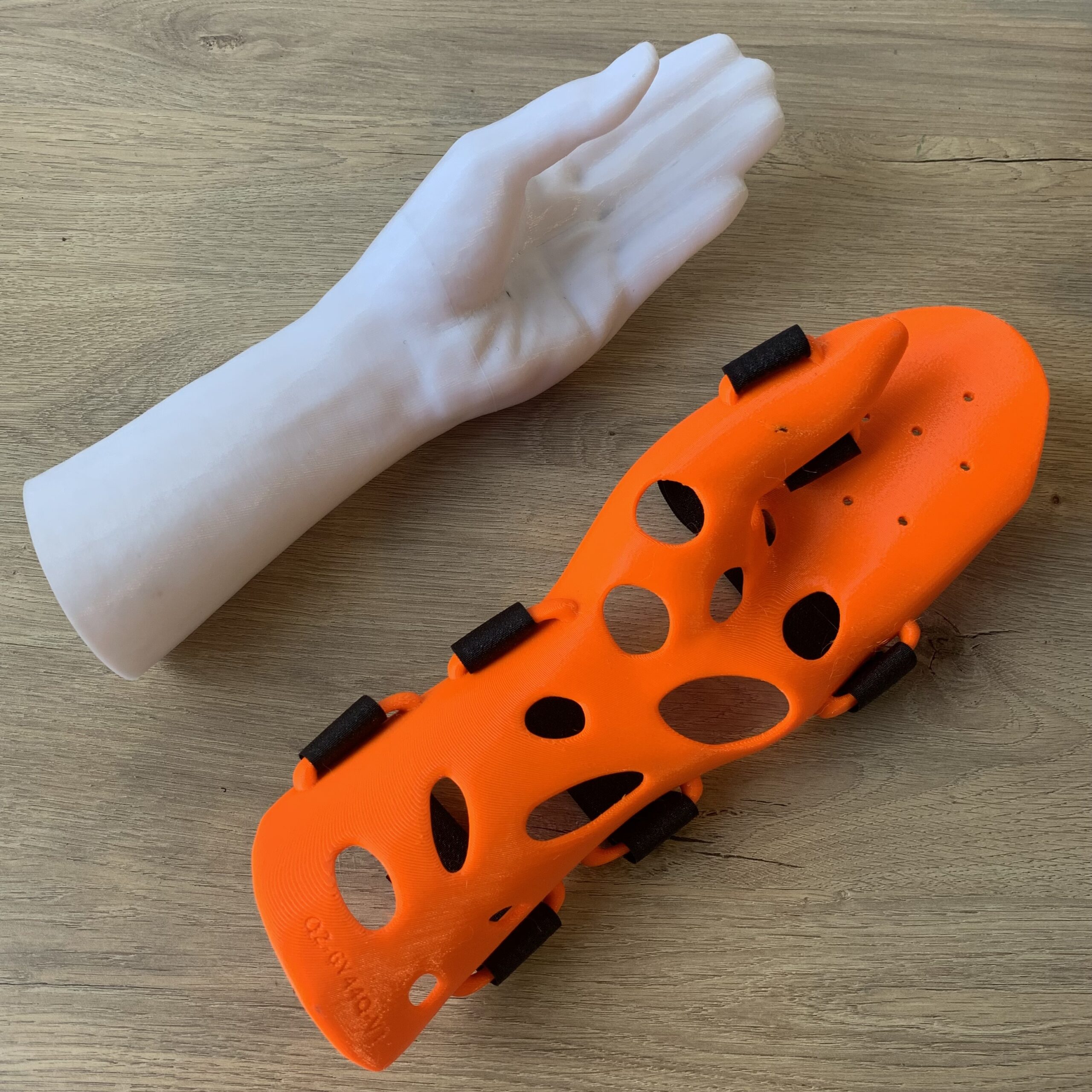
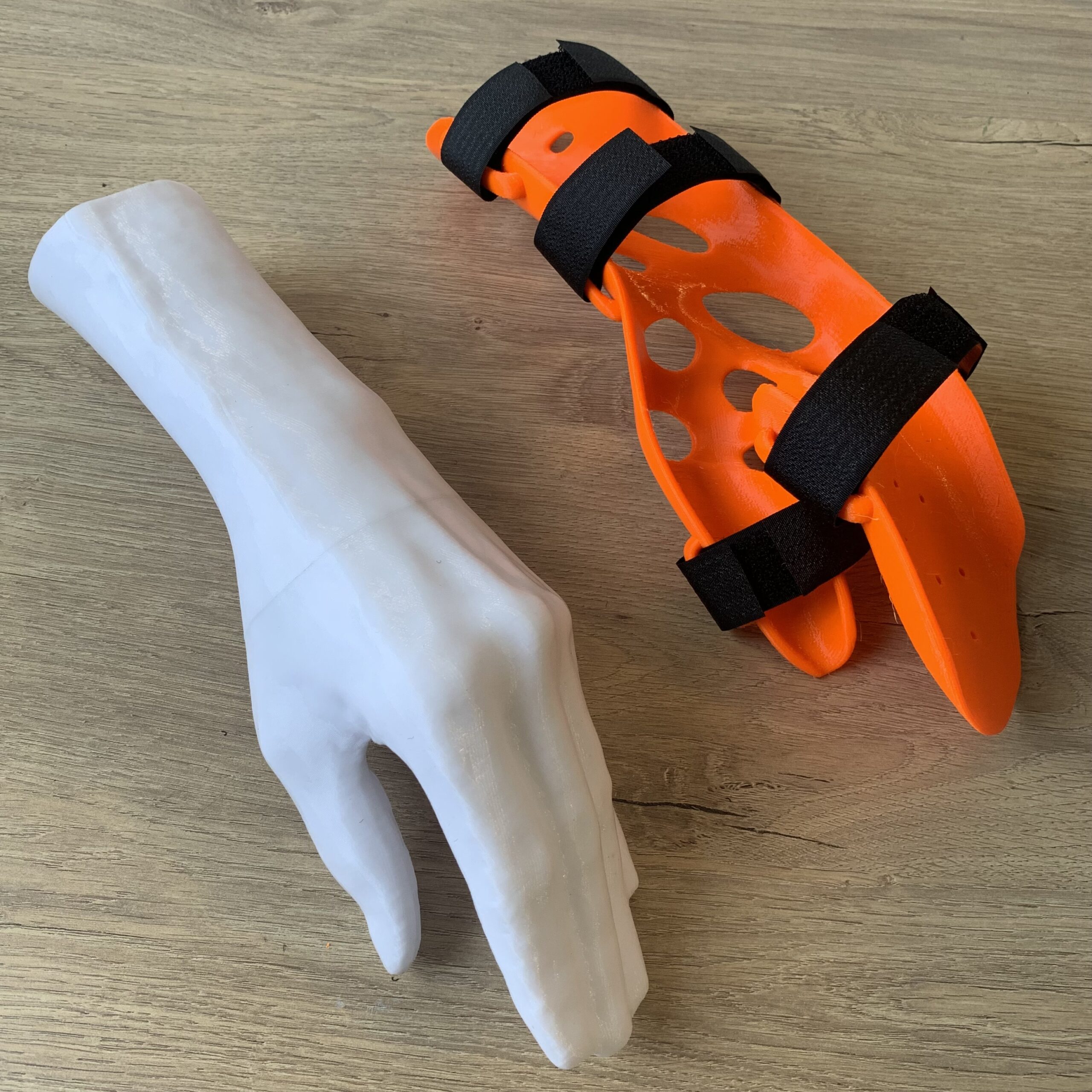
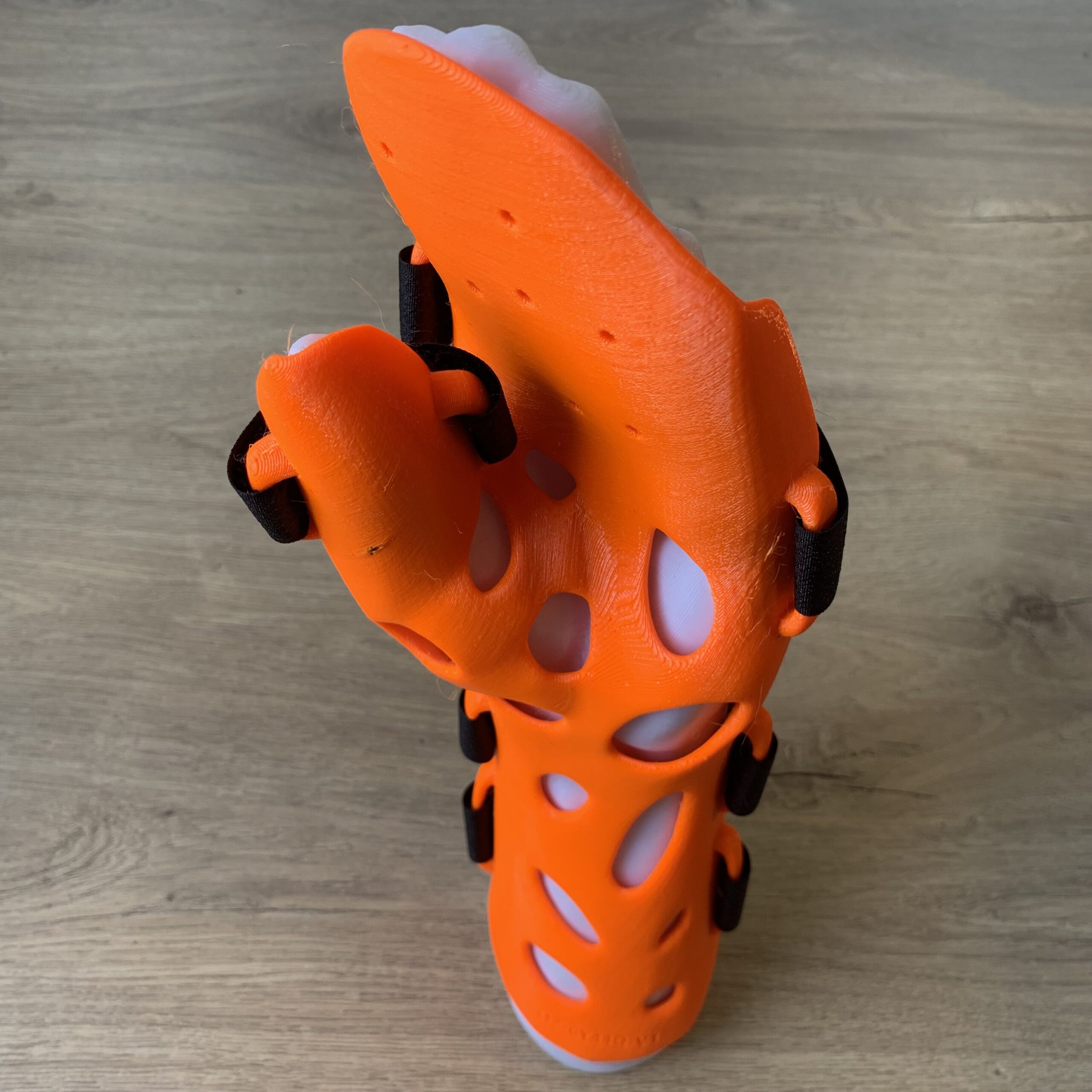
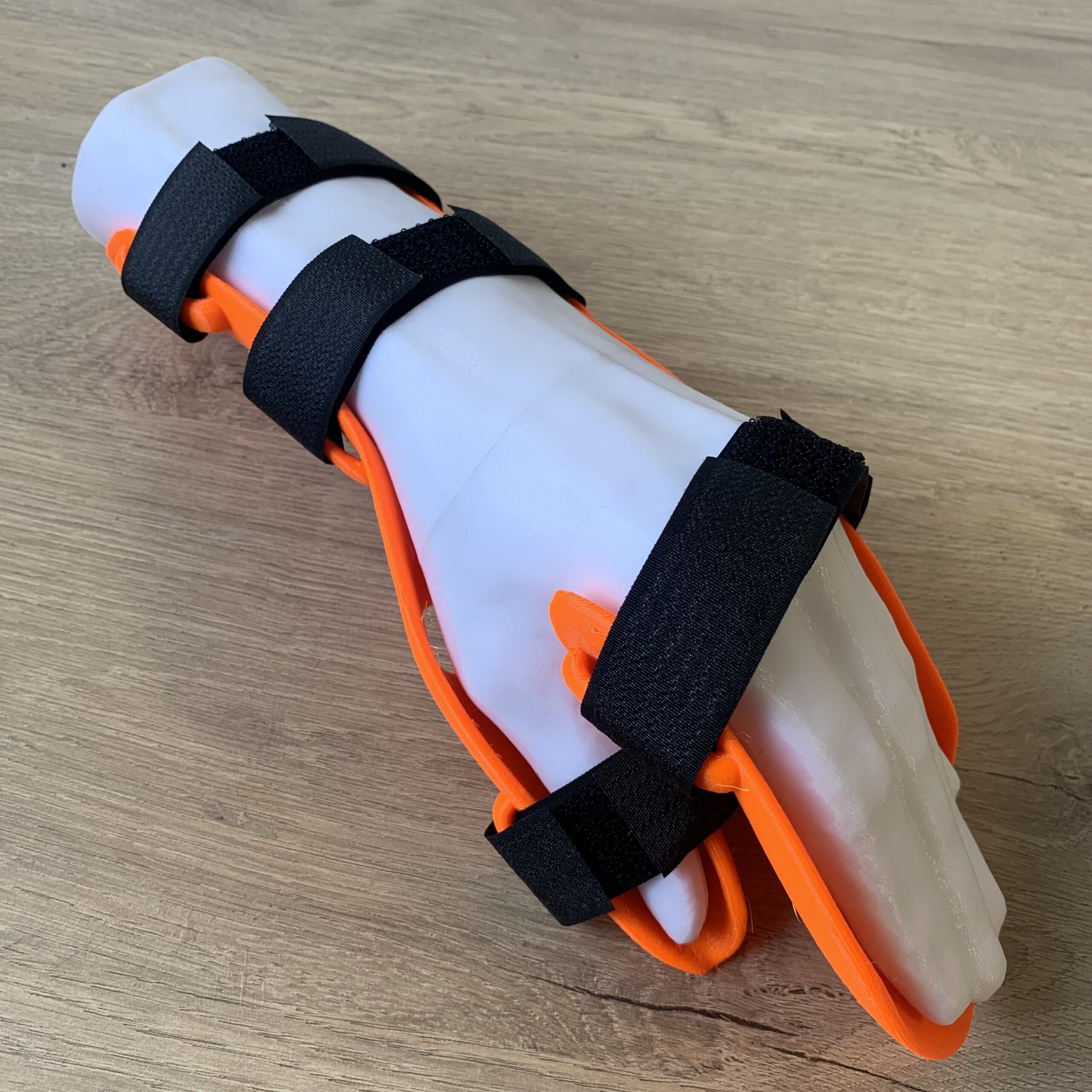
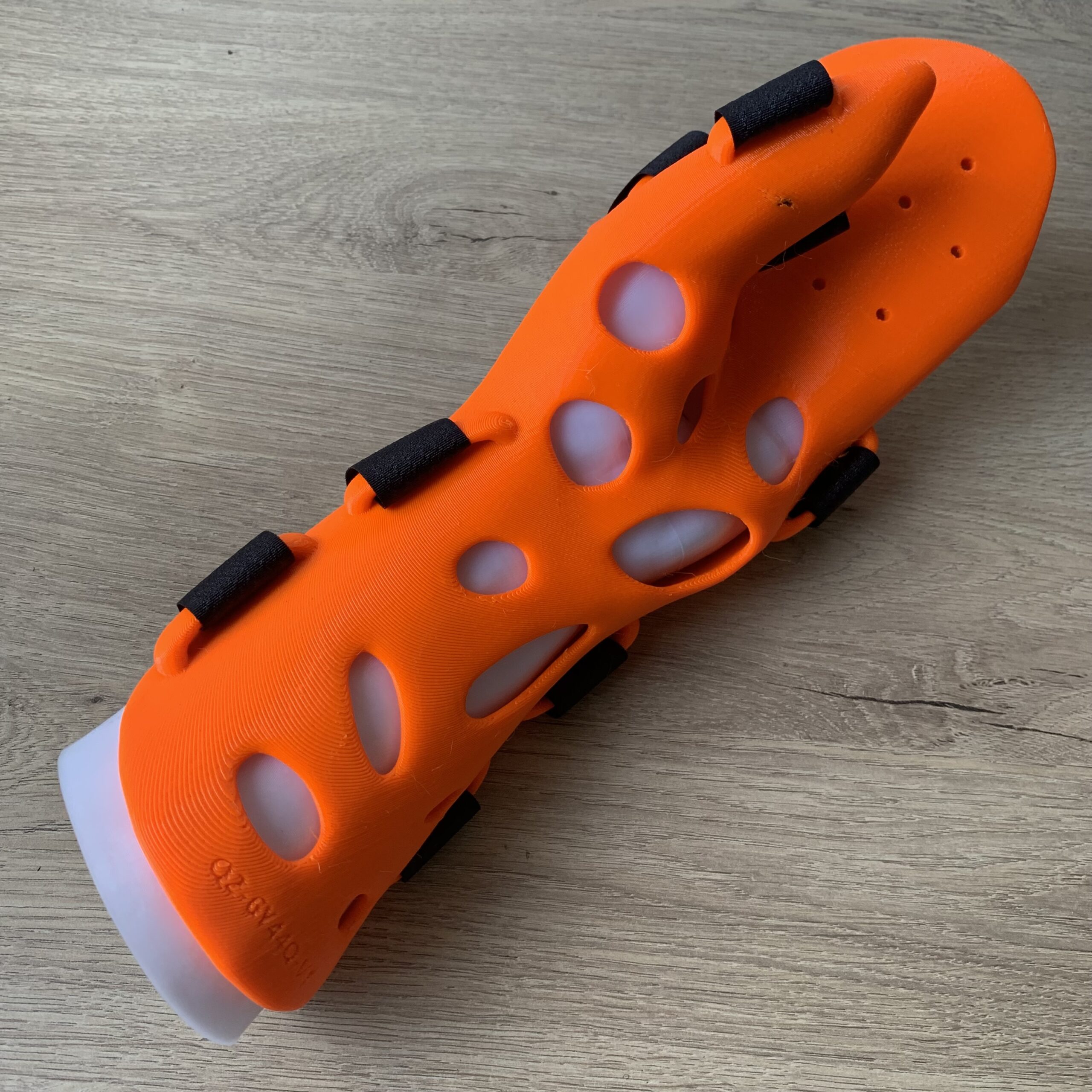
Printhoek 3D was commissioned to develop a custom orthotic hand brace for a stroke rehabilitation case, where the client had lost mobility in one hand due to paralysis. The challenge was to create a brace that would hold the hand in a therapeutically correct position, as recommended by the attending occupational therapist.
Our team used 3D scanning technology to capture precise anatomical data from the functional opposite hand and forearm, which was then digitally mirrored to design a corrective brace aligned with the patient’s unique physiology. The digital model was refined in consultation with the therapist and then fabricated in-house via 3D printing, ensuring both fit accuracy and comfort.
High-accuracy 3D scanning for anatomical data capture
Digital mirroring of the healthy hand for structural accuracy
Collaboration with medical professionals to ensure therapeutic correctness
Custom 3D-printed brace produced in-house for rehabilitation use
Lightweight and ergonomic design tailored to patient comfort
This project demonstrates how 3D printing and scanning technologies can extend beyond industrial use offering personalized healthcare solutions that enhance rehabilitation outcomes.
By merging digital precision with medical collaboration, Printhoek 3D delivered a fully customized orthotic brace that supports mobility, recovery, and comfort for the client
Client: Private Medical Case
Industry: Medical / Orthotics
Service: Orthotic Product Development • CAD Design • Additive Manufacturing • Multi-Material Assembly
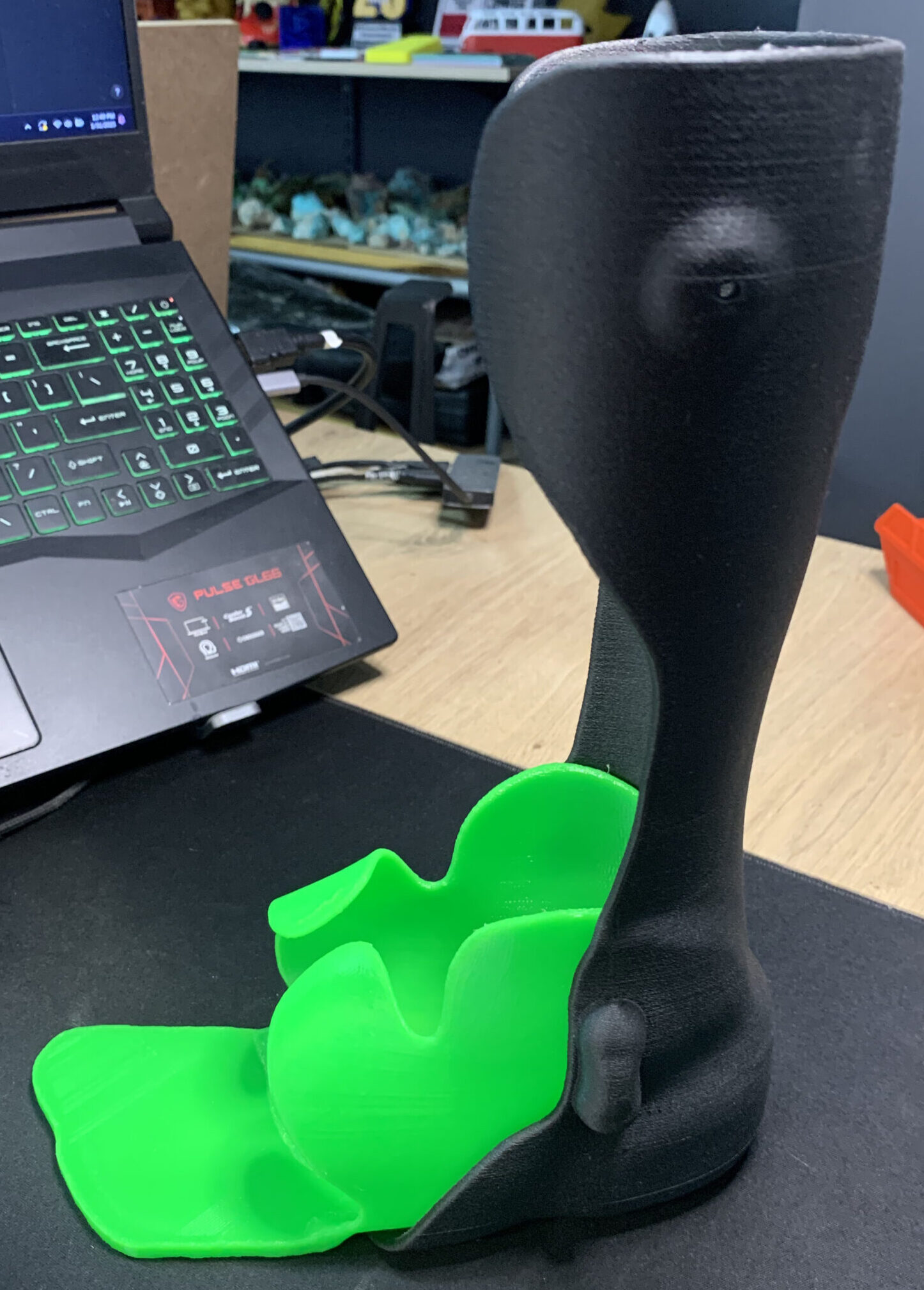
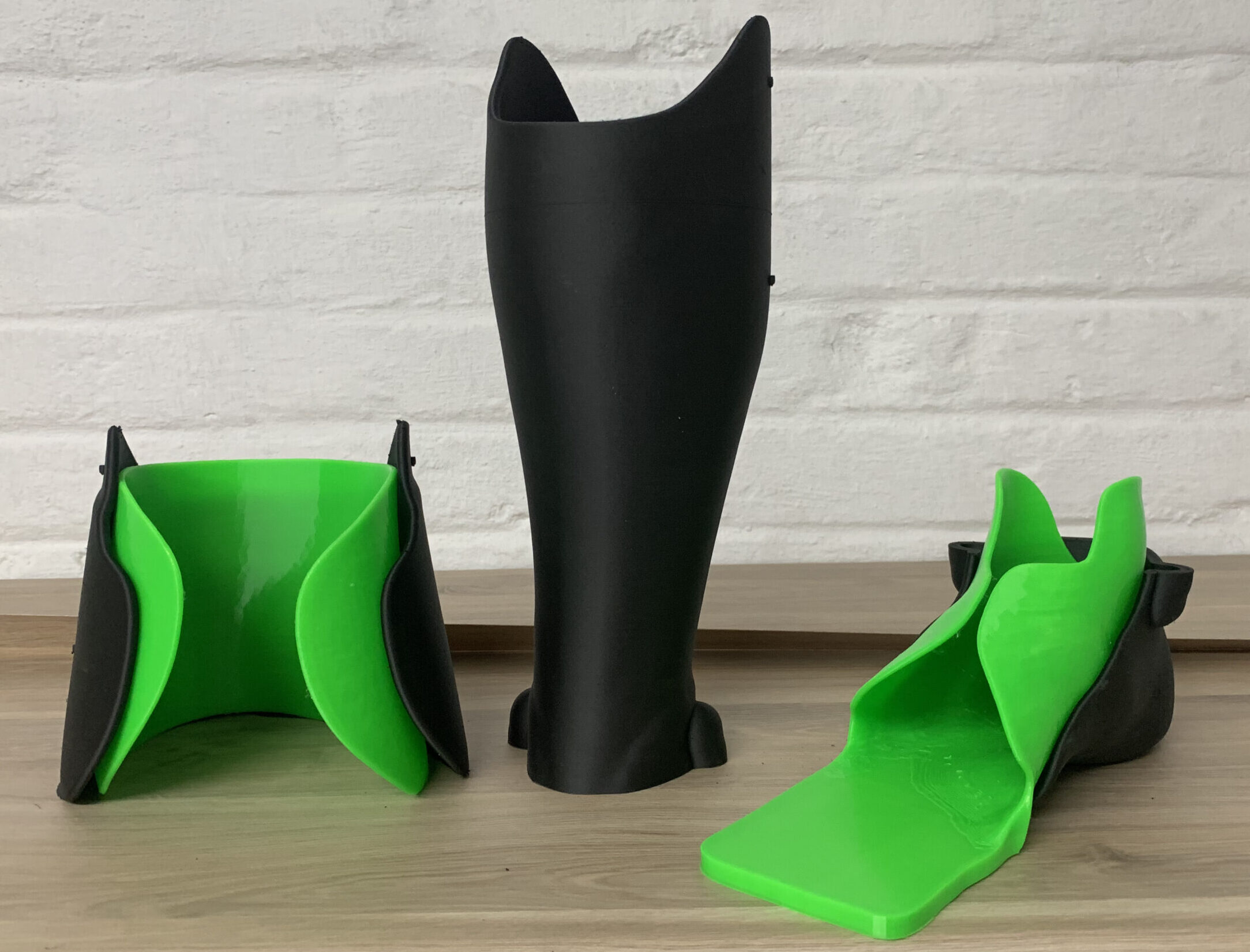
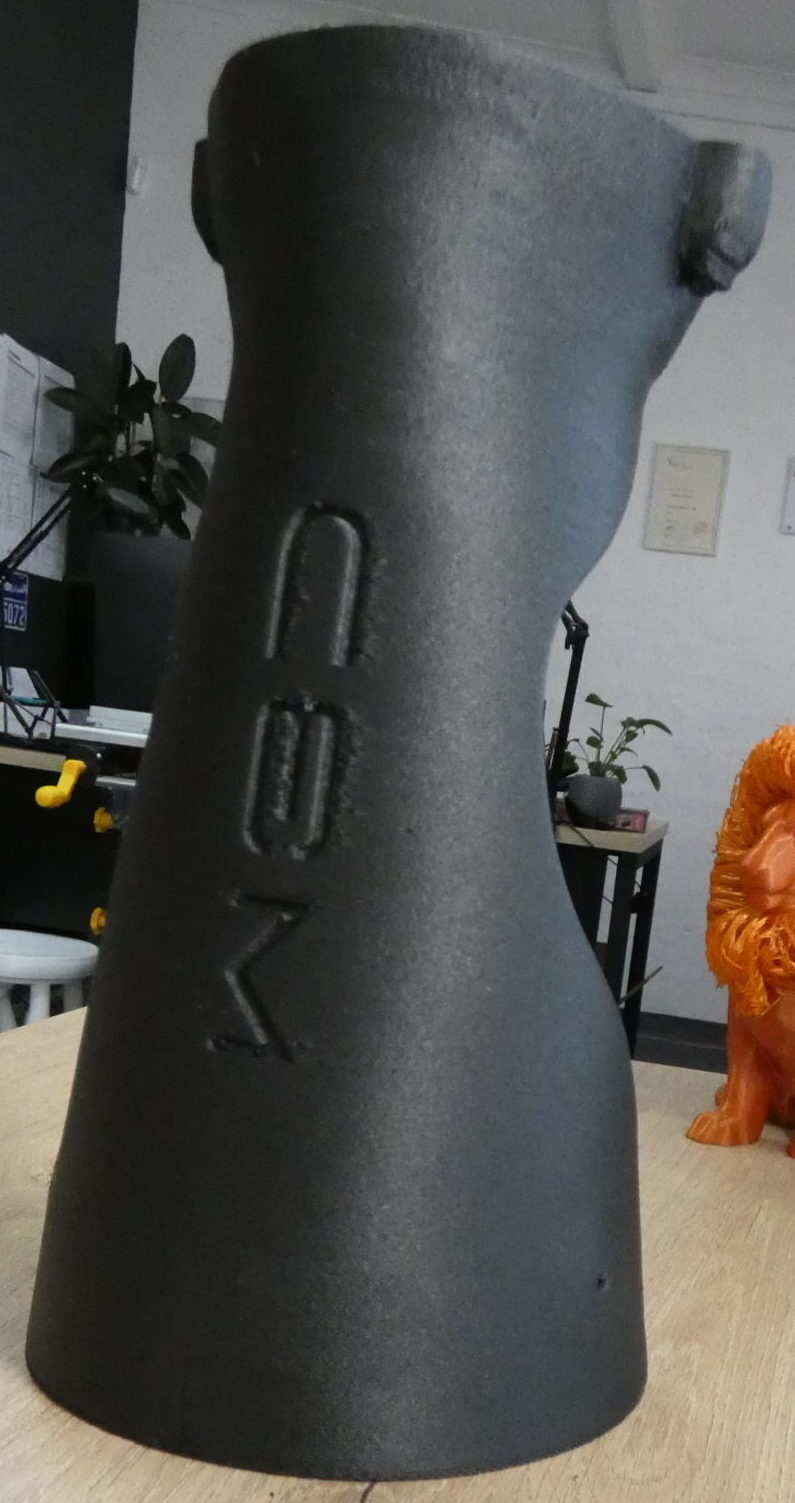
Printhoek 3D developed a custom orthotic support designed around the functional requirements of long-term wear, pressure distribution, and user comfort.
The project was not only about producing a brace that could hold its shape. Orthotic failure often starts with discomfort, pressure concentration, poor contact surfaces, or a device that the user cannot wear consistently. For this reason, the design was developed as a modular system rather than a single rigid printed part.
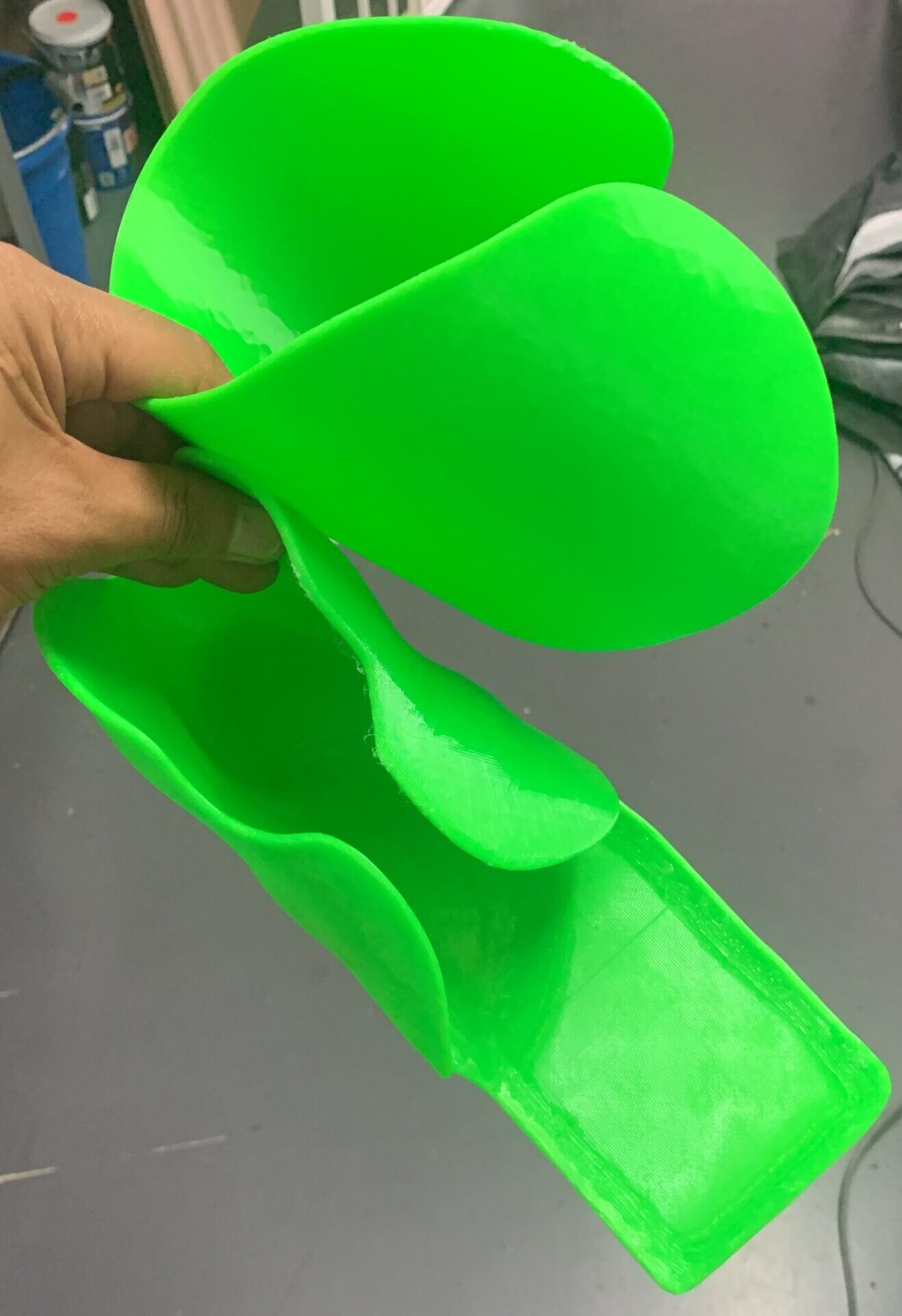
The outer structure was designed to provide stability and support, while the inner TPU interface was used for flexibility, contact comfort, and improved adaptation to the user. Separating the structural and comfort functions allowed each part of the orthotic to perform its own job more effectively.
This approach allowed PH3D to create a more controlled orthotic solution by treating rigidity, flexibility, fit, and user contact as separate design requirements.
This project shows how additive manufacturing can improve orthotic design when comfort and wearability are treated as functional requirements, not afterthoughts.
By separating the rigid support structure from the flexible user-contact interface, Printhoek 3D created an orthotic solution that addressed both mechanical support and practical daily use.
Client: Kilian Orthopaedic Services
Industry: Prosthetics / Personalised Cosmetic Covers
Service: 3D Scan • Reverse Engineering • Product Developmet • Additive Manufacturing
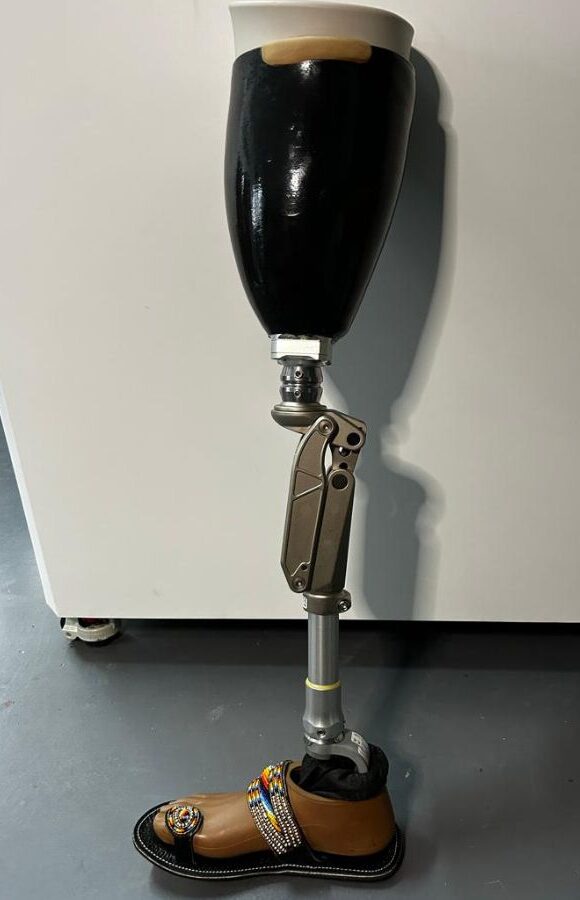
Florida wanted a cosmetic cover tailored to her existing prosthetic leg, with a decorative pattern she selected herself.
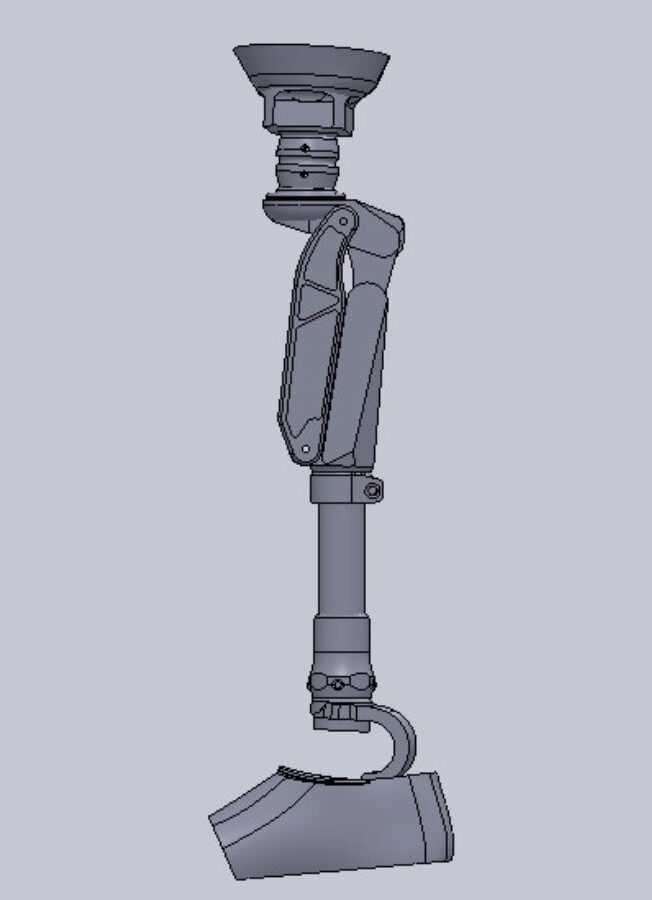
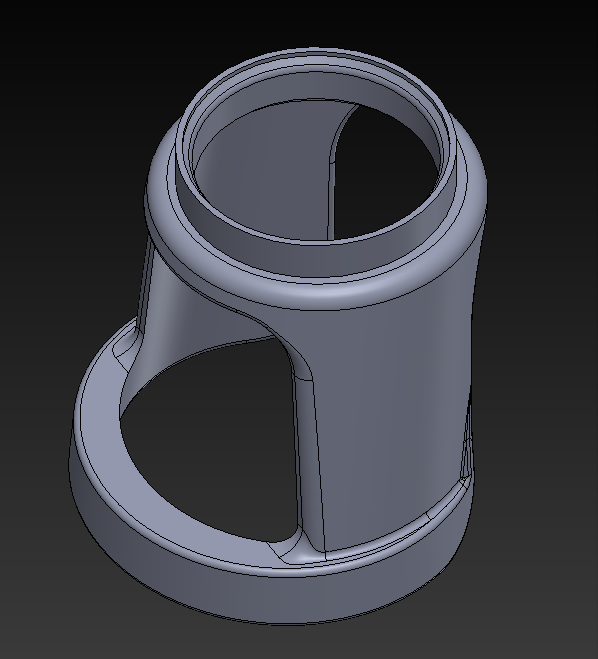
Working with the orthotist and prosthetist, Printhoek 3D captured the prosthesis using SHINING 3D scanning technology. Scanning was completed within the day so the prosthetic leg could be returned promptly, while the digital reference remained available for design development.
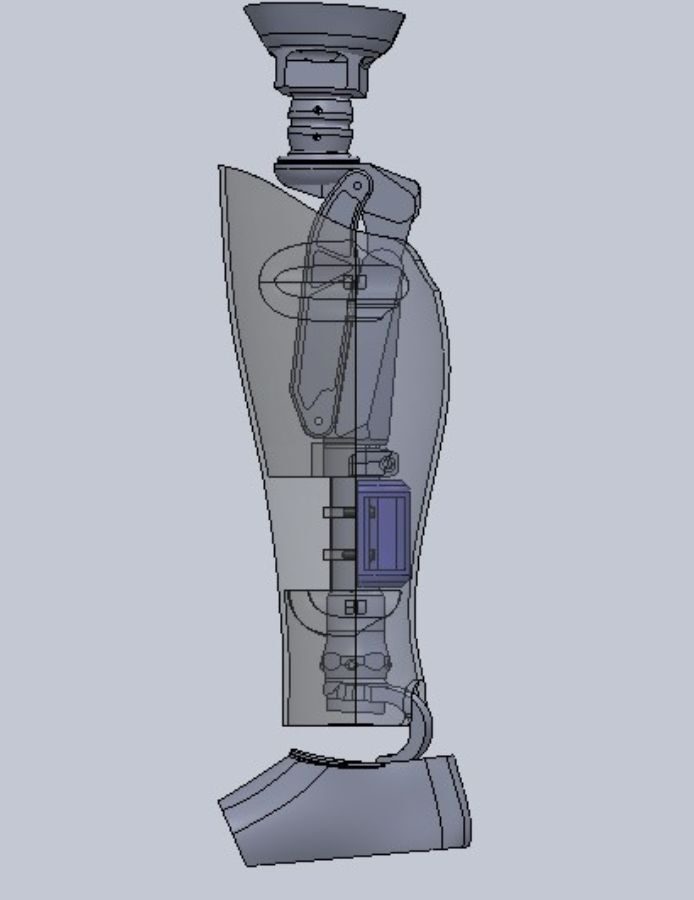
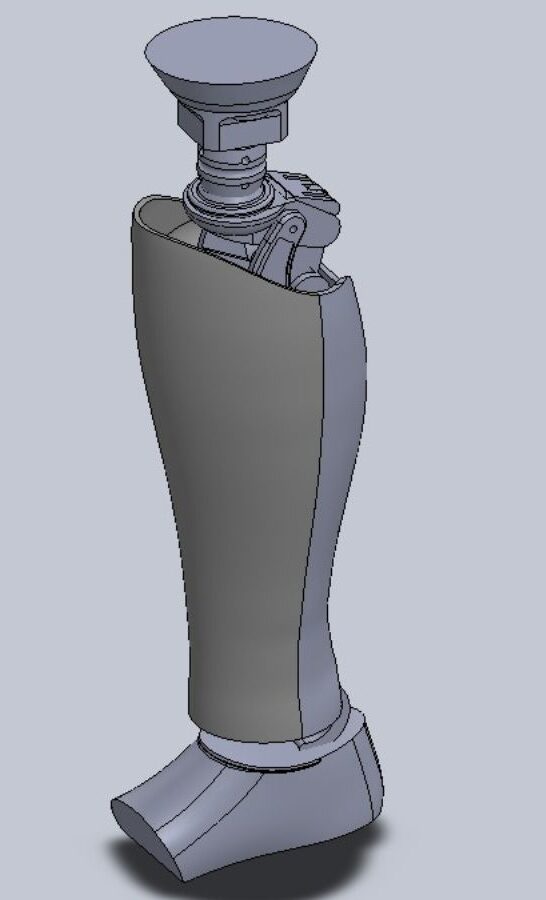
PH3D used the scan data to reconstruct the prosthesis geometry and design the cover around its existing components. Internal clearances accommodated movement, while a two-part construction allowed access for maintenance. The front section used a latch attachment, with magnets securing the removable rear section.
The cover was then 3D printed with Florida’s chosen surface pattern, combining a personalised appearance with attachment features developed for her particular prosthesis.
Prosthesis scanned and returned within the same day
SHINING 3D scan data provided the foundation for custom CAD development
Cover developed with guidance from the orthotist and prosthetist
Internal geometry designed around the existing prosthesis and its movement
Two-part cover incorporating latch and magnetic attachments
Decorative pattern selected by Florida
Cosmetic customisation focused on personal expression
The project gave Florida a cover designed around both her prosthesis and her aesthetic preferences.
Its purpose was cosmetic: to personalise the appearance of an existing prosthetic leg. By giving the client a choice in how her prosthesis looked, the project recognised that self-expression and confidence matter alongside the practical requirements of fit, attachment and maintenance access.
Client: Confidential
Industry: Medical / Healthcare Equipment
Service: Reverse Engineering • CAD Reconstruction • Additive Manufacturing • Replacement Part Manufacturing
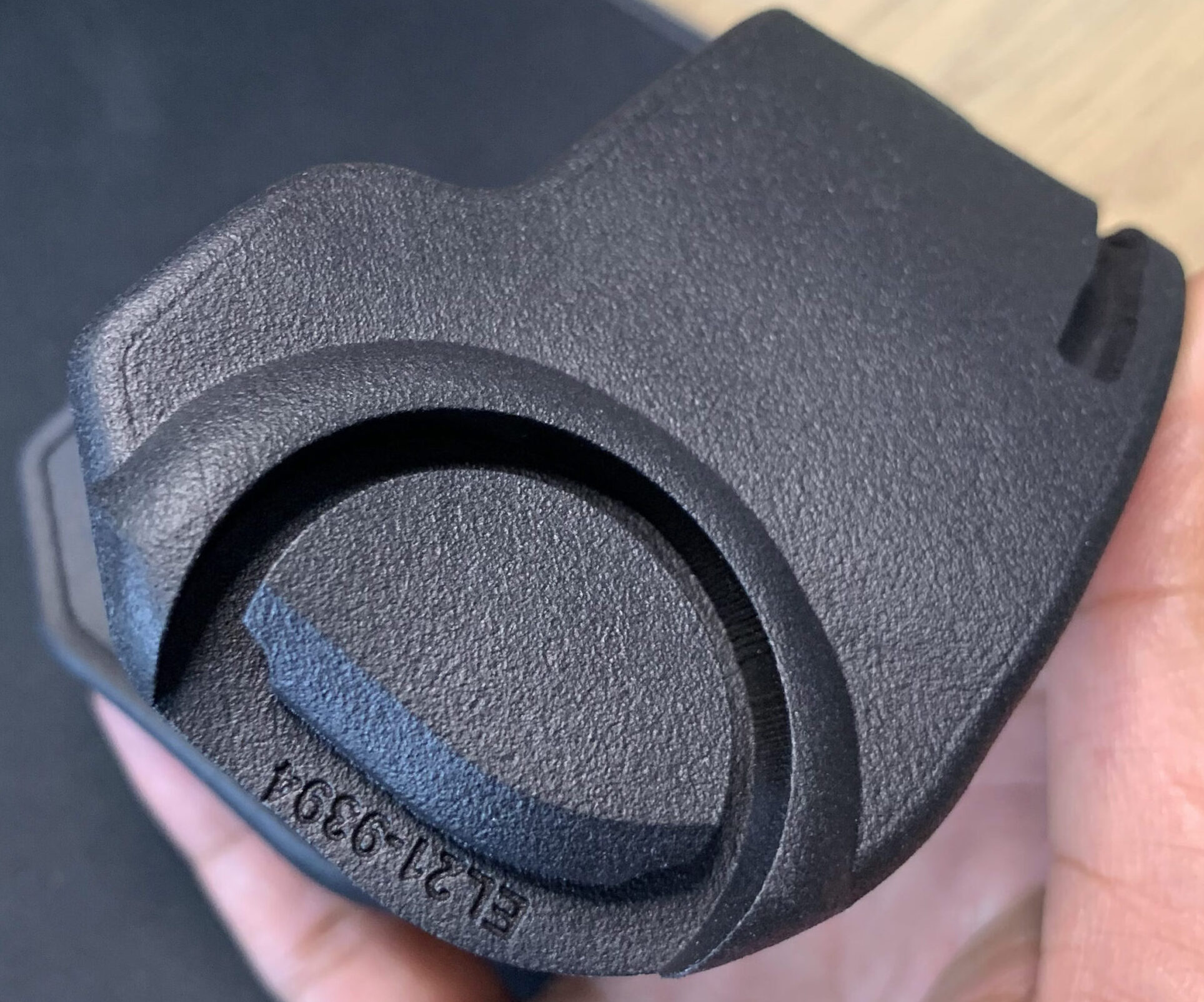
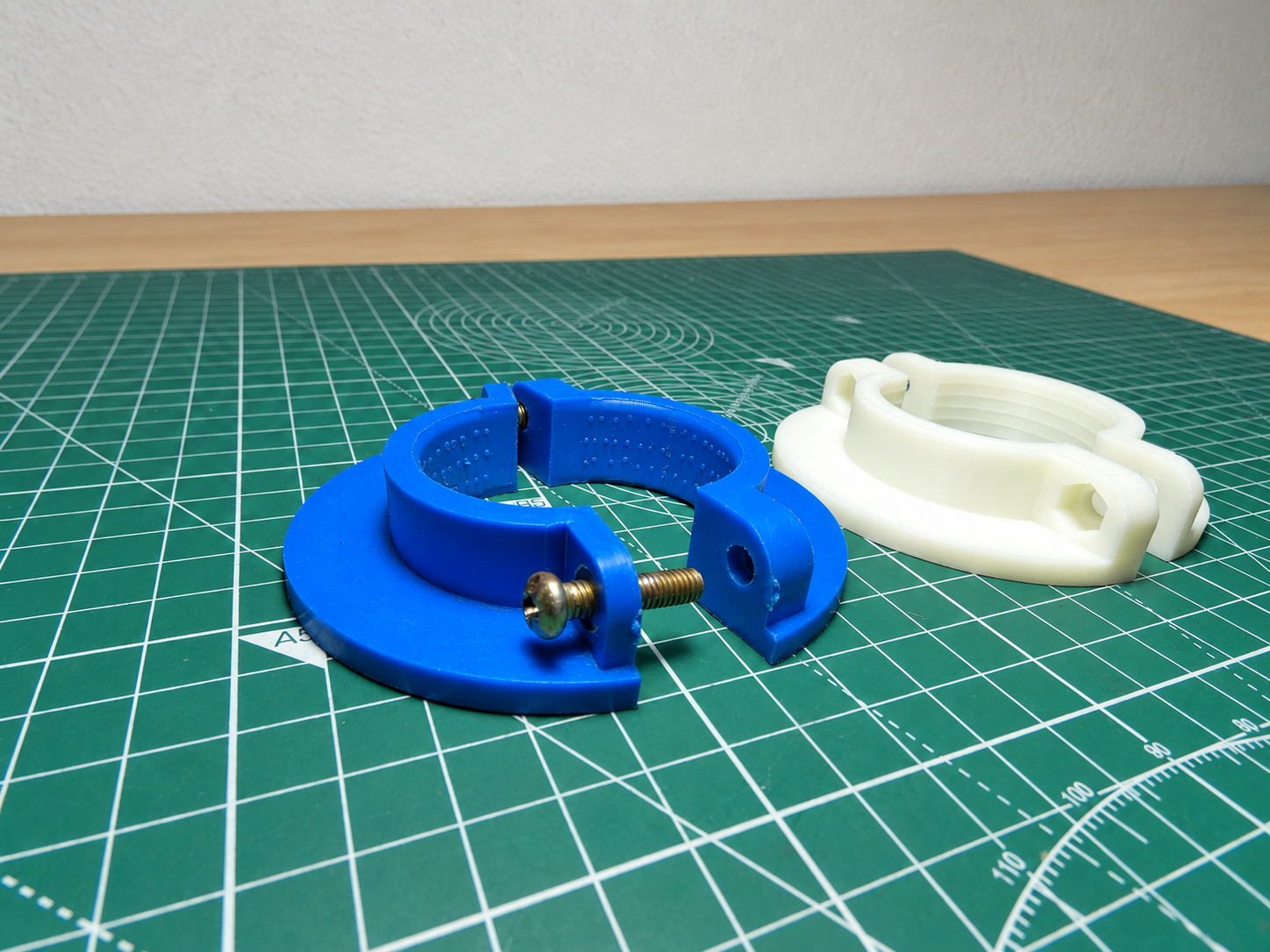
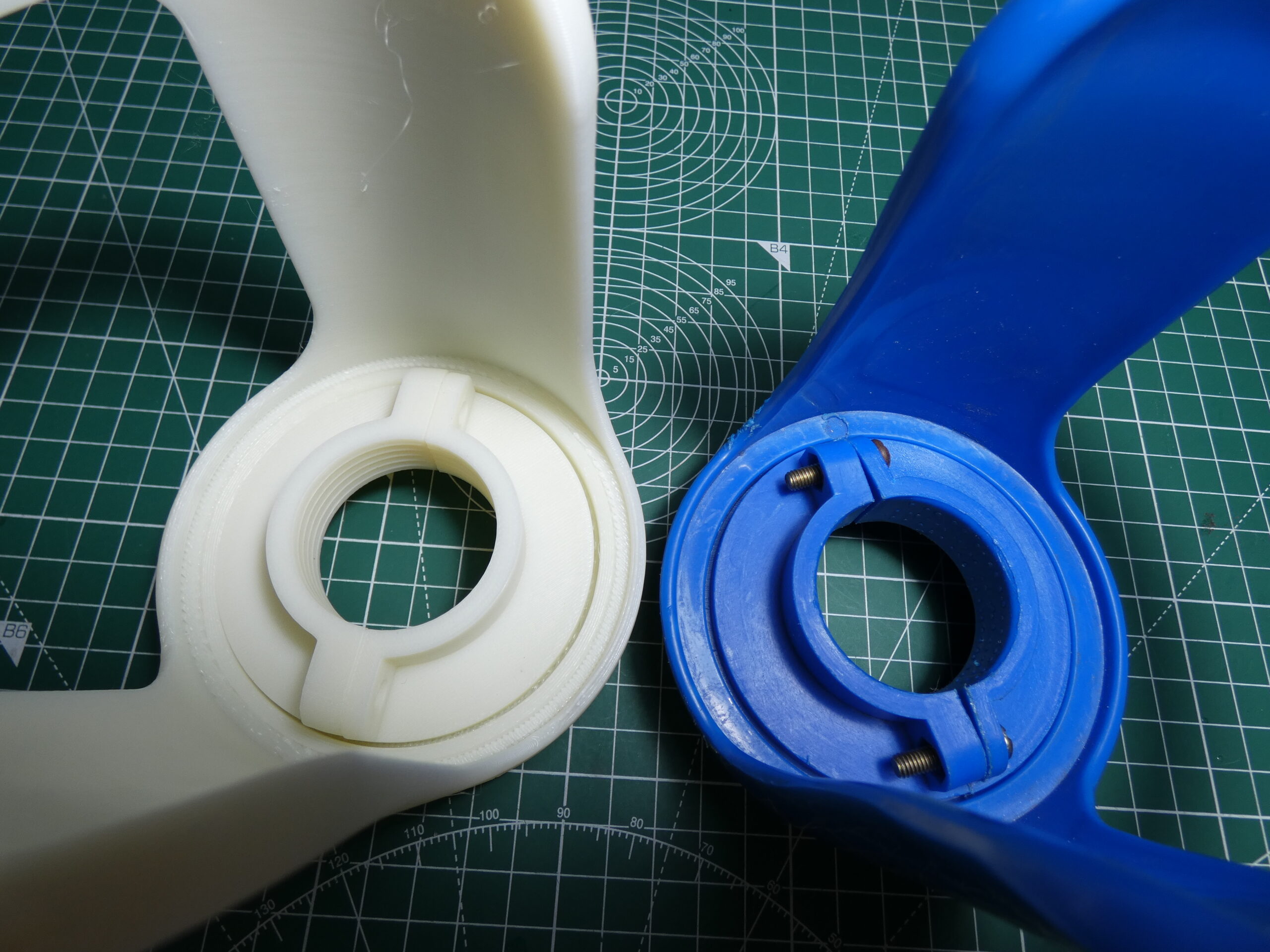
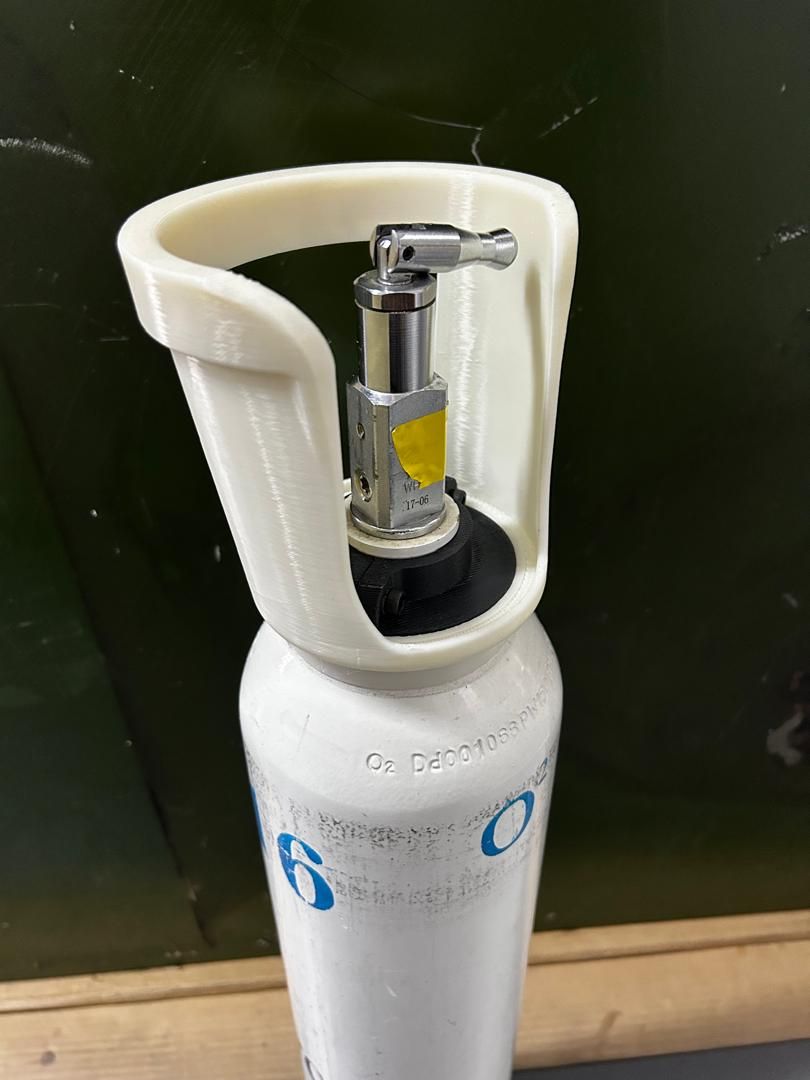
Printhoek 3D was commissioned to recreate a failed handle assembly for a medical oxygen cylinder after the original component could no longer perform reliably.
The project focused on replacing the external handle assembly, not altering the oxygen cylinder or pressure system itself. The part needed to fit the existing cylinder interface, allow safe handling, and restore usability without waiting for imported replacement parts.
PH3D reverse engineered the failed component, rebuilt the geometry in CAD, and manufactured a replacement part locally through additive manufacturing. The design process focused on fitment, handling, strength, and compatibility with the existing equipment.
By producing the component locally, the client had a practical replacement pathway for a small but important medical equipment part.
This project shows how reverse engineering can support healthcare equipment maintenance when small external components fail or become difficult to source.
By recreating the oxygen cylinder handle assembly locally, Printhoek 3D helped restore function to existing equipment and reduced the delay associated with waiting for replacement parts through normal supply channels.
Client: Private Client
Industry: Medical/ Health Equipment
Service: Reverse Engineering • CAD Modelling • Resin 3D Printing • Batch Production
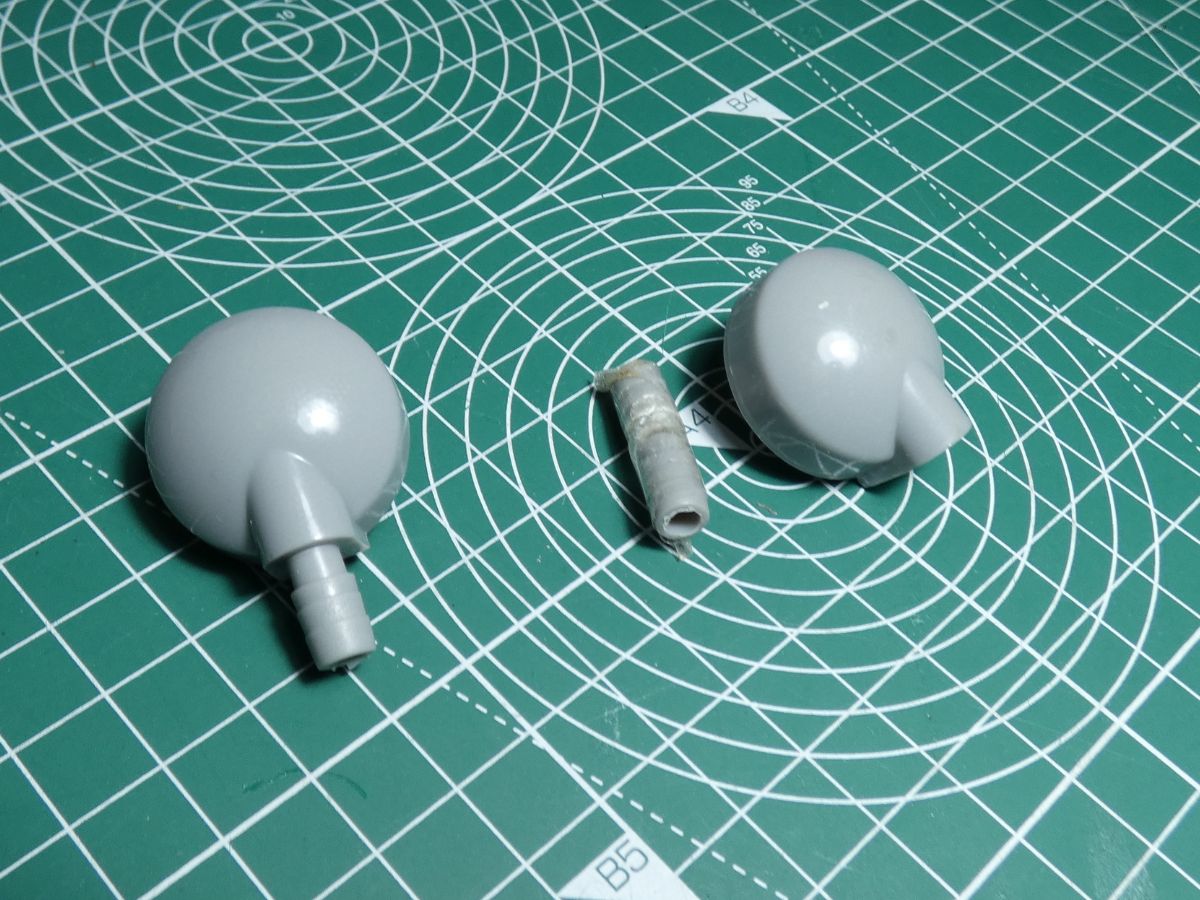
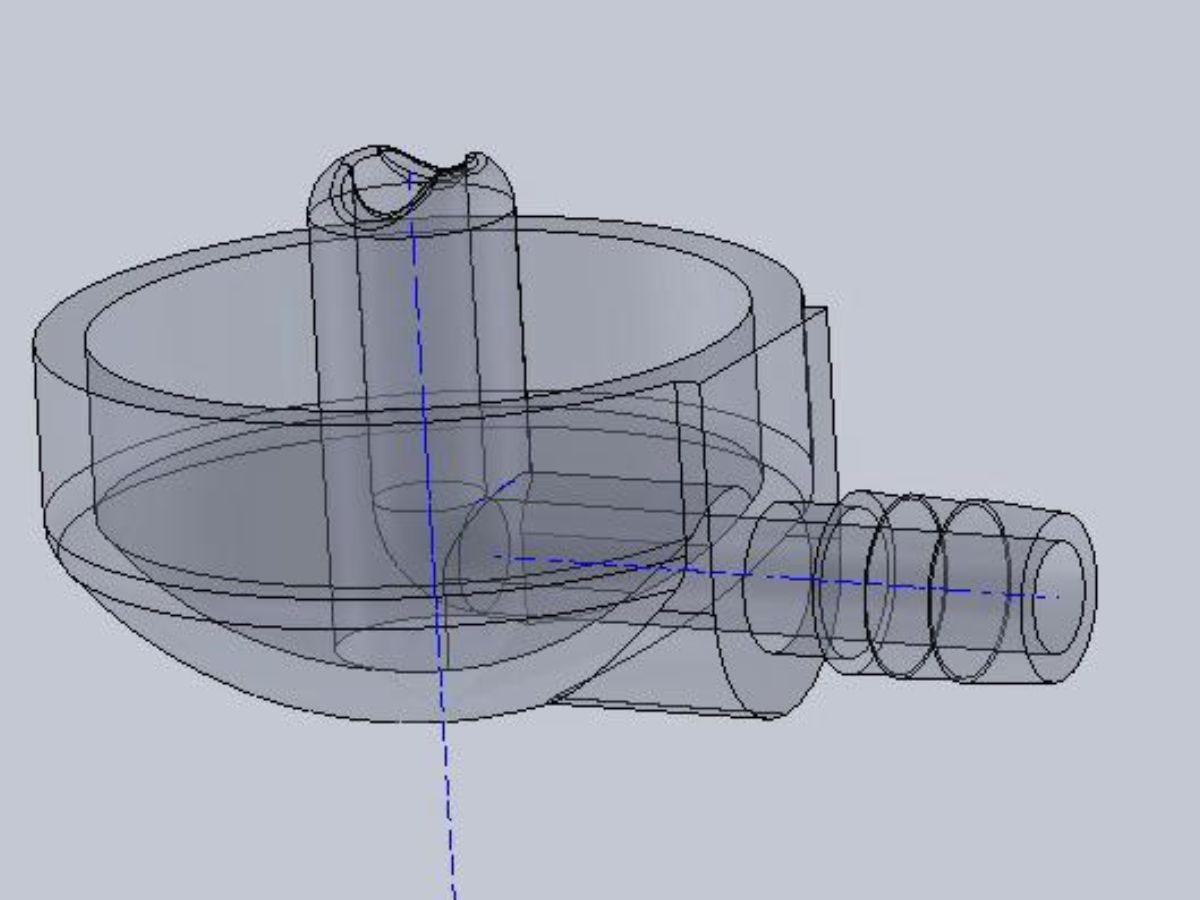
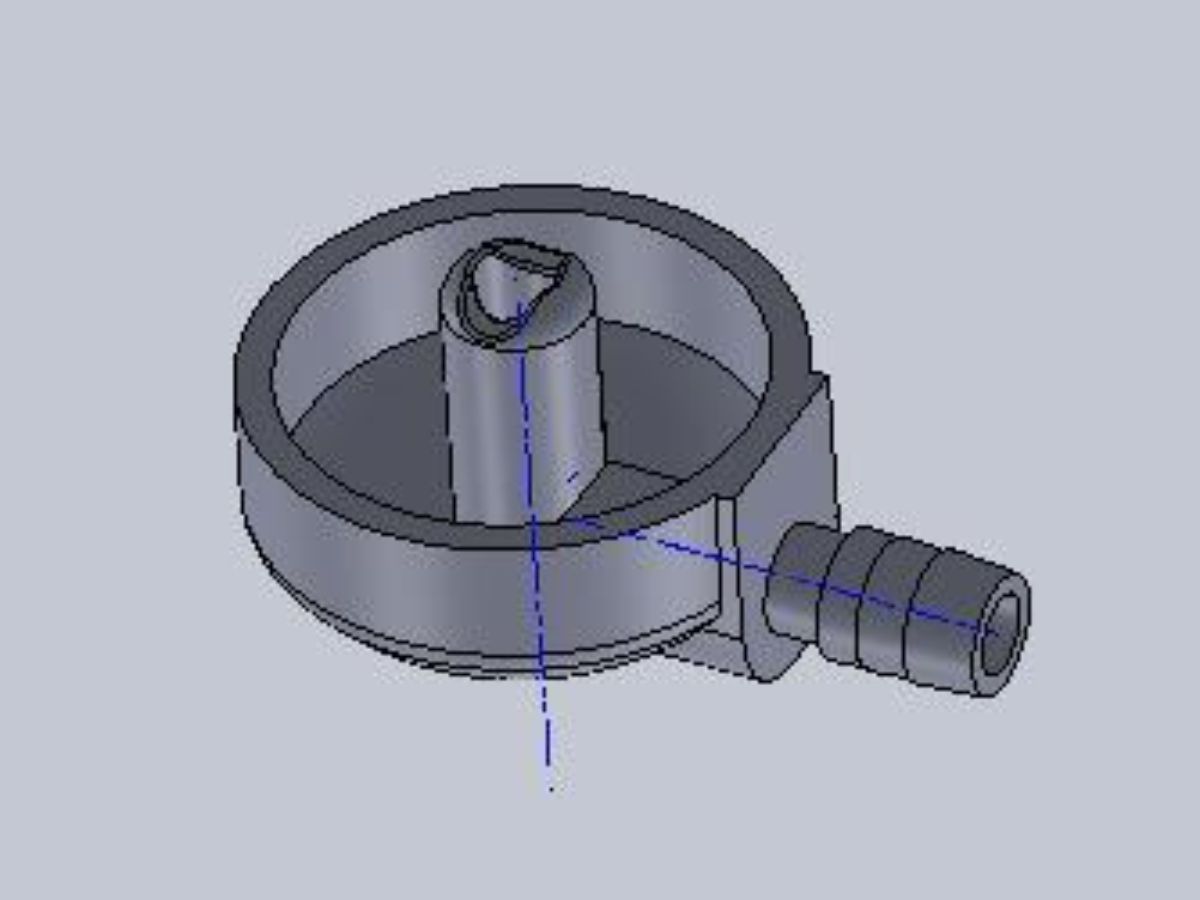
A client needed replacement components for lymphatic equipment but faced limited availability and high sourcing costs.
Printhoek 3D worked from an original component, measuring its features by hand and rebuilding the geometry in CAD. The part’s straightforward shape made manual measurement a practical approach.
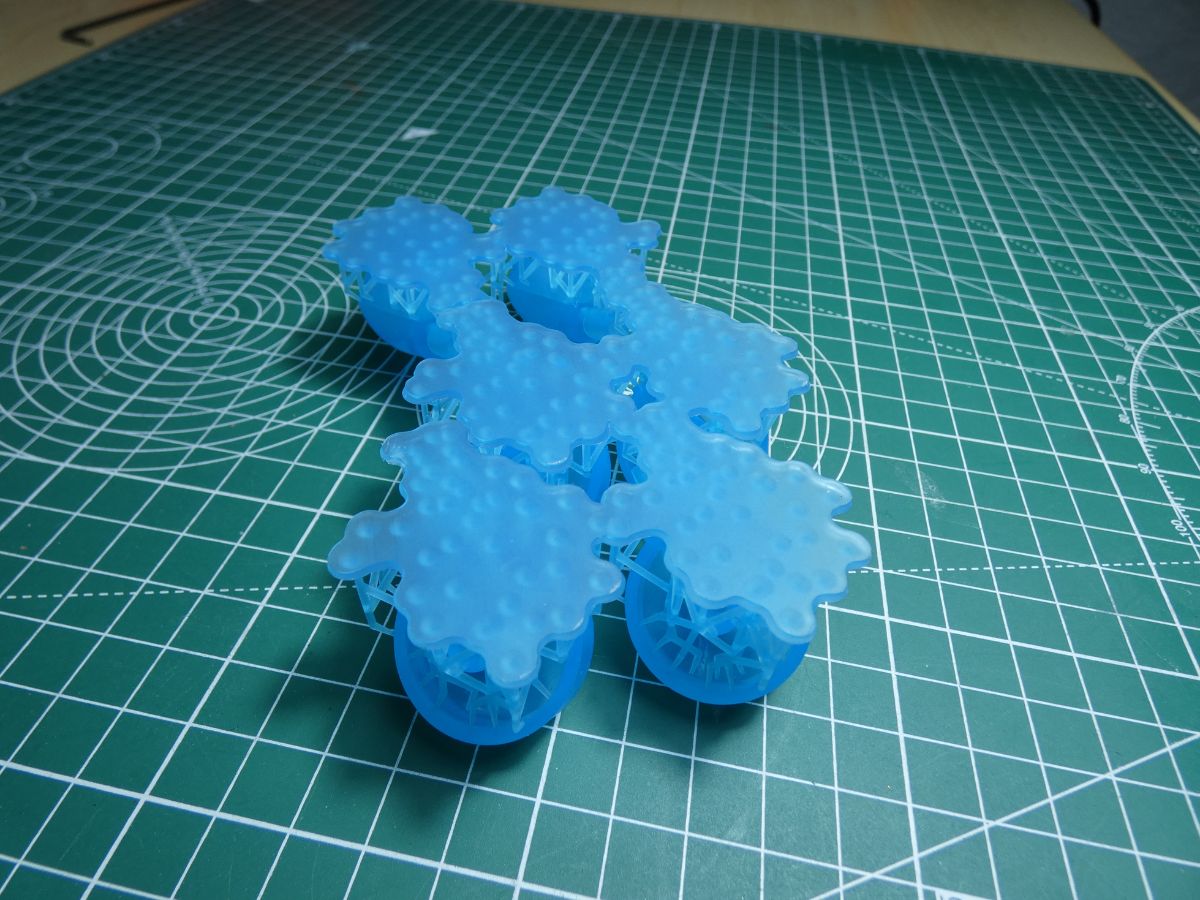
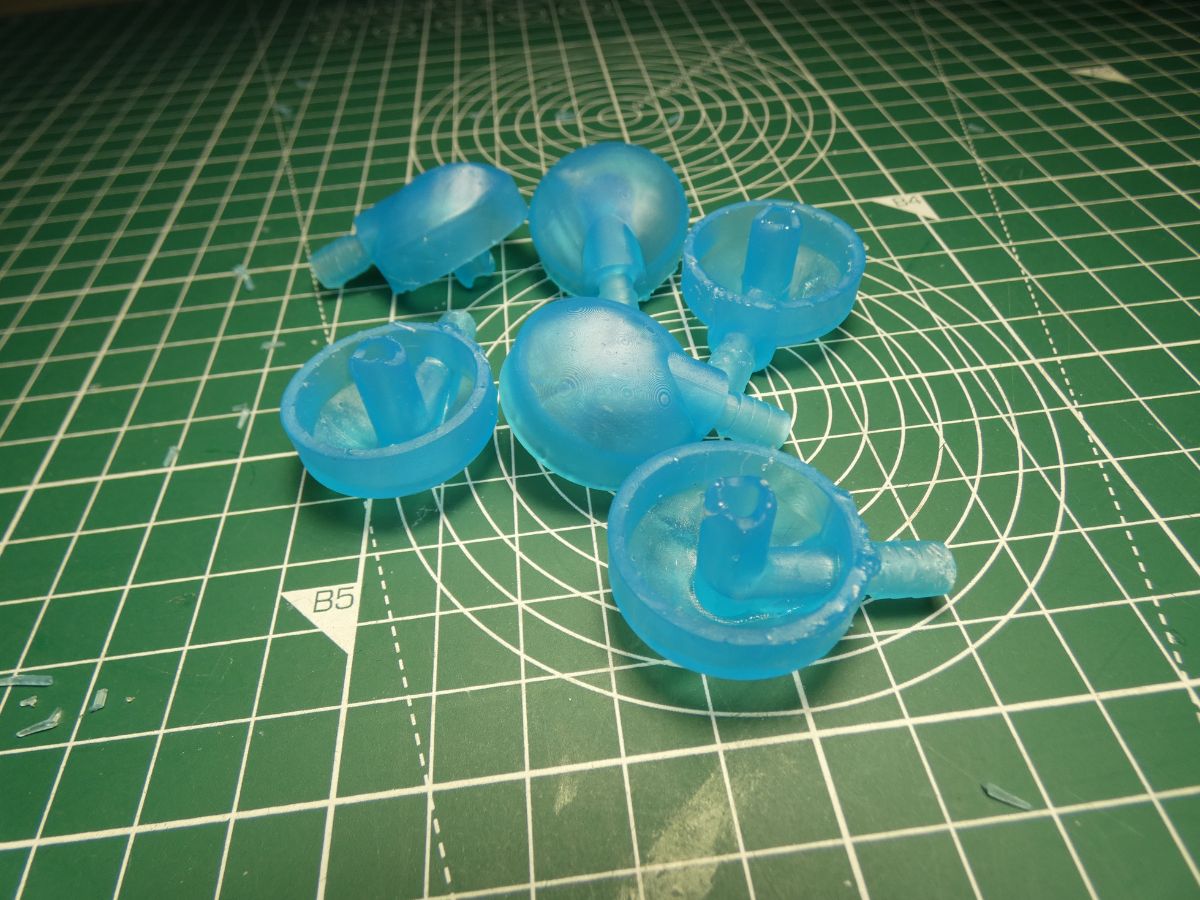
The component’s small size and fine features informed the choice of resin 3D printing. PH3D produced the replacements in batches, providing a local manufacturing option for the client.
Original component used as the reference for manual measurement
Geometry reconstructed directly in CAD
Resin printing selected for the small component and fine detail
Replacements manufactured in batches
Lower replacement cost reported compared with the client’s sourcing option
The client was happy with the replacements and received batches at a substantially lower cost than the alternative available to them.
The project demonstrates how manual measurement, CAD reconstruction and resin printing can provide a practical route to reproducing small equipment components when conventional sourcing is difficult or expensive.

Whitney is an industrial designer redefining the intersection of creativity and advanced manufacturing. At Printhoek 3D, she bridges engineering precision and visual design, ensuring every product reflects both function and identity. Her expertise in digital fabrication and branding enhances the bureau’s capabilities, turning innovation into design that inspires.
Whitney Namwi Ntema
Industrial Designer & Branding Specialist

Daniel is a mechatronic engineer with a strong background in programming, electronics, and product development. He has collaborated with Printhoek 3D on groundbreaking projects such as PET recycling systems and advanced prototyping solutions. Driven by curiosity and problem-solving, he brings research and innovation that turn ambitious ideas into practical technologies.
Daniel James Godfrey
Mechatronic Engineer & R&D Specialist

Justin oversees workshop operations and ensures every print that leaves Printhoek 3D meets uncompromising quality standards. With years of hands-on expertise in additive manufacturing, inspection, and post-processing, he is dedicated to producing precise, reliable results. His eye for detail and commitment to excellence safeguard the bureau’s reputation for world-class precision.
Justin Rain Cole
Workshop & Quality Lead

Romar is a mechanical engineer and entrepreneur driving Industry 4.0 in Namibia. He founded Printhoek 3D to pioneer advanced additive manufacturing and has over a decade of experience in 3D printing, scanning, and mechanical design. His mission is to push the boundaries of what’s possible, transforming complex engineering challenges into future-ready solutions
Rodolfo Marcial (Romar) Rañola Quitasol
Founder & CEO