

Tell us which component you need to replace, adapt or develop. Share photographs, dimensions and any available drawings so we can assess the requirements.
Client: Private Client
Industry: Automotive
Service: Reverse Engineering • CAD Reconstruction • Additive Manufacturing • Prototype Manufacturing • Functional Testing
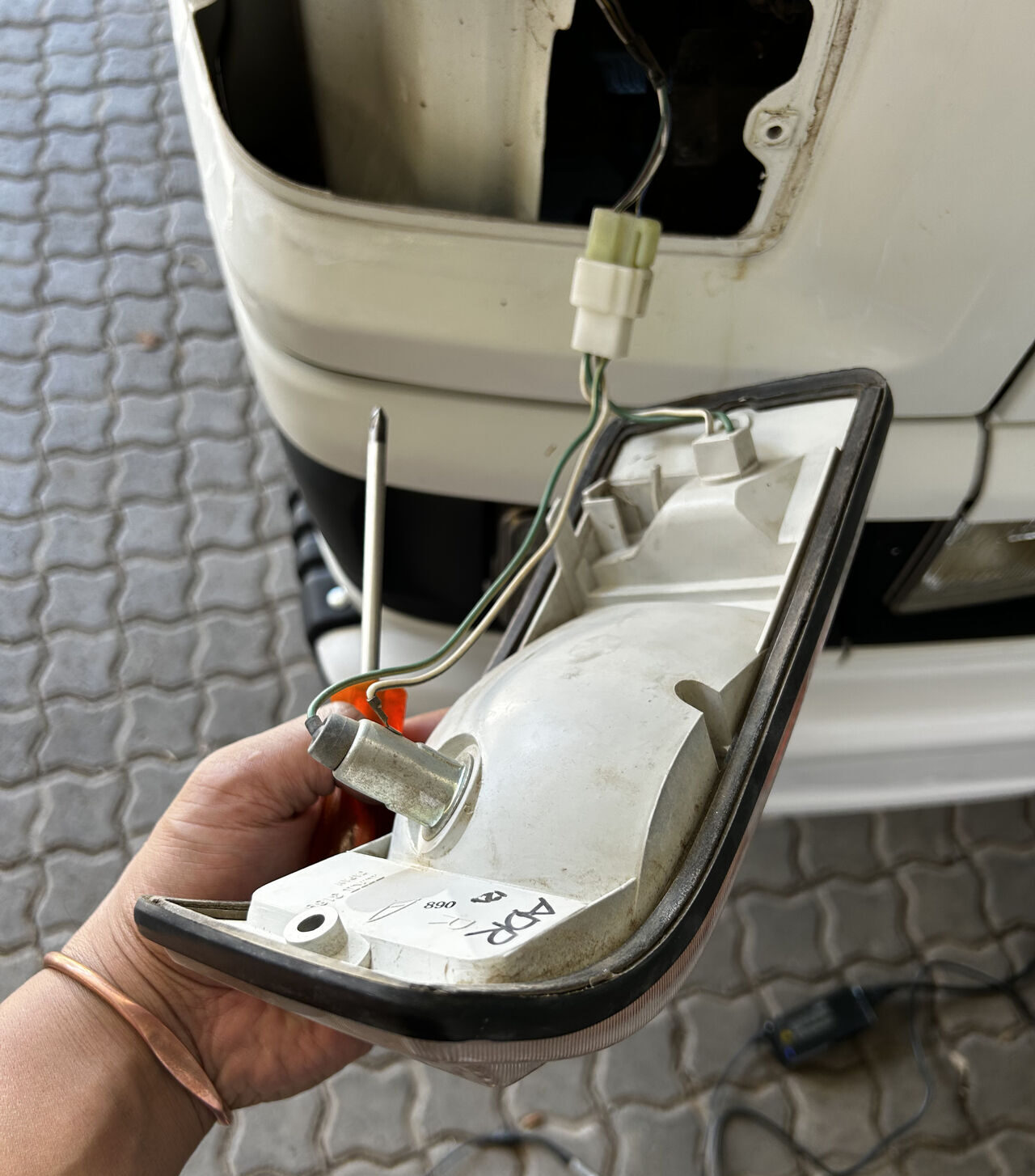
Printhoek 3D was commissioned to recreate an obsolete brake light lens after the original replacement part was no longer readily available.
The project required more than copying the visible outer shape. The lens had to fit into the existing light housing, align with the original mounting points, hold the internal components correctly, and allow light to distribute as intended when powered.
PH3D rebuilt the lens geometry in CAD, preserving the critical features that controlled fit and function. This included the outer shell, internal diffuser geometry, clip positions, mounting clearances, and engagement points.
The replacement was manufactured as separate sections so each feature could perform its role correctly. The parts were printed, test-fitted, adjusted, and checked under power to confirm fit, alignment, and light performance.
This project shows that reverse engineering an automotive light component is not only about reproducing the shape.
By preserving the mounting geometry, internal diffuser features, and light performance requirements, Printhoek 3D produced a functional replacement lens that allowed the original brake light assembly to remain in use.
Client: Zibo Automotive
Industry: Automotive
Service: 3D Scanning • Reverse Engineering • CAD Design • 3D Printing
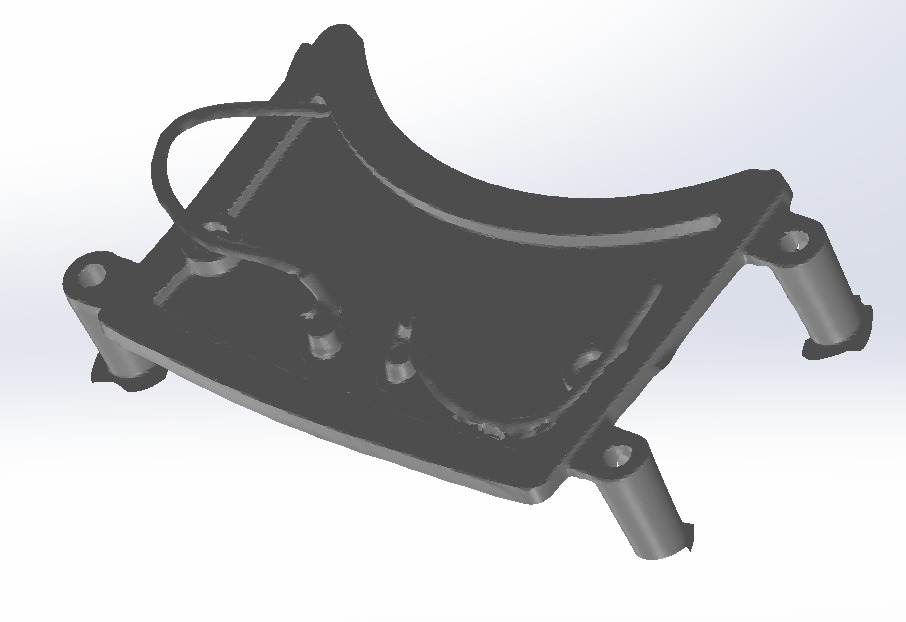
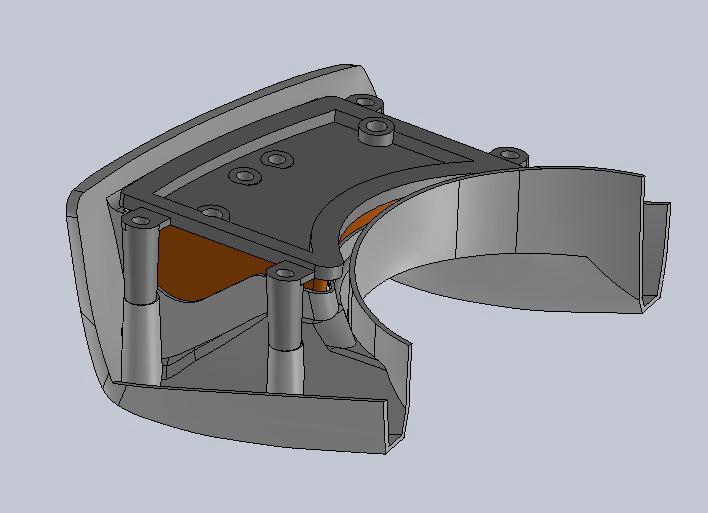
Missing sections of the original mounting base meant the replacement could not simply be copied. The mounting positions had to be reconstructed in relation to the surrounding housing and lens.
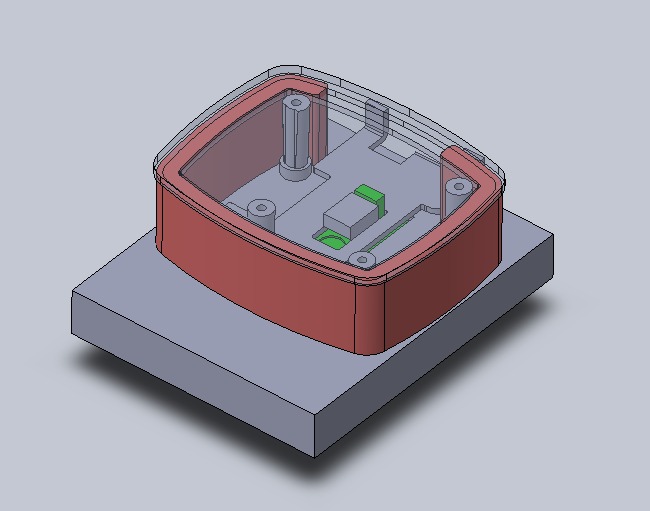
Printhoek3D scanned the existing components using SHINING 3D’s EinScan Rigil. The captured geometry provided a reference for redesigning the base and locating its mounting pillars.
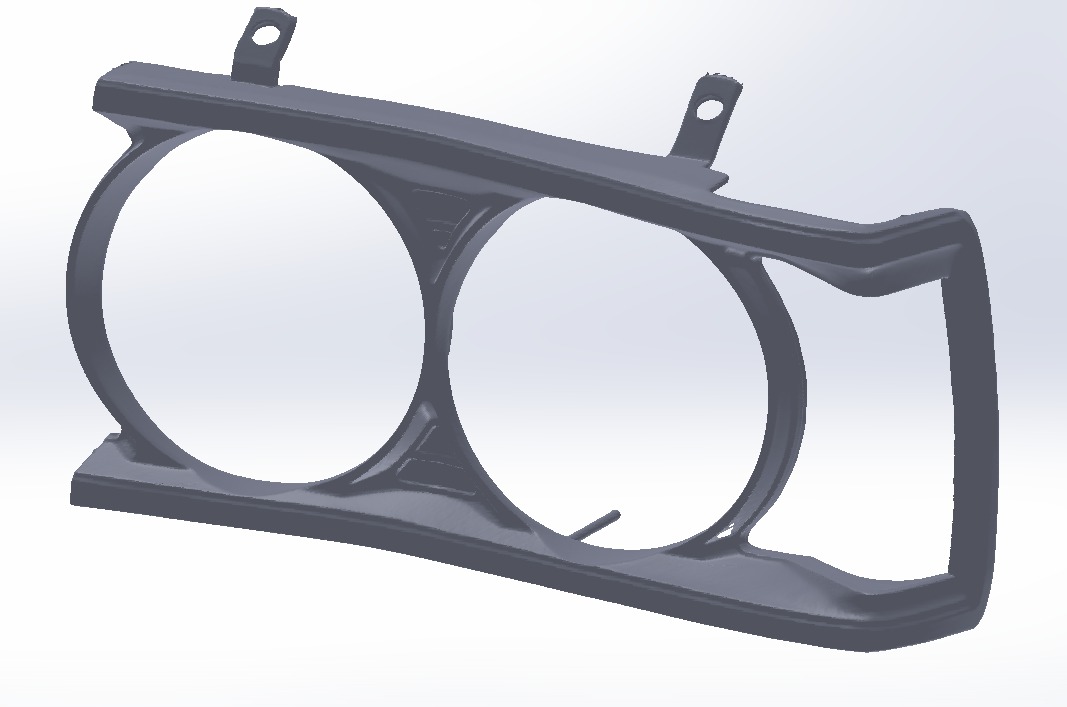
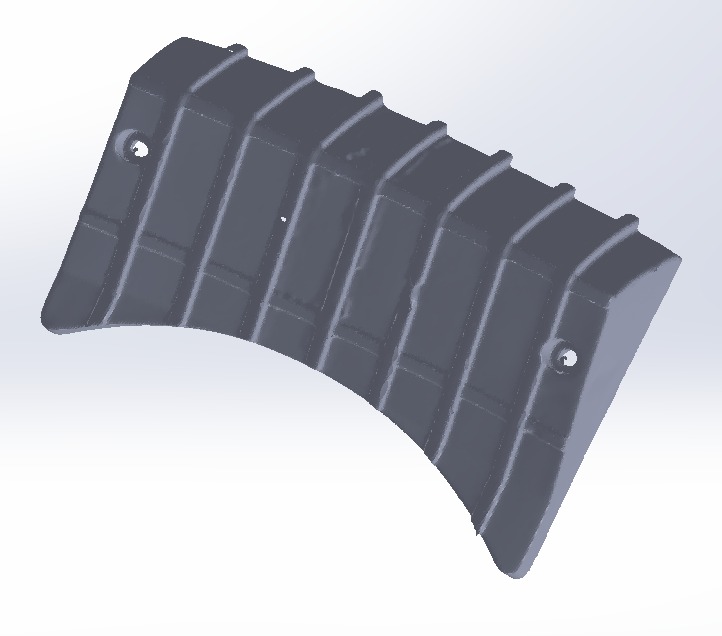
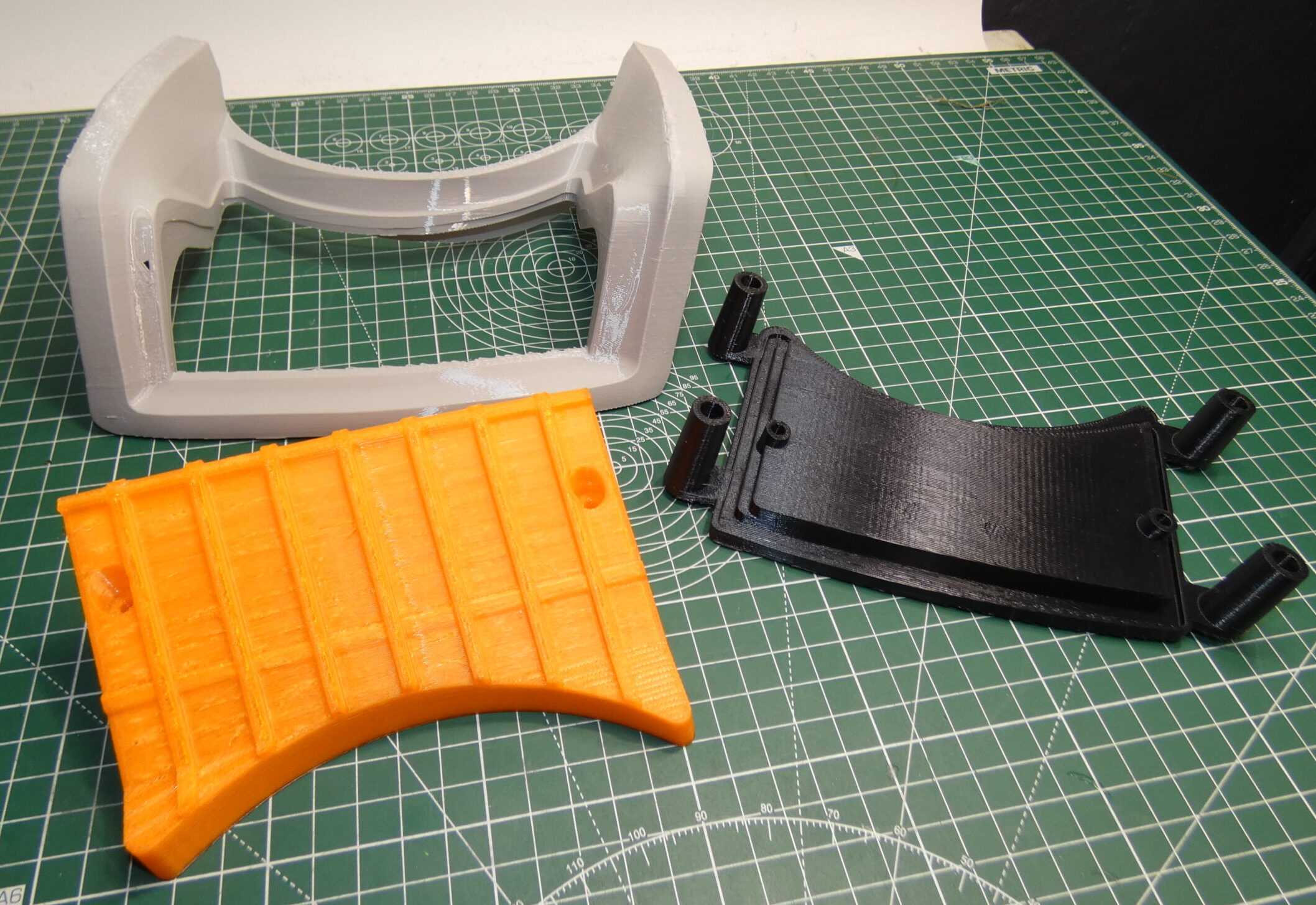
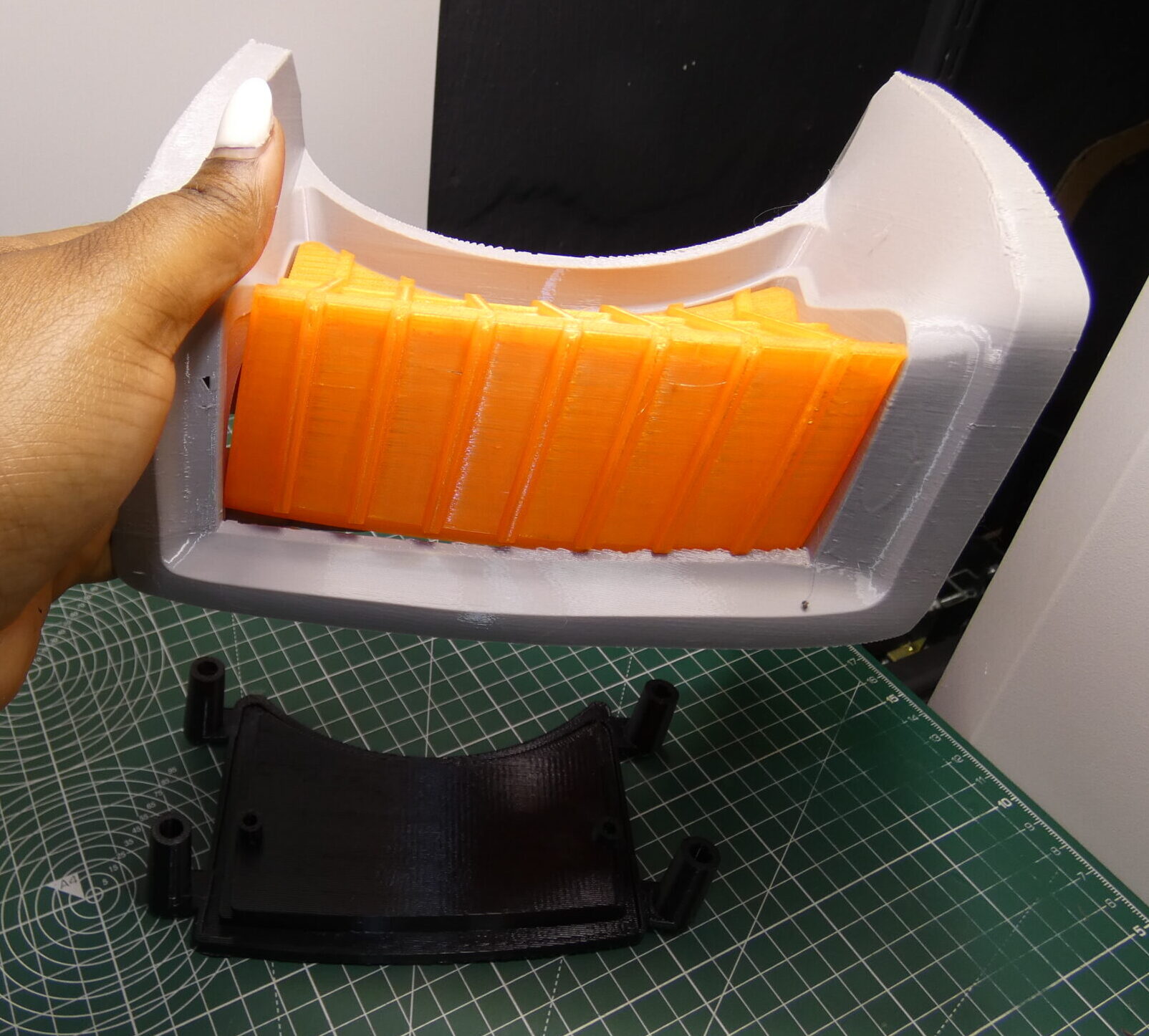
The replacement lens and base were 3D printed, together with a grey housing replica used to check how the components fitted together.
3D scanning of the existing components to establish the assembly geometry.
Reconstruction of missing mounting features using the surrounding housing as a reference.
Transparent orange PETG lens and black ASA mounting base.
Grey PETG housing replica produced for assembly checks.
Reconstructing the missing mounting features enabled a replacement lens and base to fit the Camaro’s existing housing. A printed housing replica allowed the components to be checked together before vehicle installation, turning incomplete original parts into a reproducible digital design.
Client: Private Client
Industry: Automotive
Service: 3D Scanning • Reverse Engineering • CAD Reconstruction • Additive Manufacturing
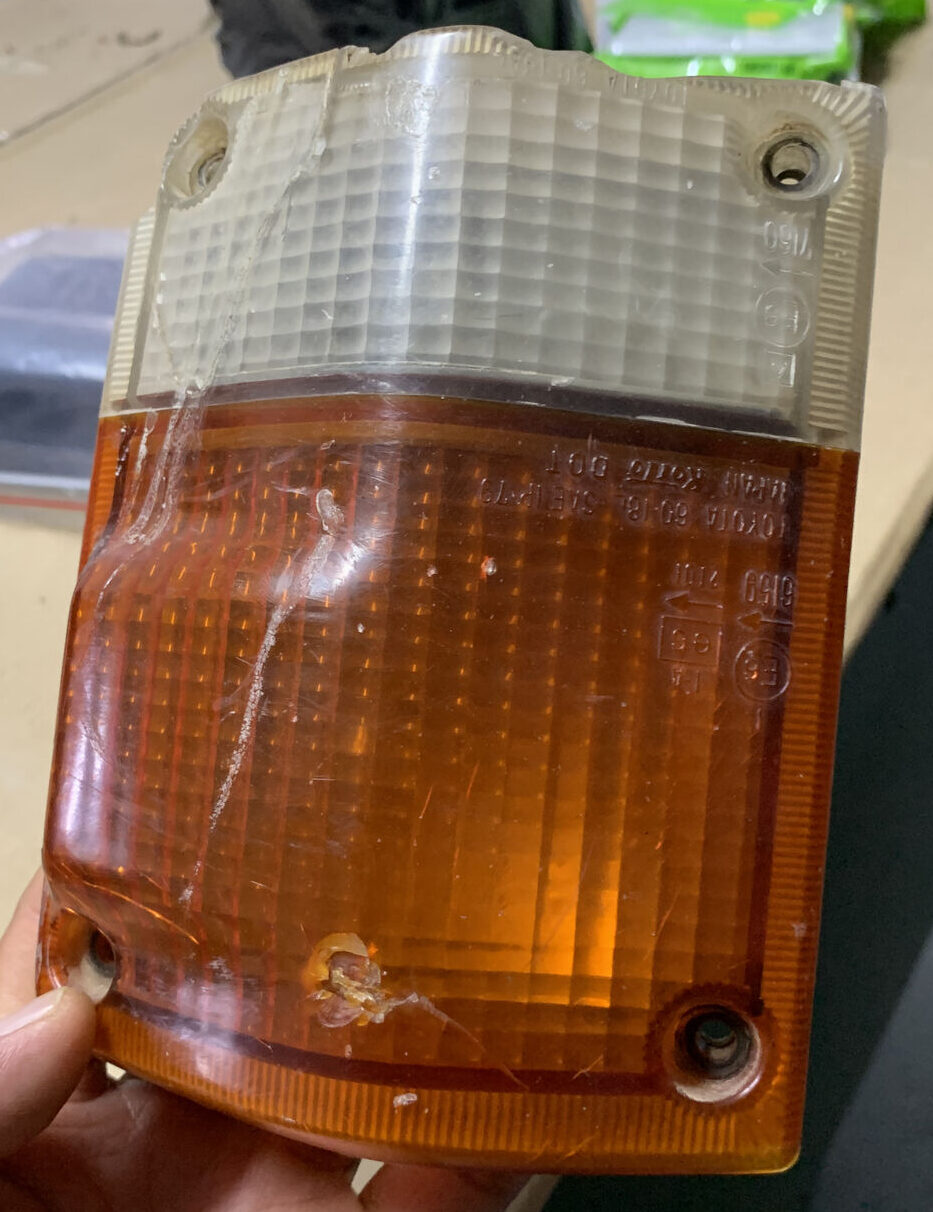
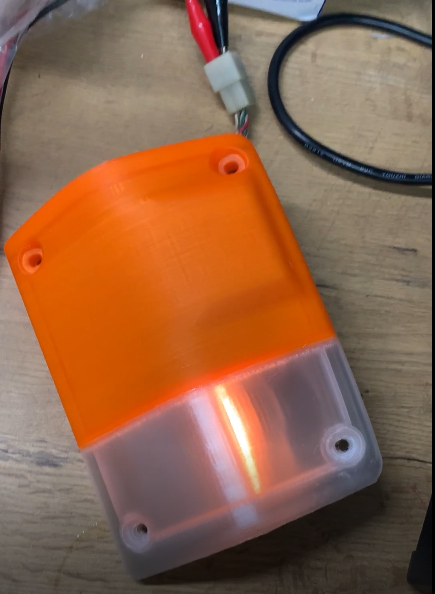
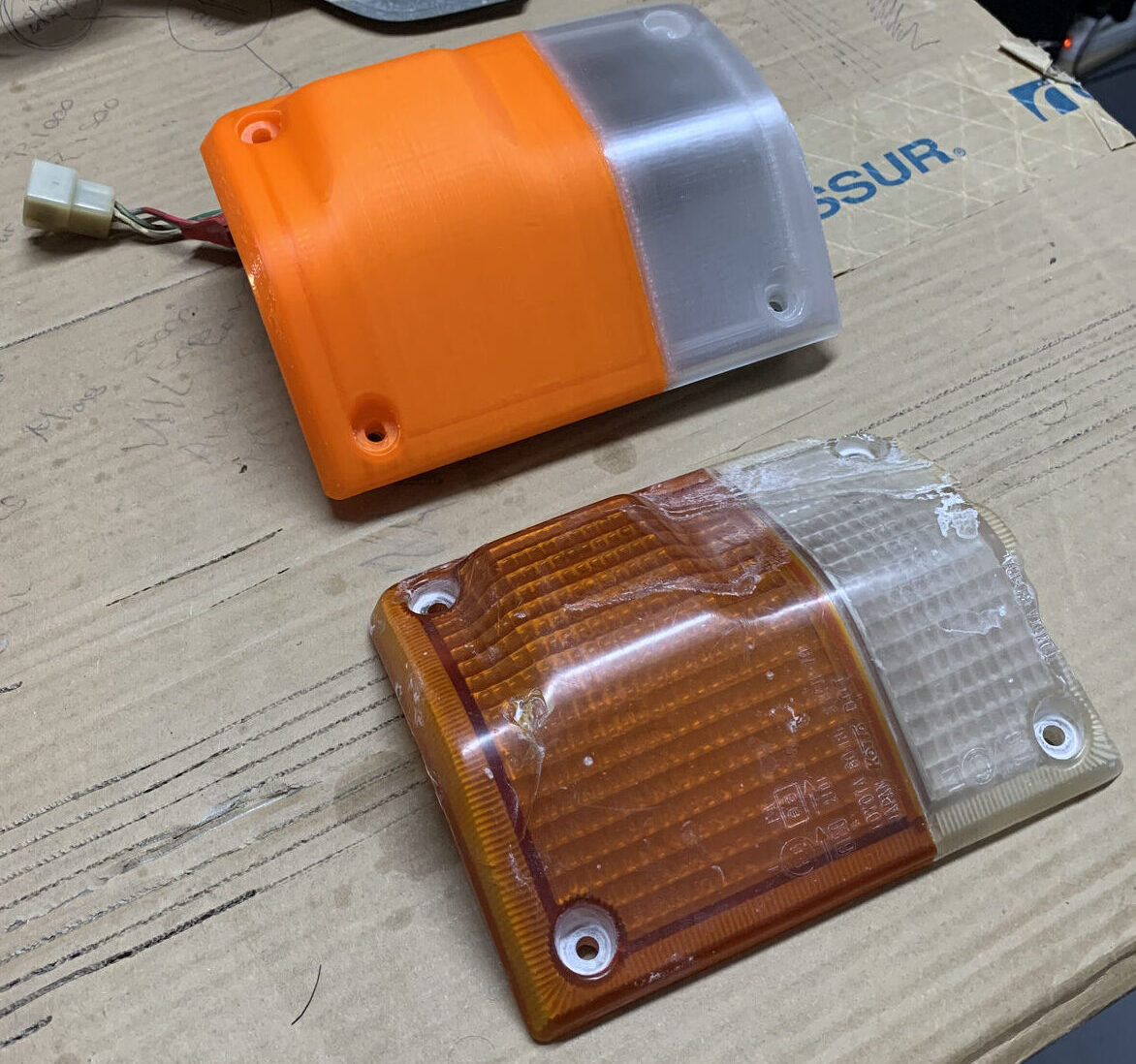
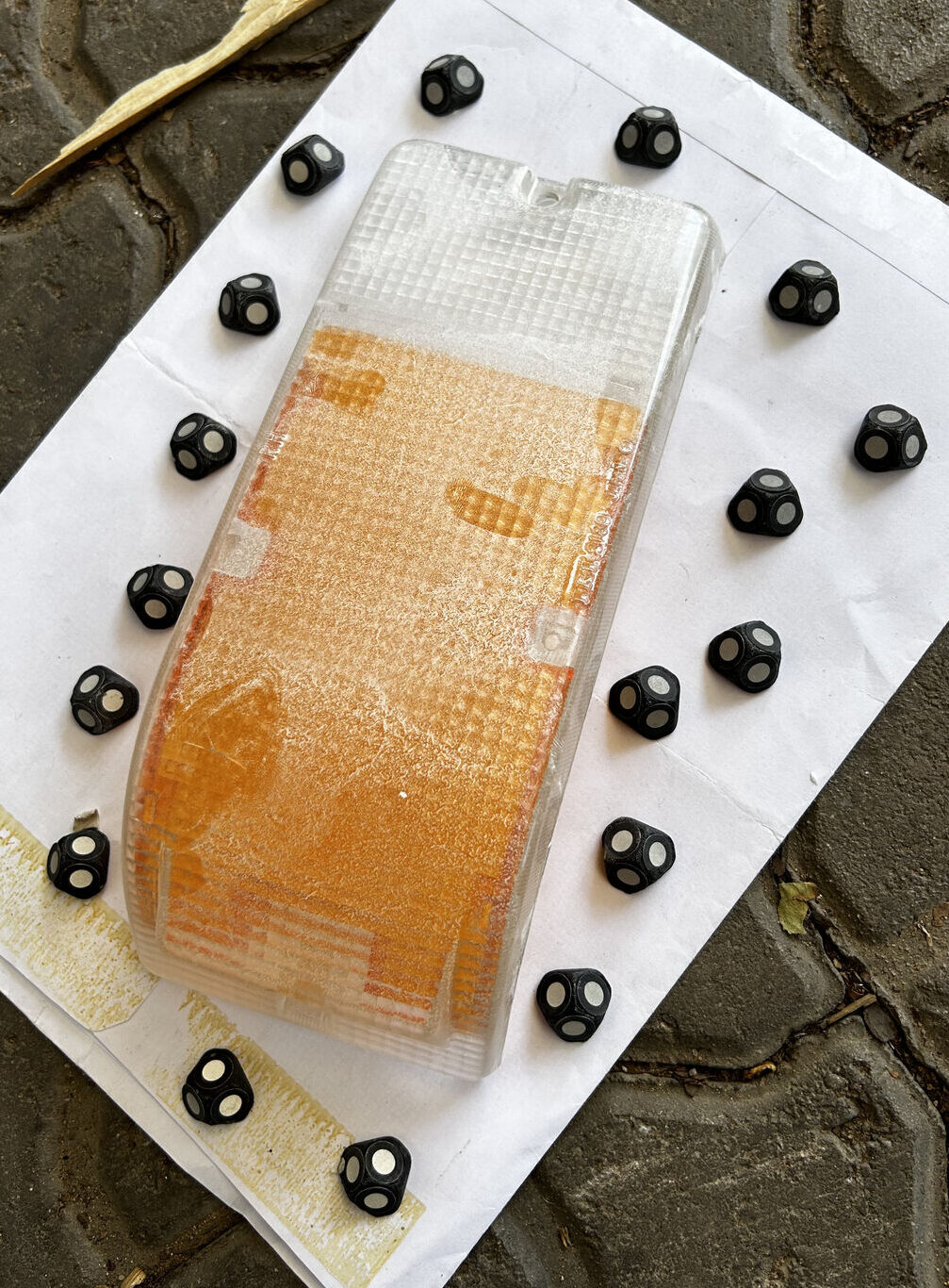
Printhoek 3D was commissioned to recreate an automotive indicator lens assembly after the original replacement part was no longer readily available.
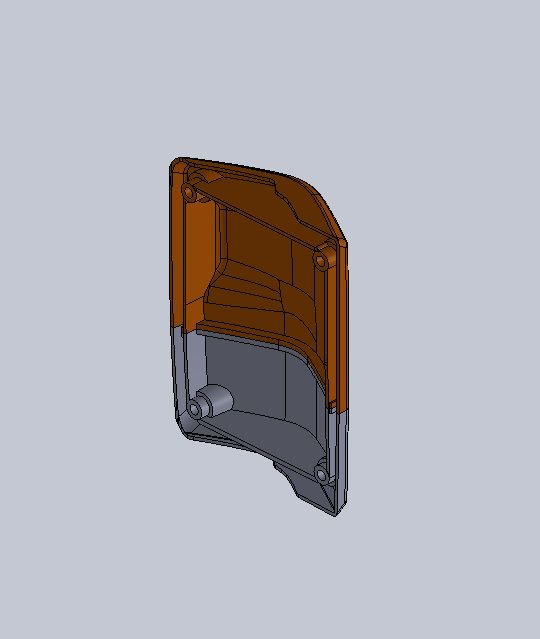
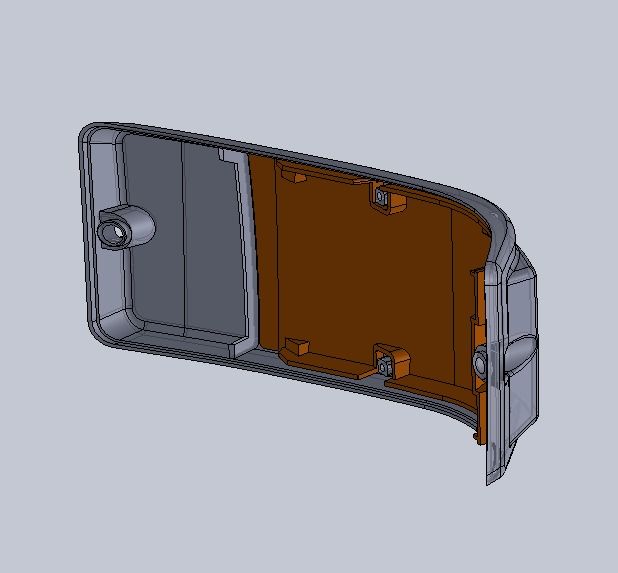
The part required more than a visual copy. The replacement needed to maintain the outer lens shape, internal orange diffuser section, mounting points, clip positions, clearances, and fit within the original light housing.
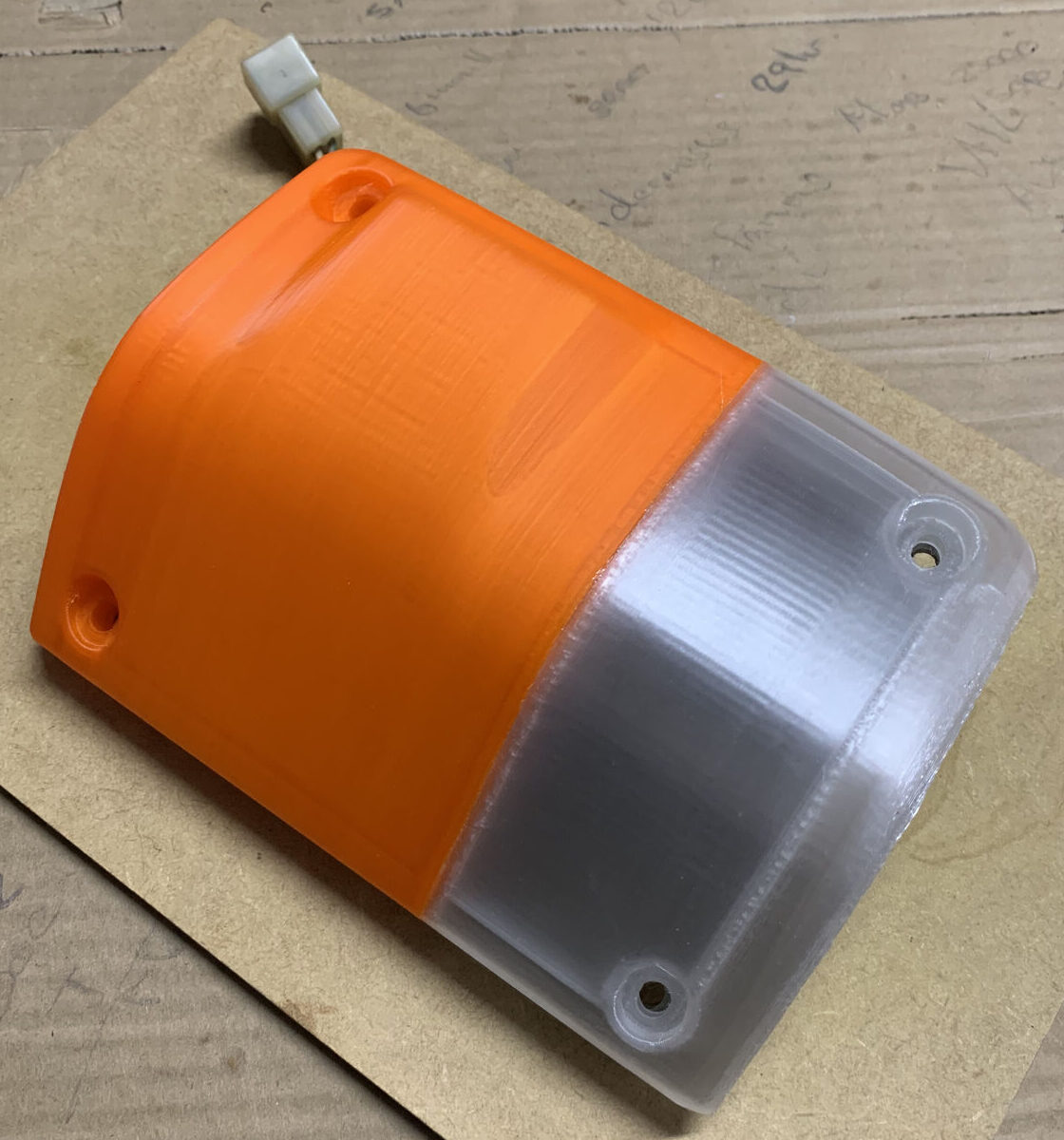
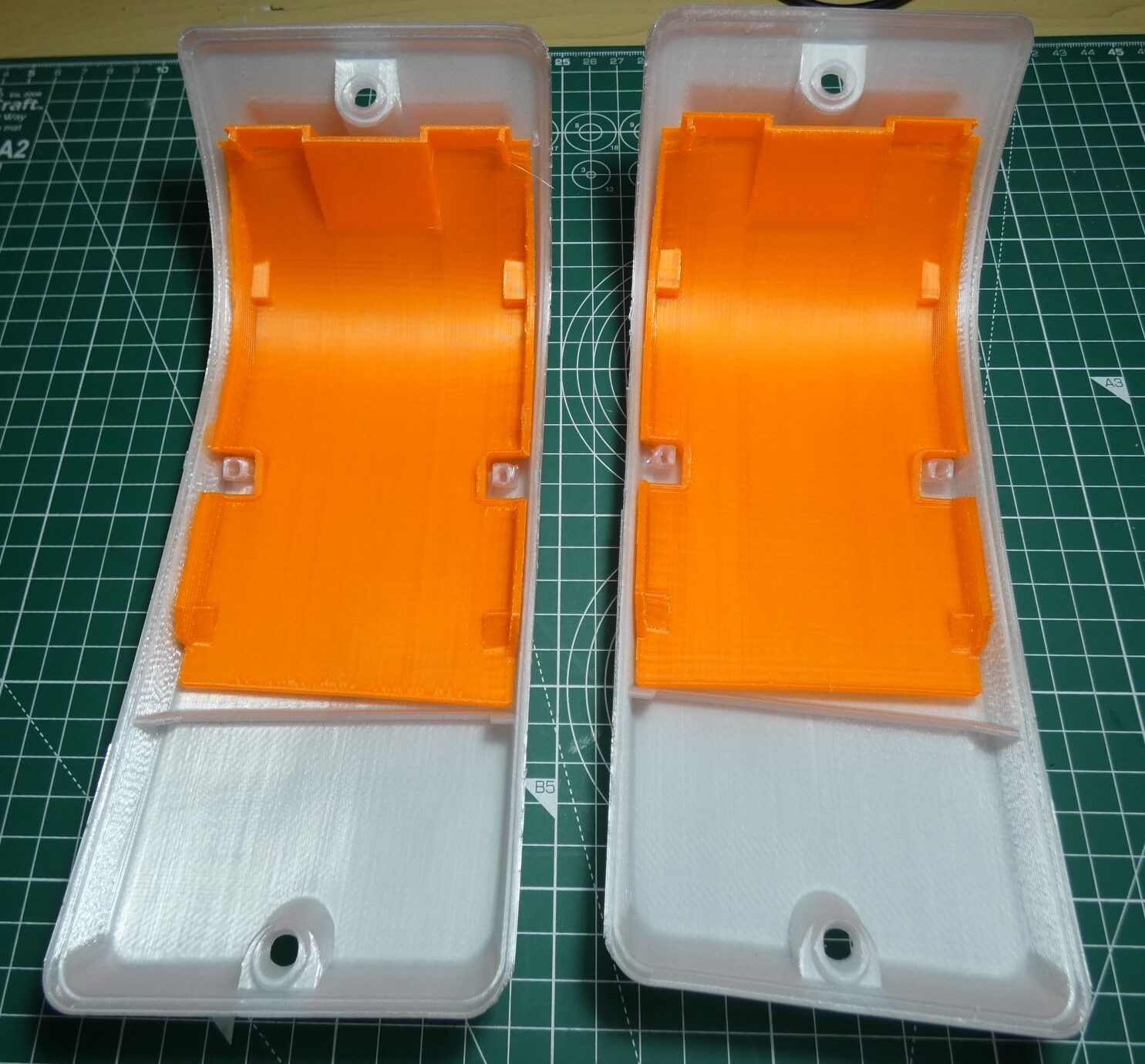
PH3D reconstructed the component as a two-part assembly, separating the clear outer section from the orange internal section. This allowed the replacement to preserve the visual function of the original lens while keeping the internal geometry required for mounting and alignment.
Each section was manufactured and test-fitted to confirm that the parts seated correctly, aligned with each other, and could function within the existing vehicle assembly.
This project shows how reverse engineering can restore automotive lighting components when original replacement parts are no longer available.
By recreating the indicator lens as a fitted two-part assembly, Printhoek 3D helped provide a local replacement pathway while preserving the original mounting, alignment, and visual function of the component.
Client: Caddy Carriers
Industry: Automotive
Service: 3D Scanning • Reverse Engineering • 3D Printing • Post-processing
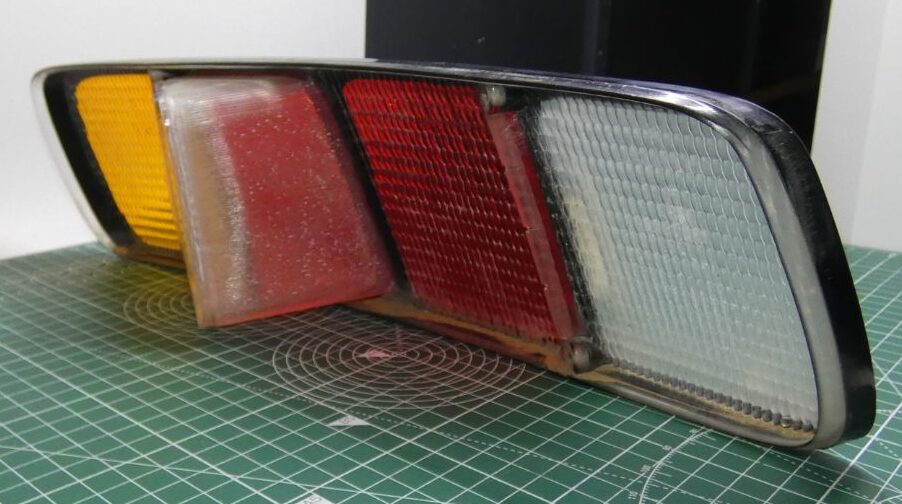
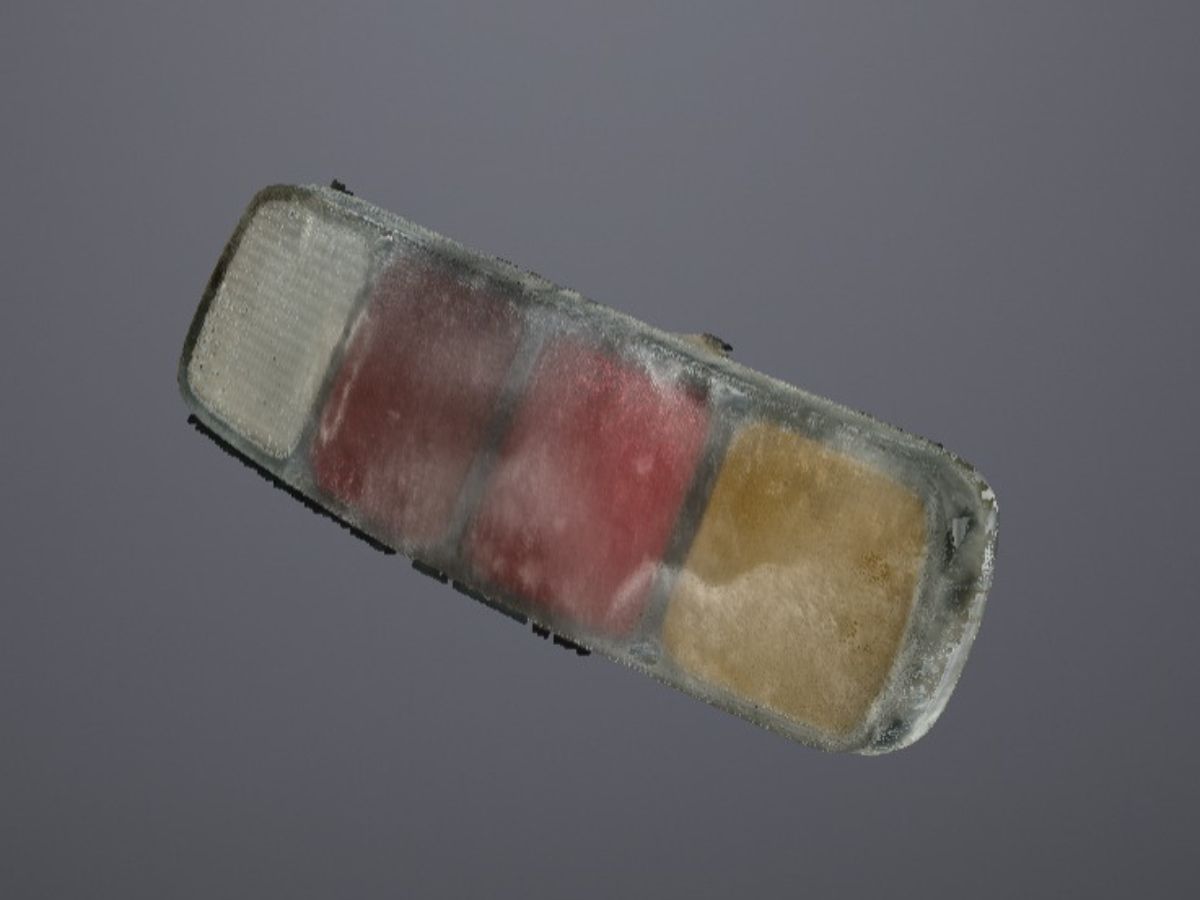
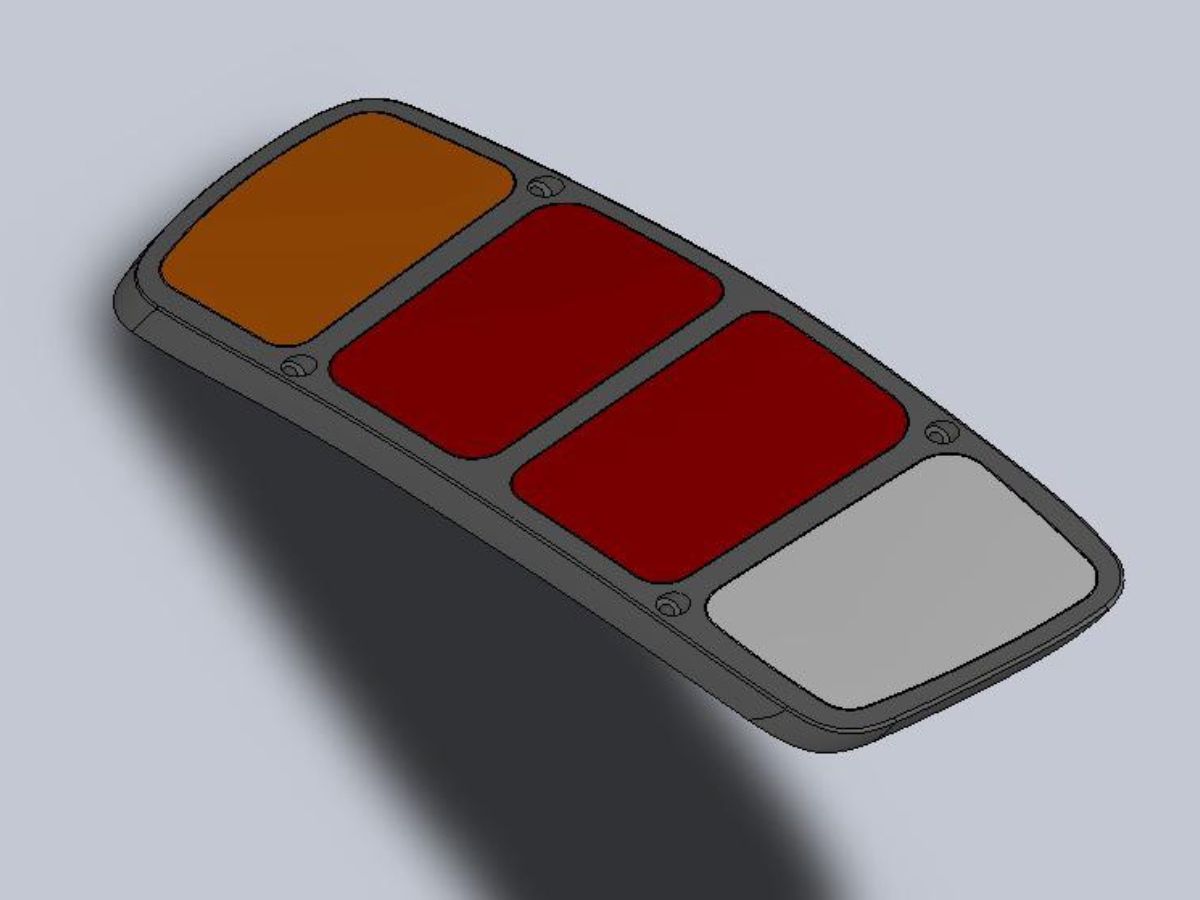
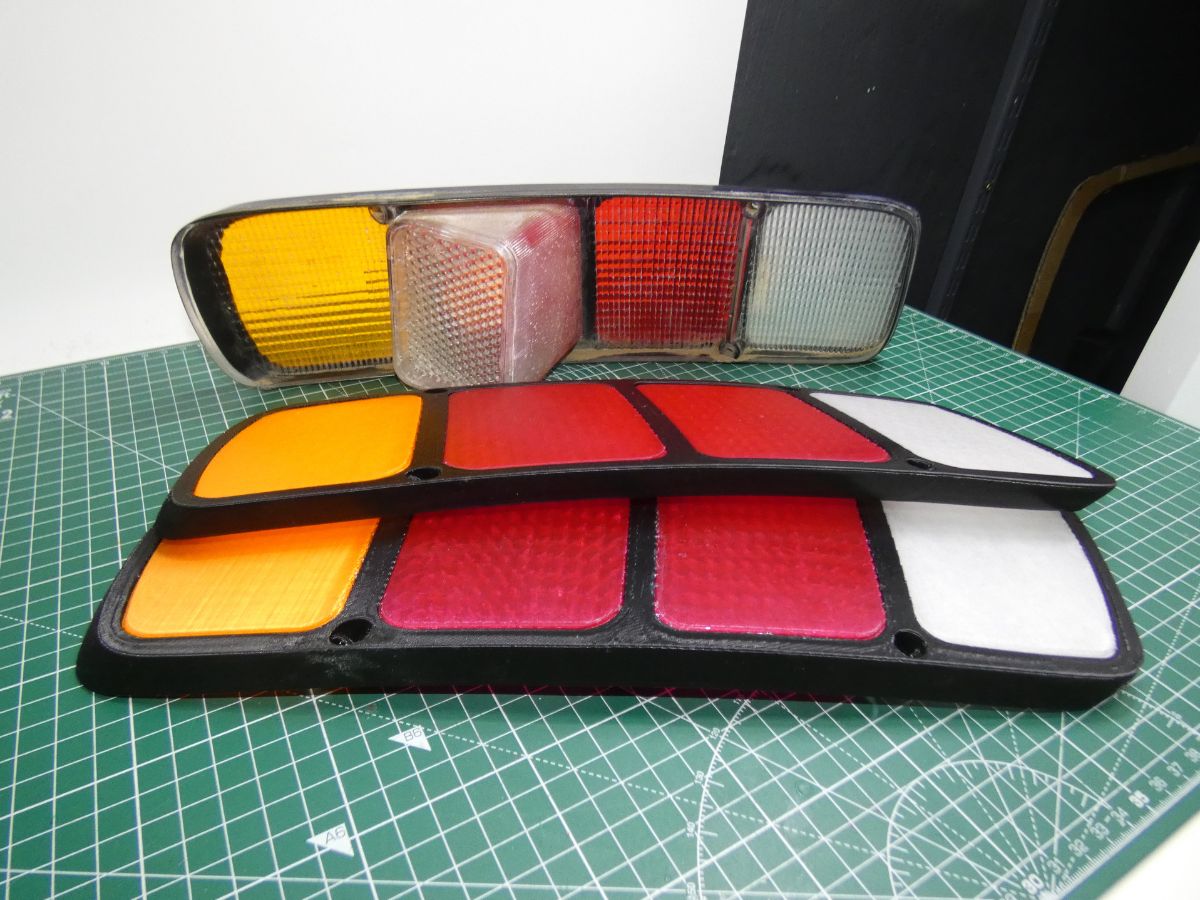
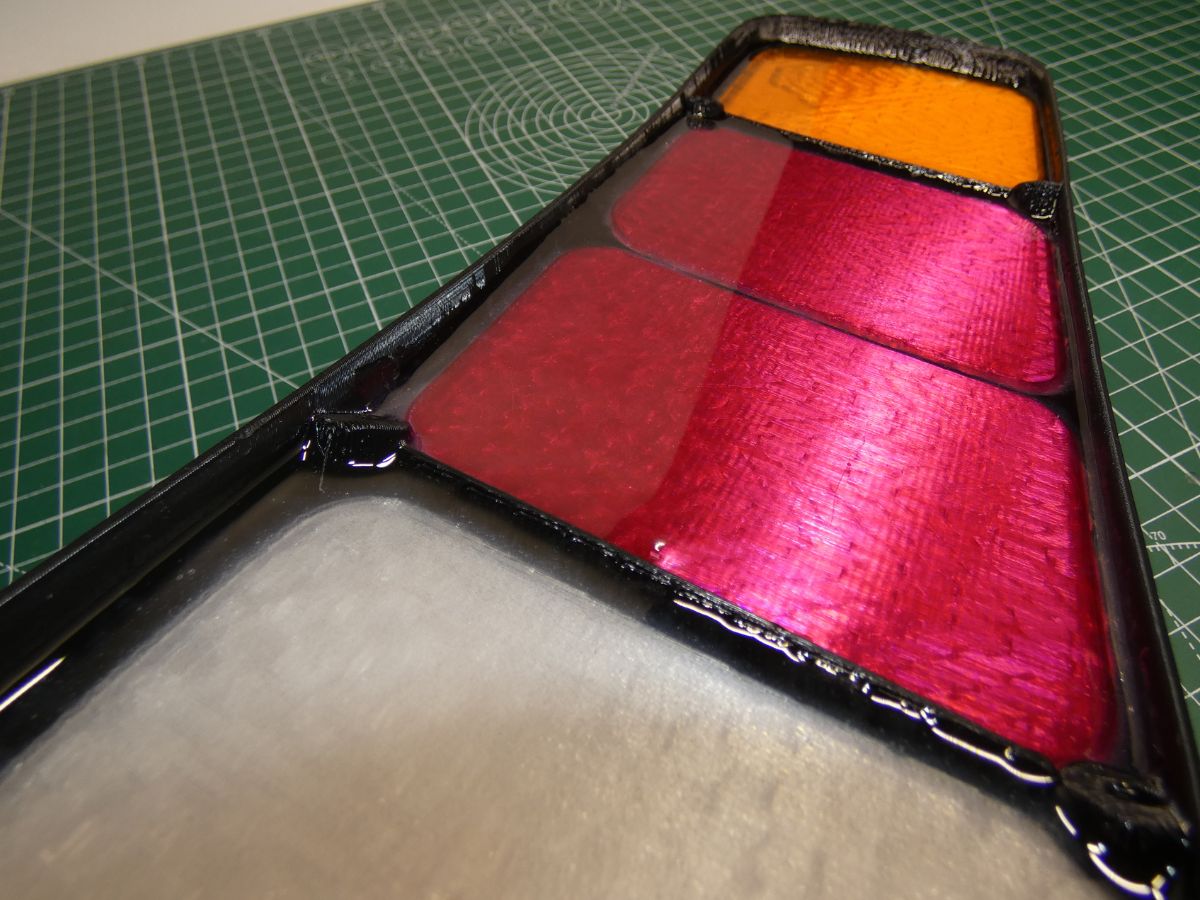
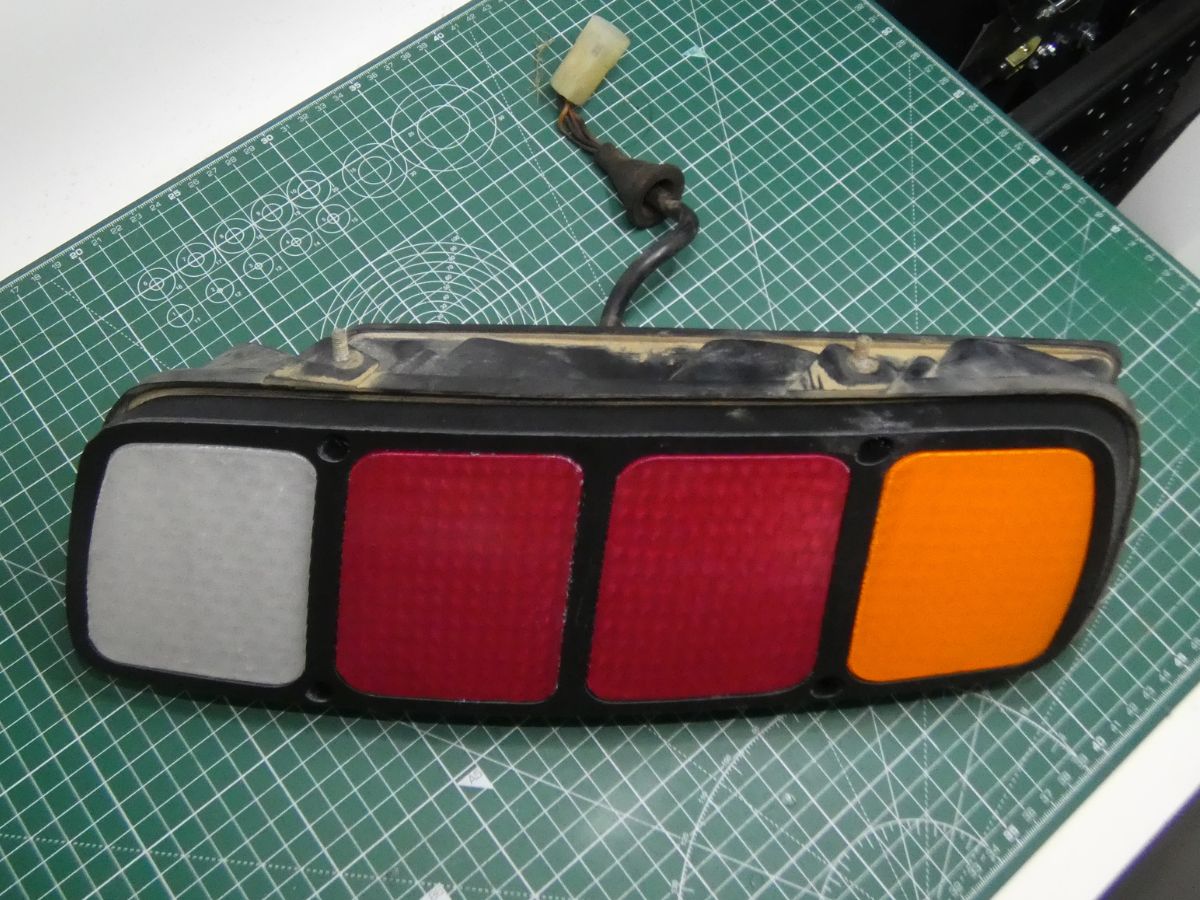
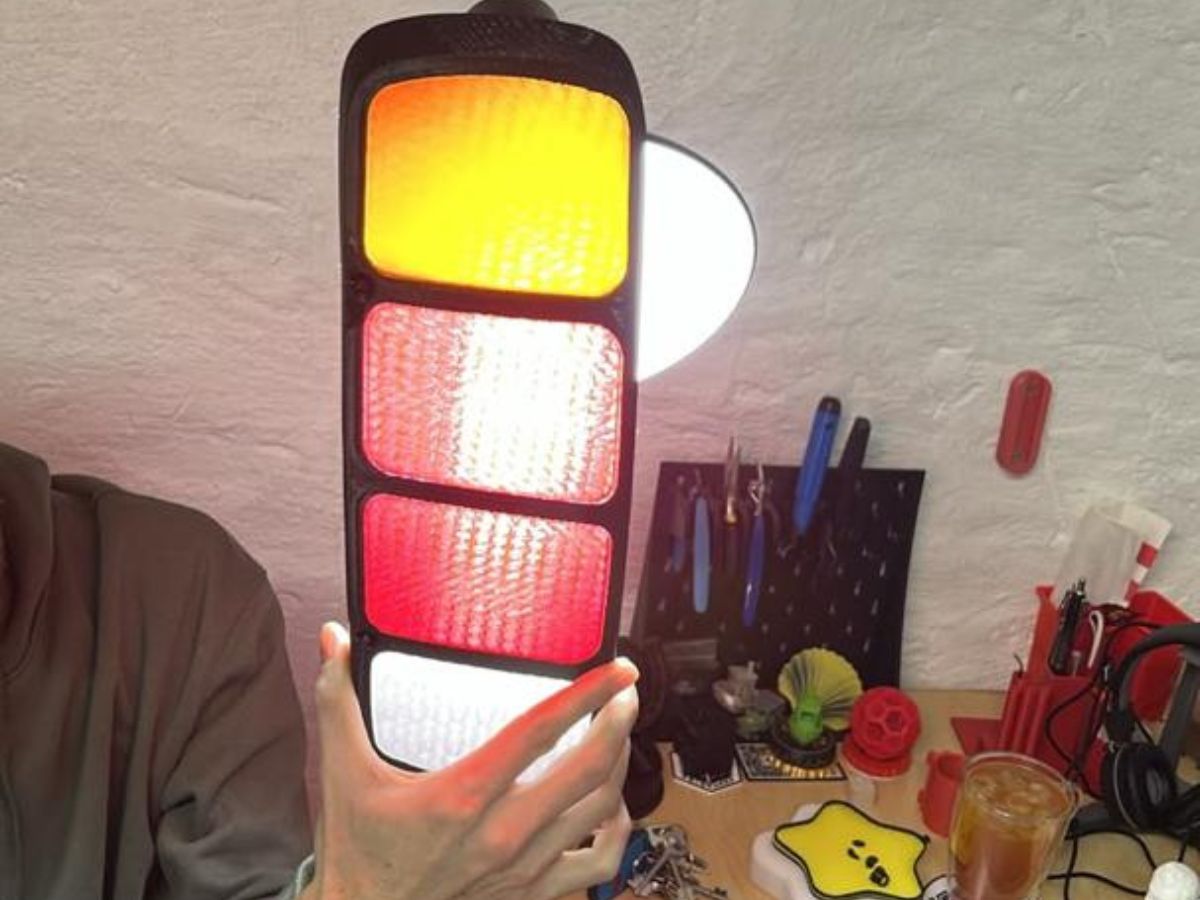
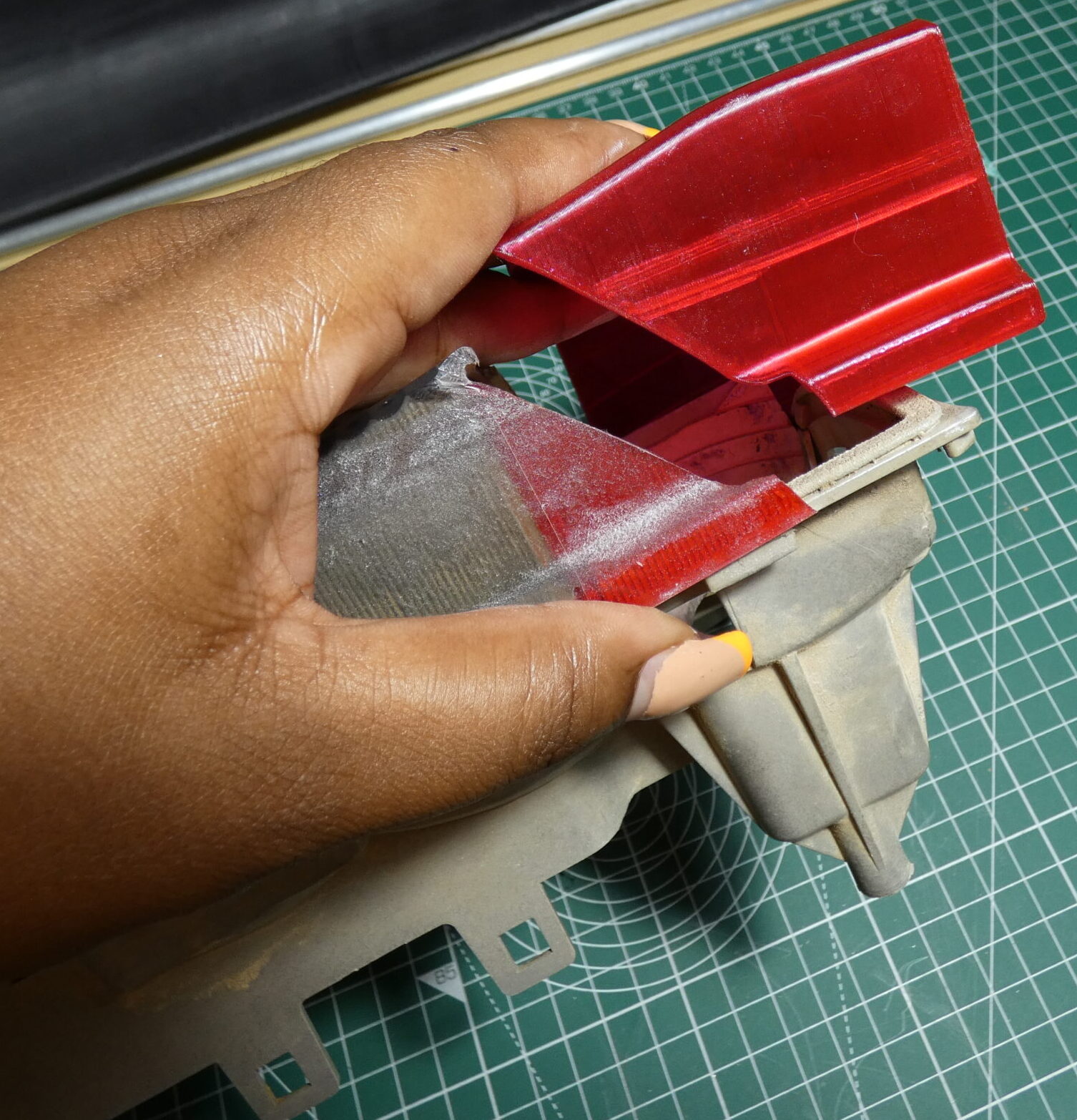
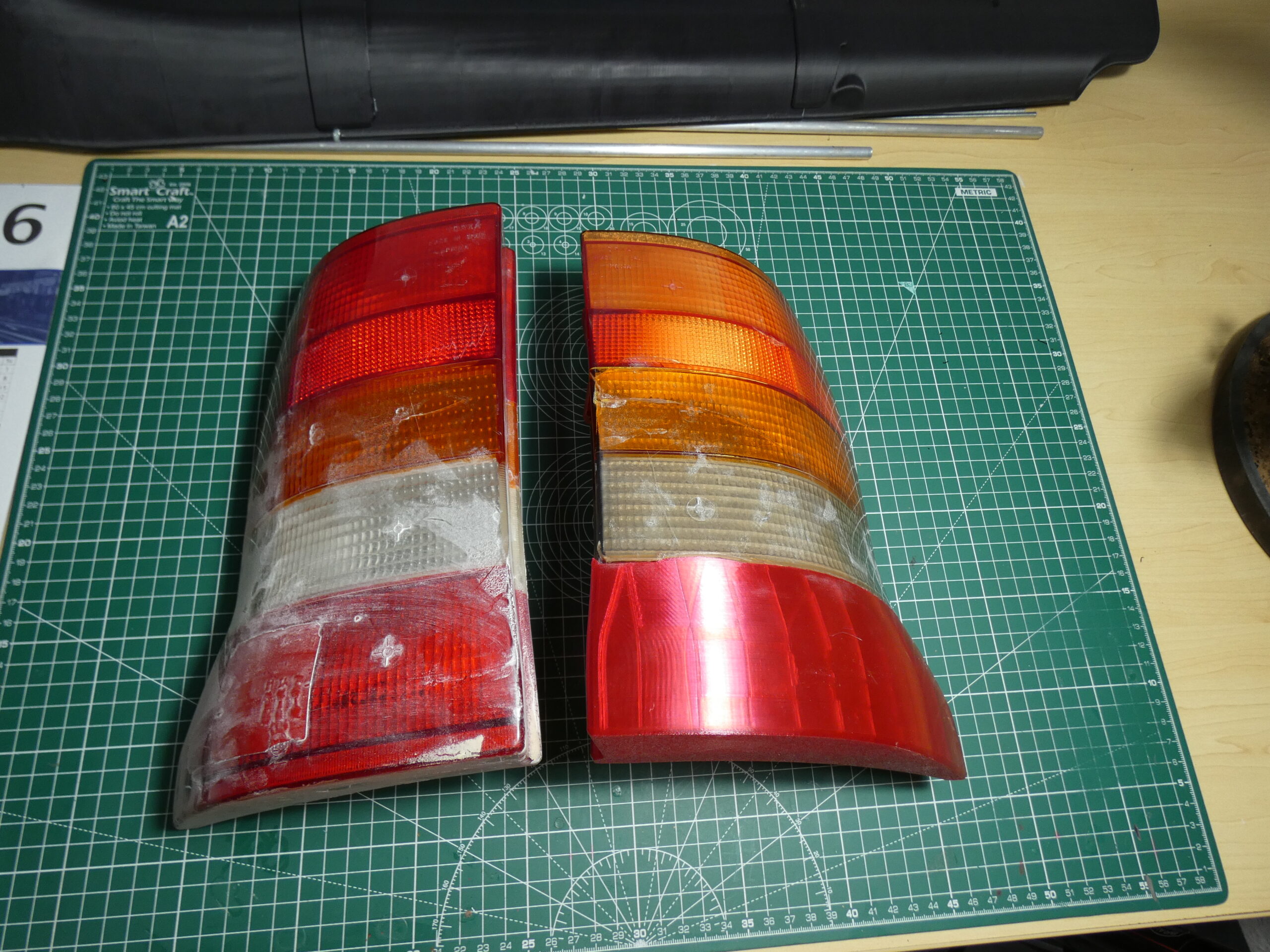
PH3D recreated a Porsche 928 rear light lens for Caddy Carriers using the intact opposite-side lens as a reference. We captured its geometry using SHINING 3D scanning technology, mirrored the design and adapted it for 3D printing.
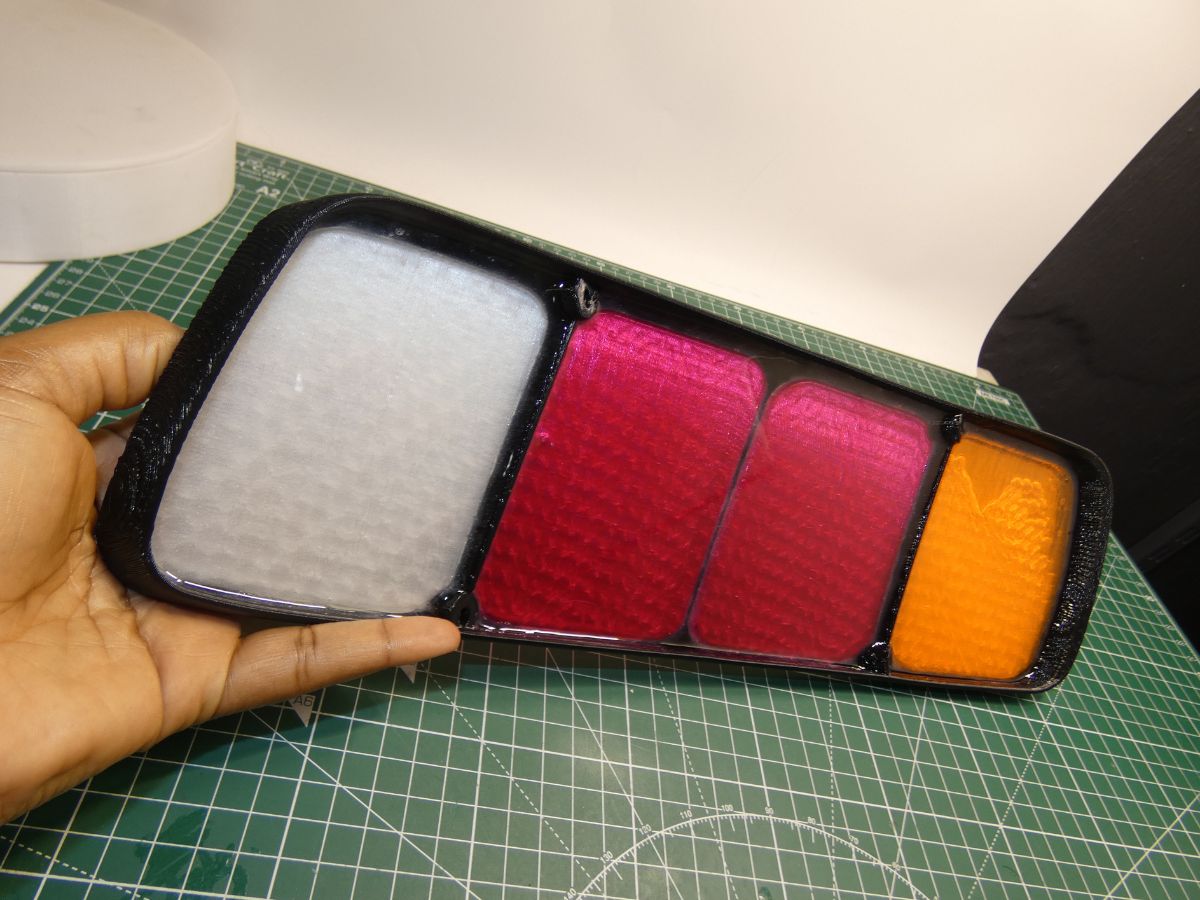
The assembly comprised separate red, orange and white lens sections within a printed black frame. Stepped edges on the lens sections seated into matching pockets in the frame, allowing the components to be assembled and bonded.
Captured the original lens geometry using SHINING 3D scanning technology.
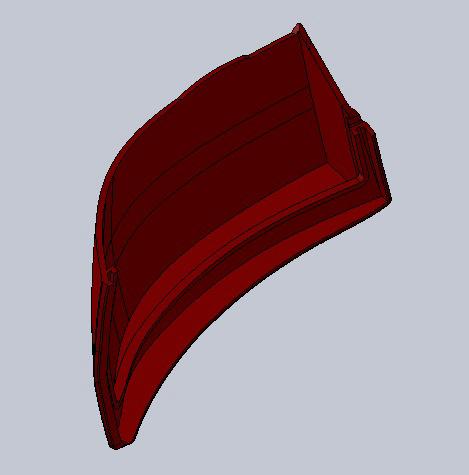
Mirrored the reference geometry to recreate the opposite side.
Adapted the design into separately printable lens sections and a black frame.
Bonded the contact areas with epoxy, then sealed the inside with UV-stable clear epoxy.
Caddy Carriers was happy with the completed replacement. The project demonstrated an approach to recreating difficult-to-source automotive components, while highlighting opportunities to improve the surface finish and production process.
Client: Private Client
Industry: Automotive
Service: Reverse Engineering • CAD Reconstruction • Additive Manufacturing • Legacy Component Repair
Printhoek 3D was commissioned to restore a discontinued tail light housing after the outer corner of the original component fractured.
The failure was not cosmetic. The damaged section compromised mounting stability, alignment, and the way the housing sat within the vehicle assembly. Because the replacement part was no longer available, replacing the full unit was not a practical option.
PH3D assessed the damaged housing, isolated the failed section, and measured it against the remaining intact geometry. The missing structure was then rebuilt digitally to match the original curvature, mounting interfaces, and load-bearing surfaces.
Instead of replacing the entire housing, only the failed section was reconstructed, printed, and integrated back into the existing component. The objective was to restore structural integrity and alignment so the assembly could function as intended.
This project shows how reverse engineering can support legacy automotive repair when replacement parts are no longer available.
By rebuilding only the damaged section, Printhoek 3D helped restore the function and alignment of the original tail light housing without forcing a full-system replacement.
Client: Ricky’s Custom Cars
Industry: Automotive Customization & Performance Design
Service: 3D Scanning • Product Design • Additive Manufacturing
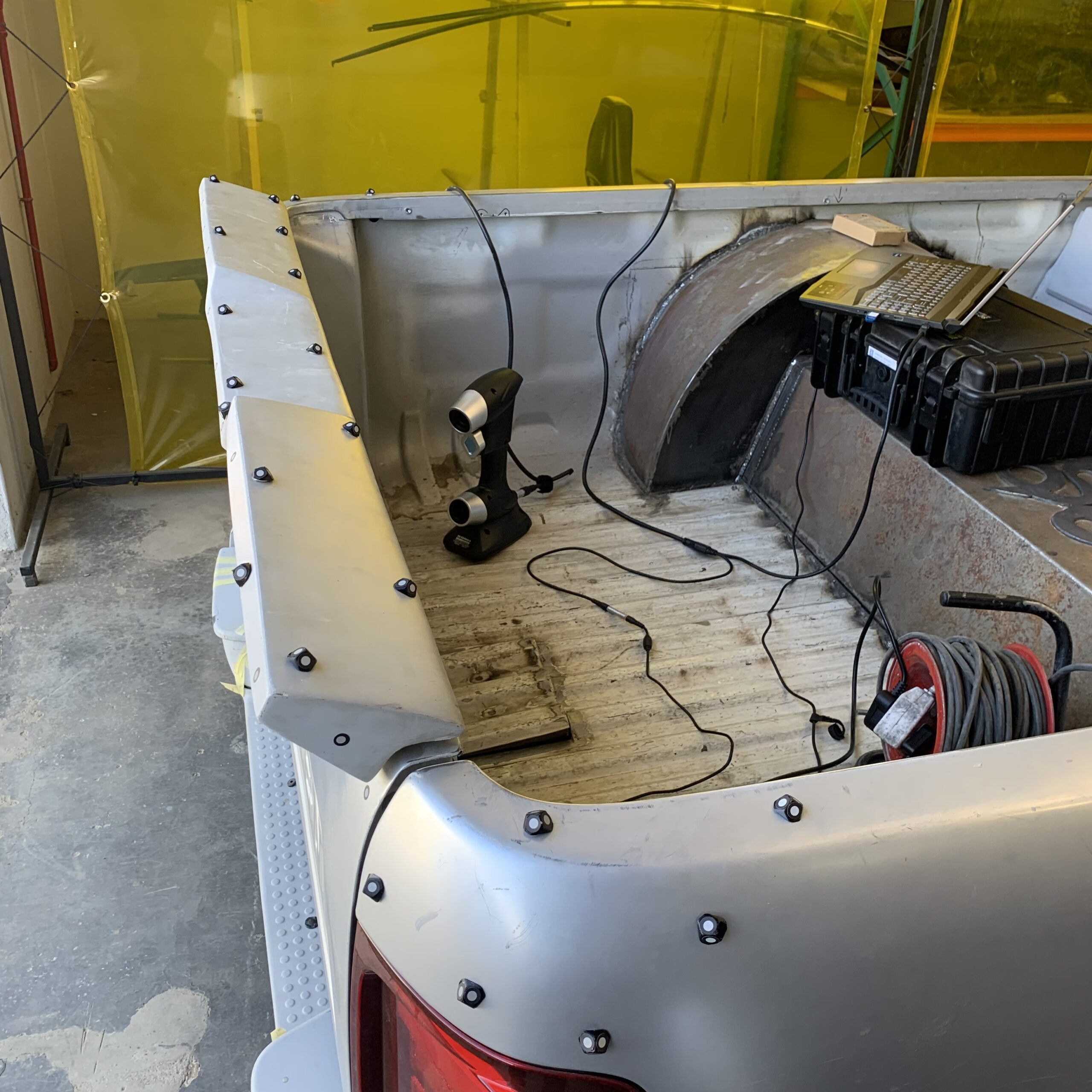
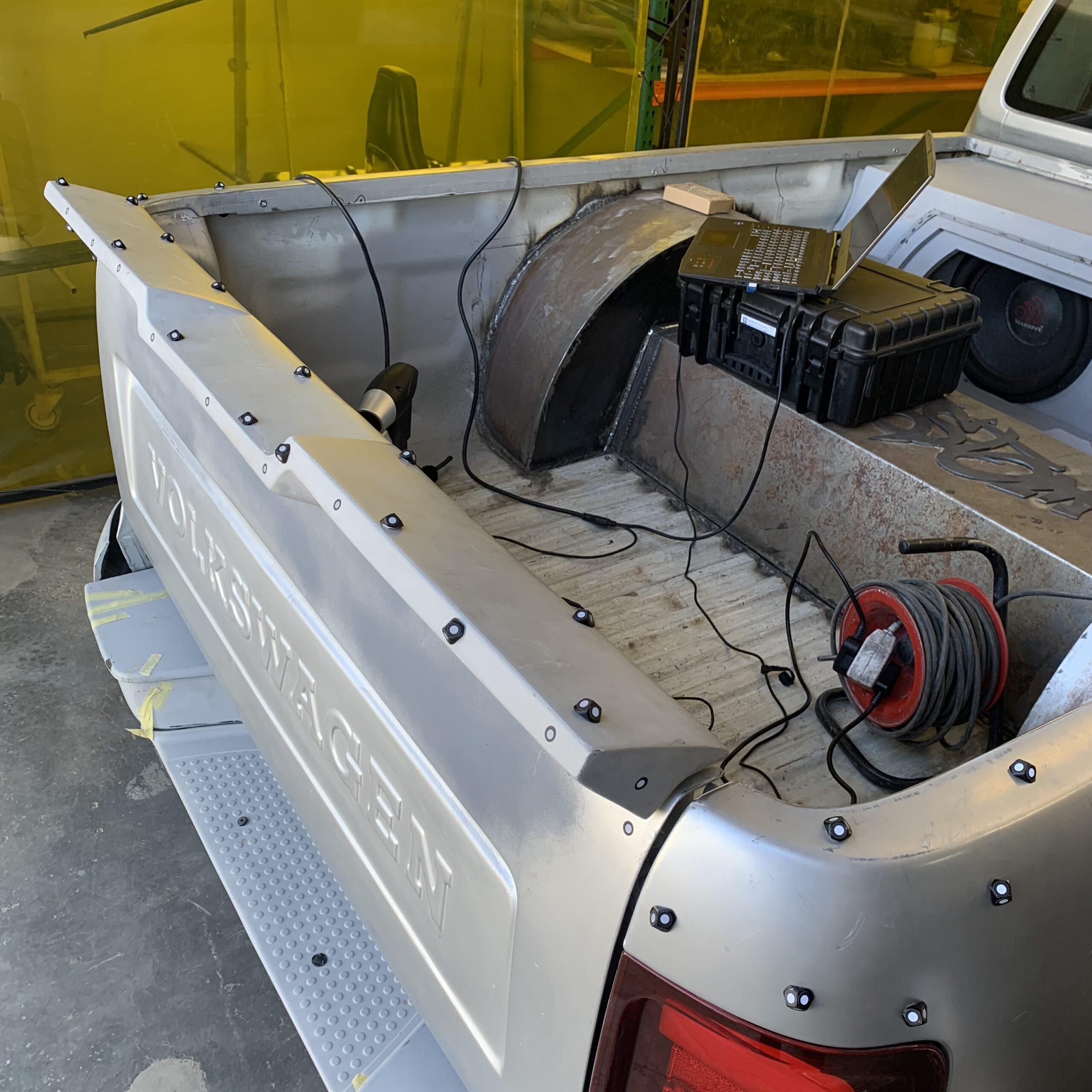
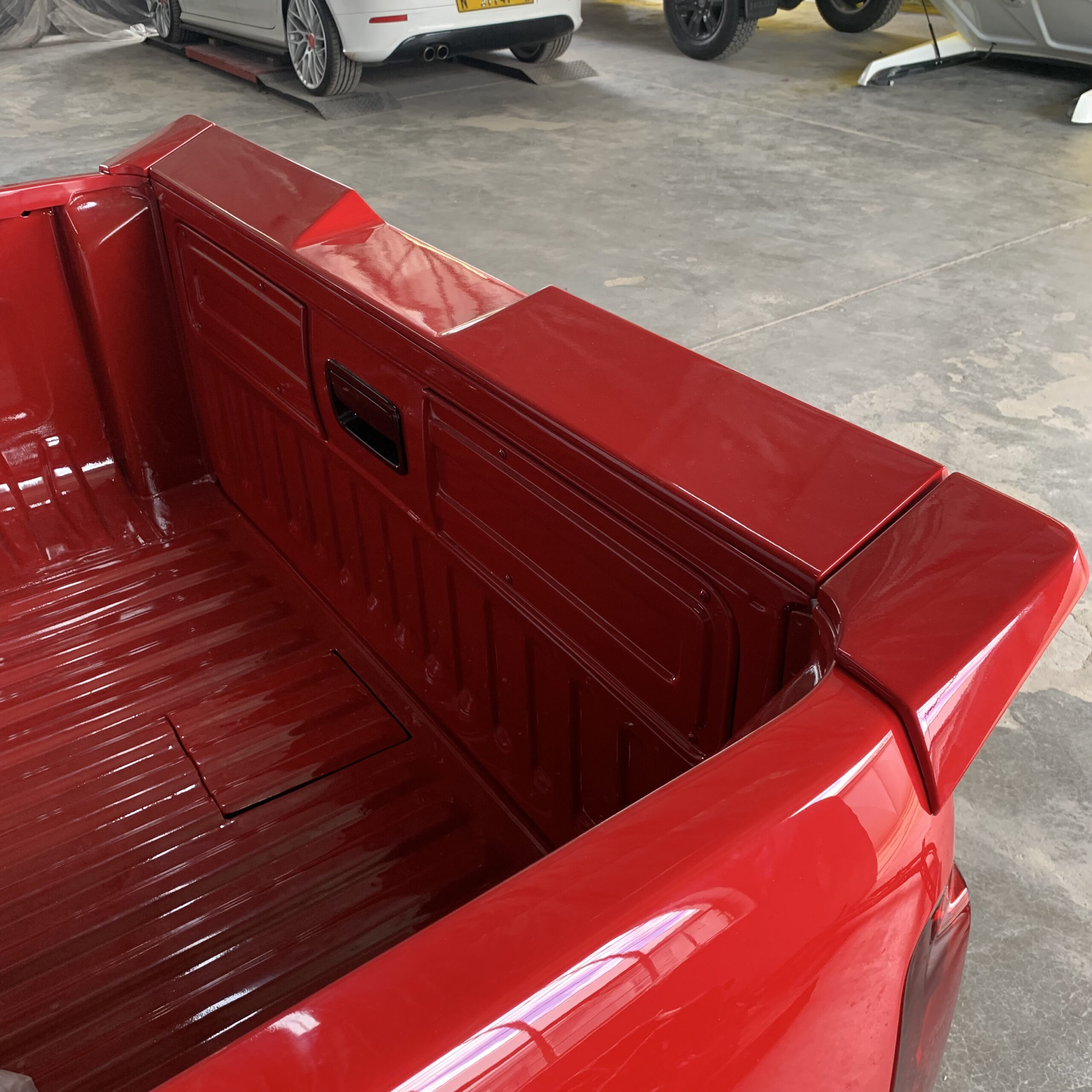
In collaboration with Ricky’s Custom Cars, Printhoek 3D developed a custom spoiler for a modified Volkswagen Amarok, nicknamed the “Airmarok” for its air-lift adjustable suspension system.
The project aimed to blend performance styling with precision engineering, resulting in a feature piece that ultimately helped the vehicle win “Best Car Amarok VW Division.”
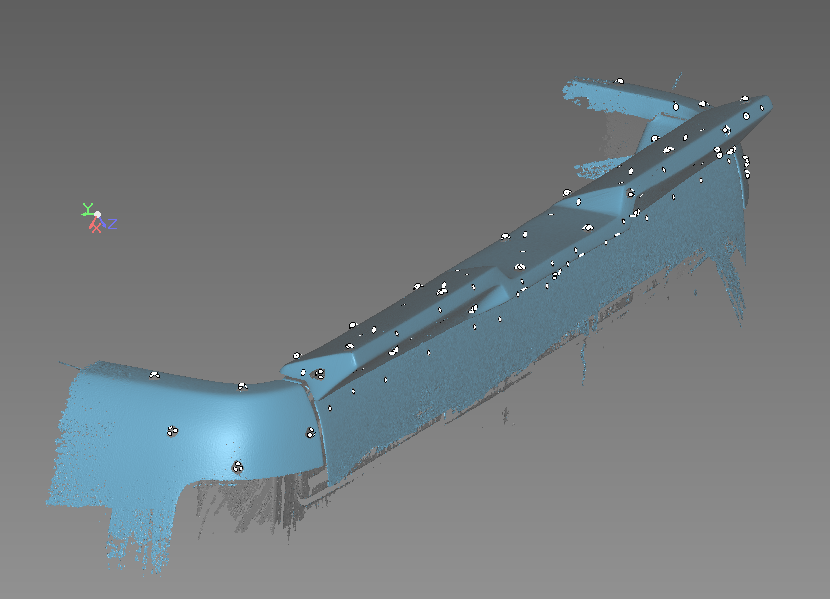
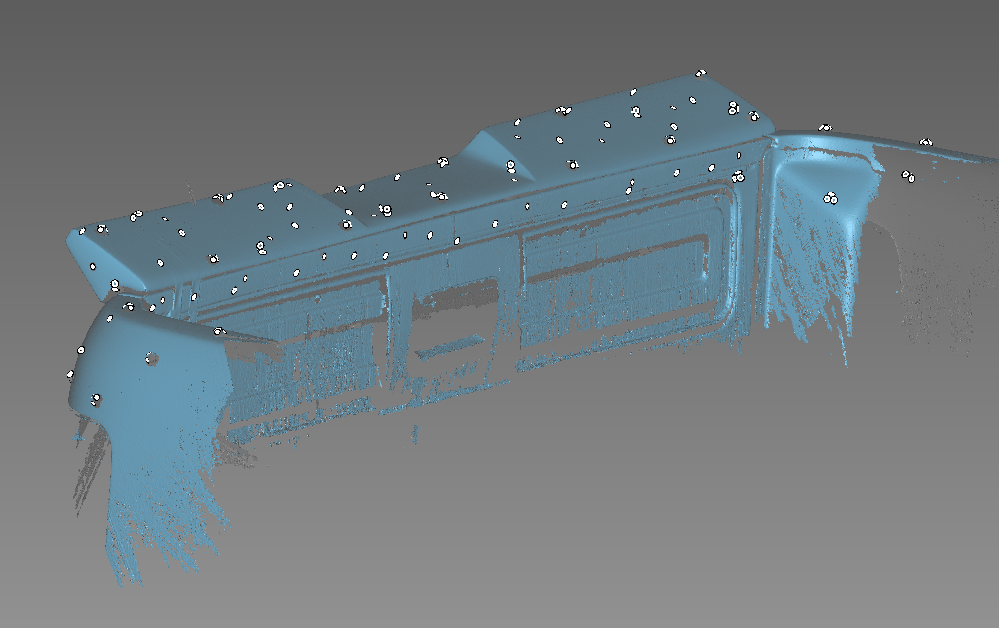
Working from a combination of client-supplied reference images and an initial handmade mock-up, our team conducted an on-site 3D scan of the Amarok’s rear section to capture exact dimensions and curvature. Using that data, we designed and fabricated a custom aerodynamic spoiler that seamlessly fit the vehicle’s profile while maintaining the aesthetic intent of the owner’s concept.
Full 3D scanning of Amarok rear body for precision fitment
Custom aerodynamic design derived from visual references and mock-ups
Enhanced aesthetics and performance appearance
Result: Award-winning build at VW Amarok Division competition
This project reflects Printhoek 3D’s role in automotive innovation, merging creativity with precision engineering.
By transforming conceptual ideas into tangible, performance-inspired components, we helped Ricky’s Custom Cars push the boundaries of automotive customization and drive home with a show-winning build.
Client: Private Client
Industry: Automotive
Service: 3D Scanning • Reverse Engineering • CAD Design • 3D Printing
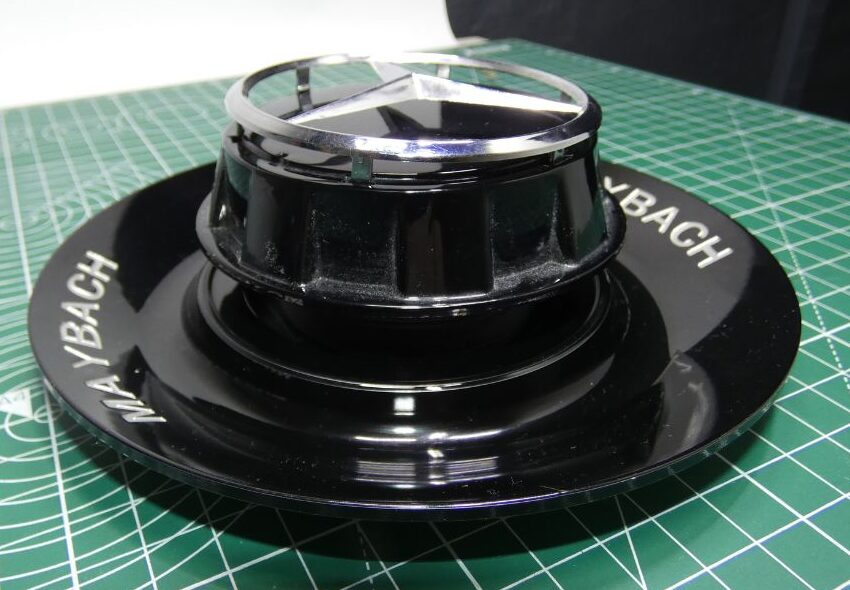
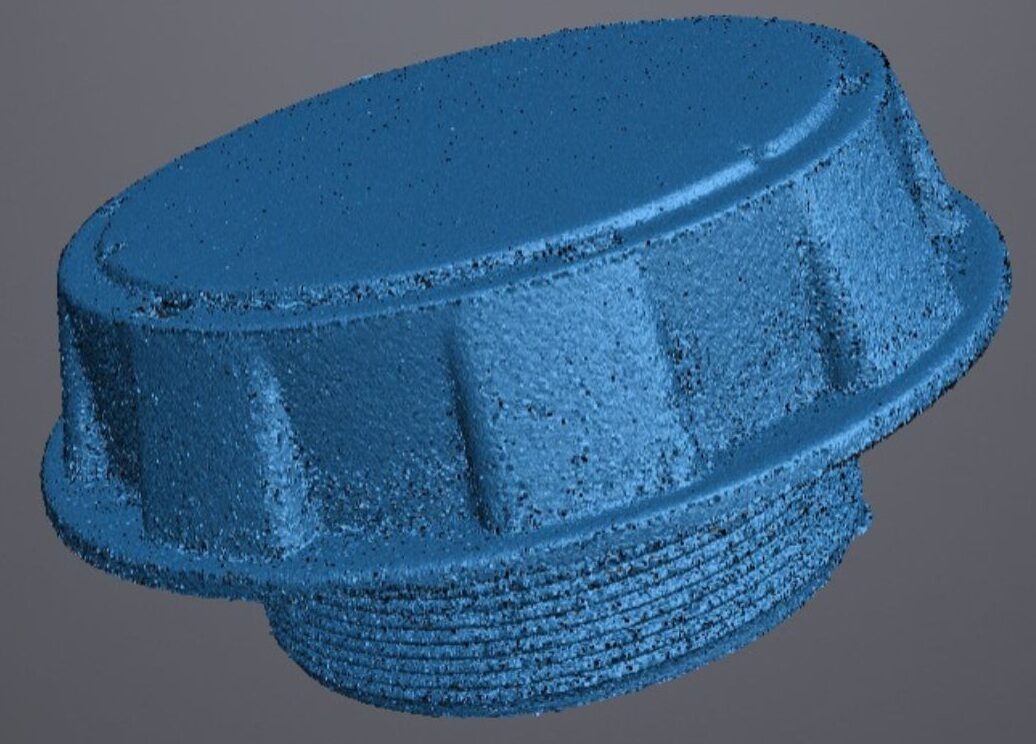
After the Maybach hubcaps supplied with a client’s custom Mercedes rims were stolen, Printhoek3D was asked to recreate the missing components.
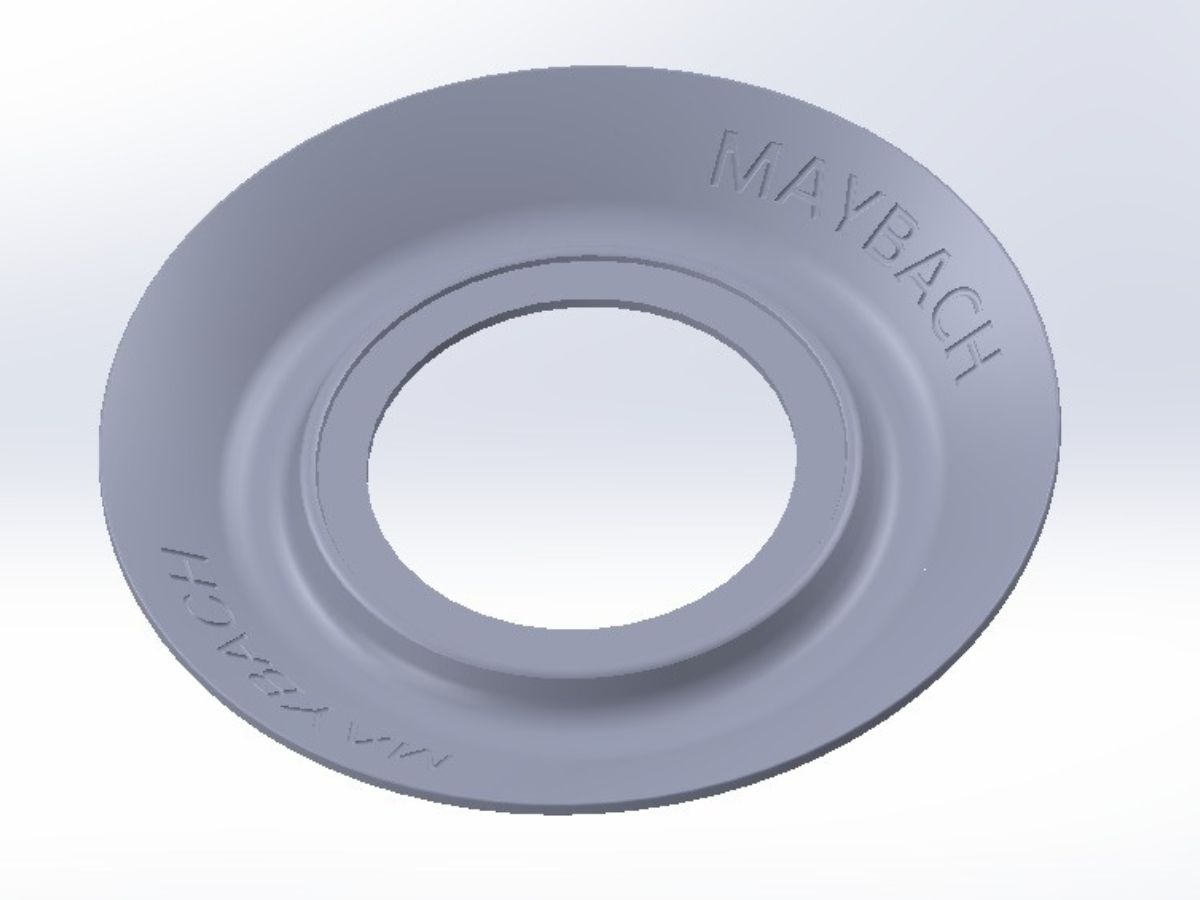
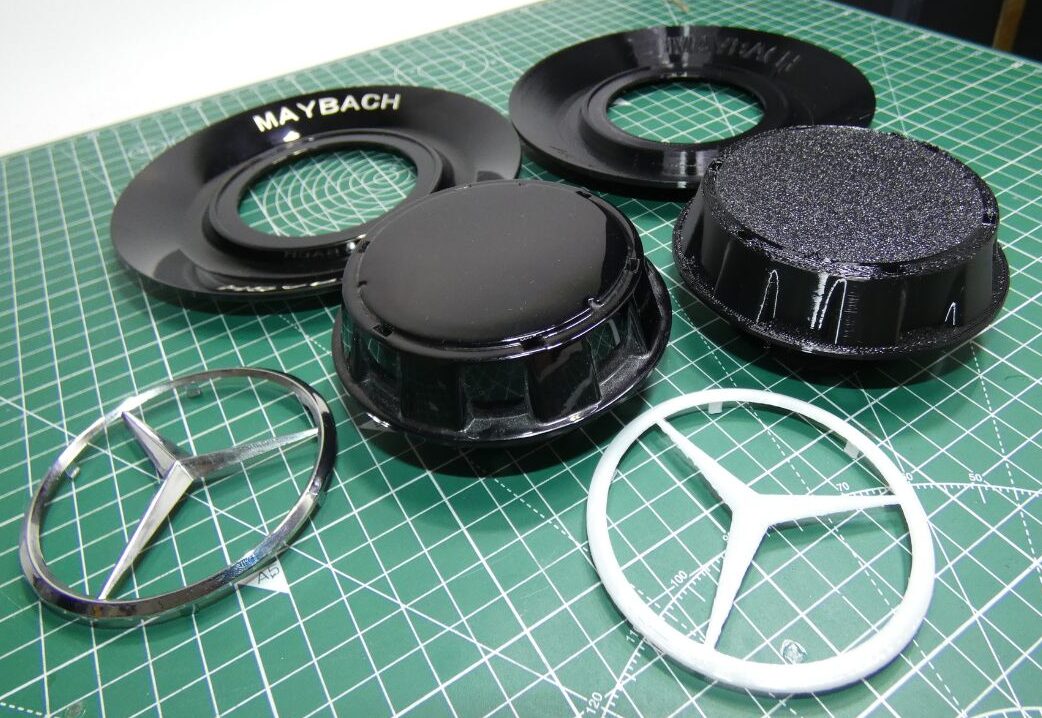
Using a Shining 3D scanner, we captured the reference components and used the scan data to reconstruct the complete hubcap assembly in CAD. This included the Maybach outer ring, Mercedes star emblem and central base, with the lettering recreated during the design process.
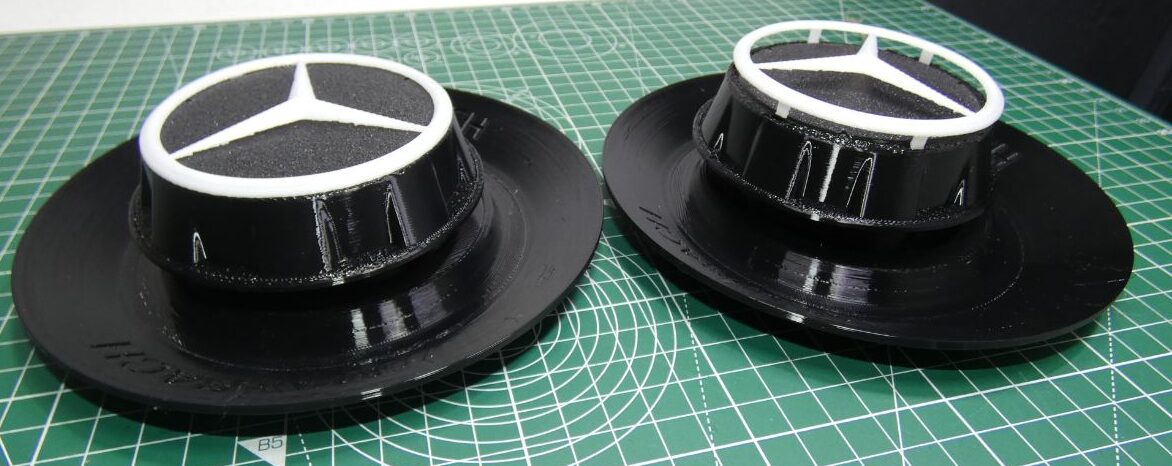
We manufactured four complete replacements in PETG: two to replace the missing hubcaps and two spares. The completed parts fitted correctly, and the digital designs were retained for future production.
Scanned reference components to capture the hubcap geometry.
Reverse engineered all three components: outer ring, star emblem and central base.
Recreated the lettering as part of the CAD design.
Produced four complete PETG replacements, including two spares.
Retained the digital models for repeat manufacture.
The client received locally manufactured replacements that fitted the existing rims, along with spares for future use. With the design work complete and the digital files retained, additional hubcaps can be printed on demand if any are lost, damaged or stolen, without repeating the scanning and reverse engineering process.
Client: Private Collector
Industry: Automotive Restoration
Service: Reverse Engineering • 3D Scanning • Digital Archiving
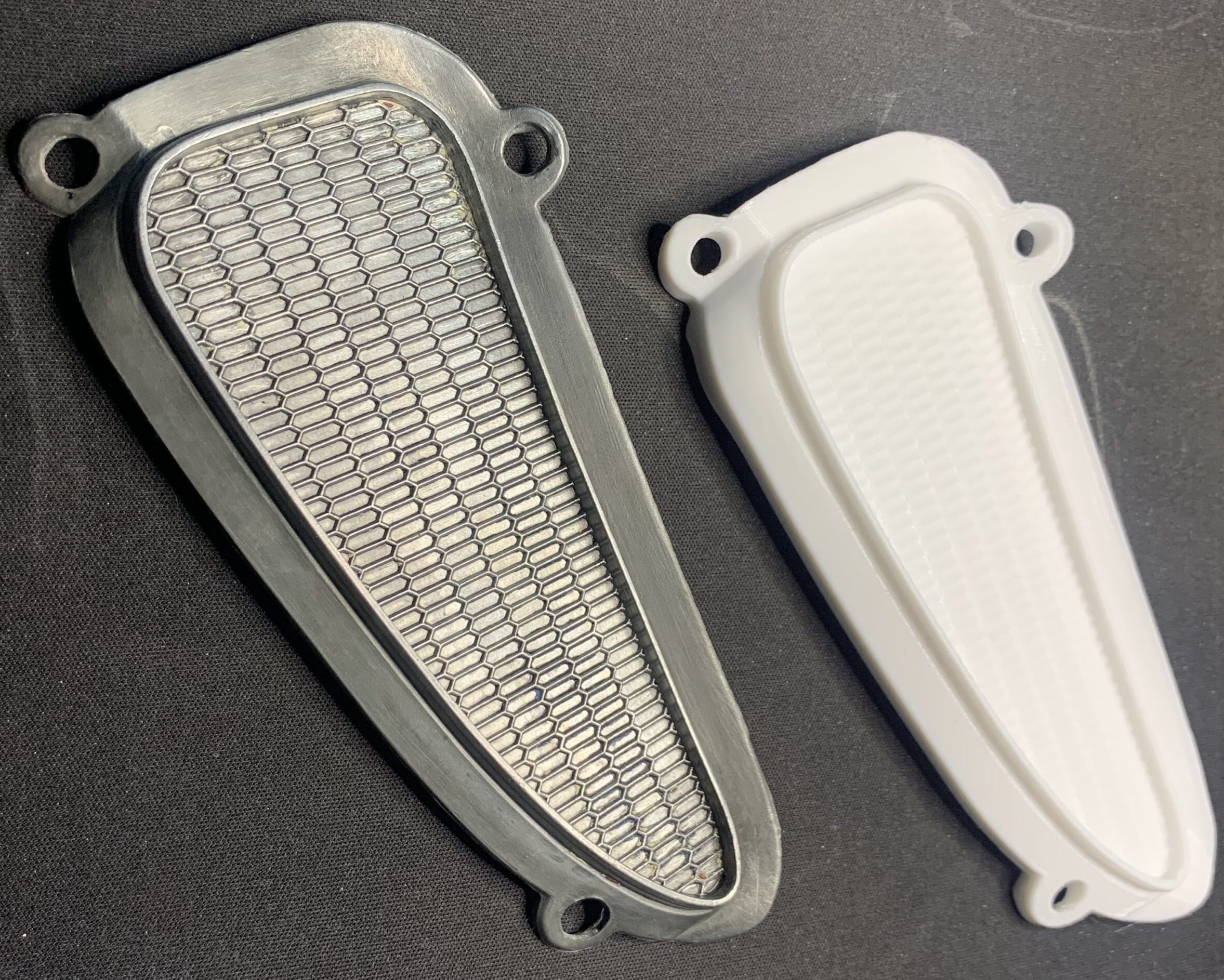
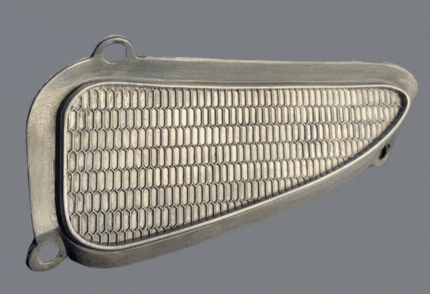
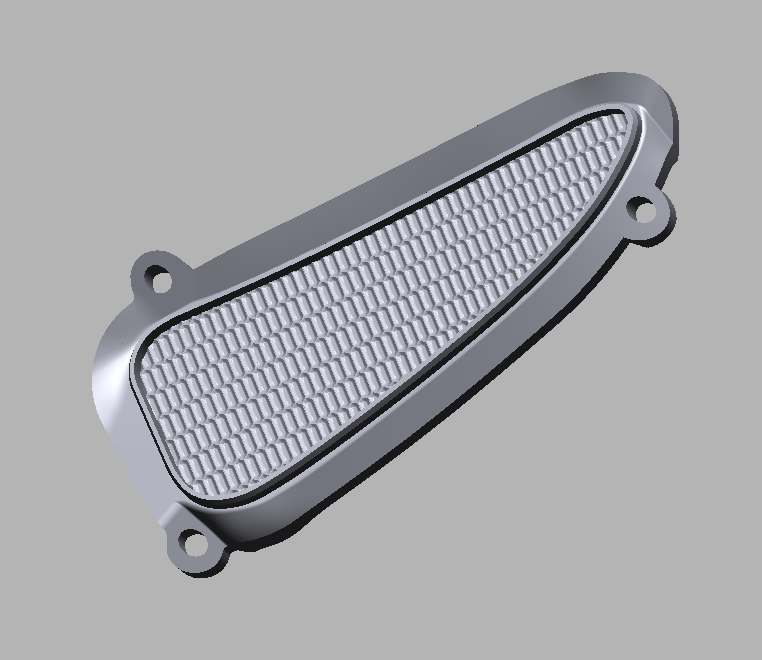
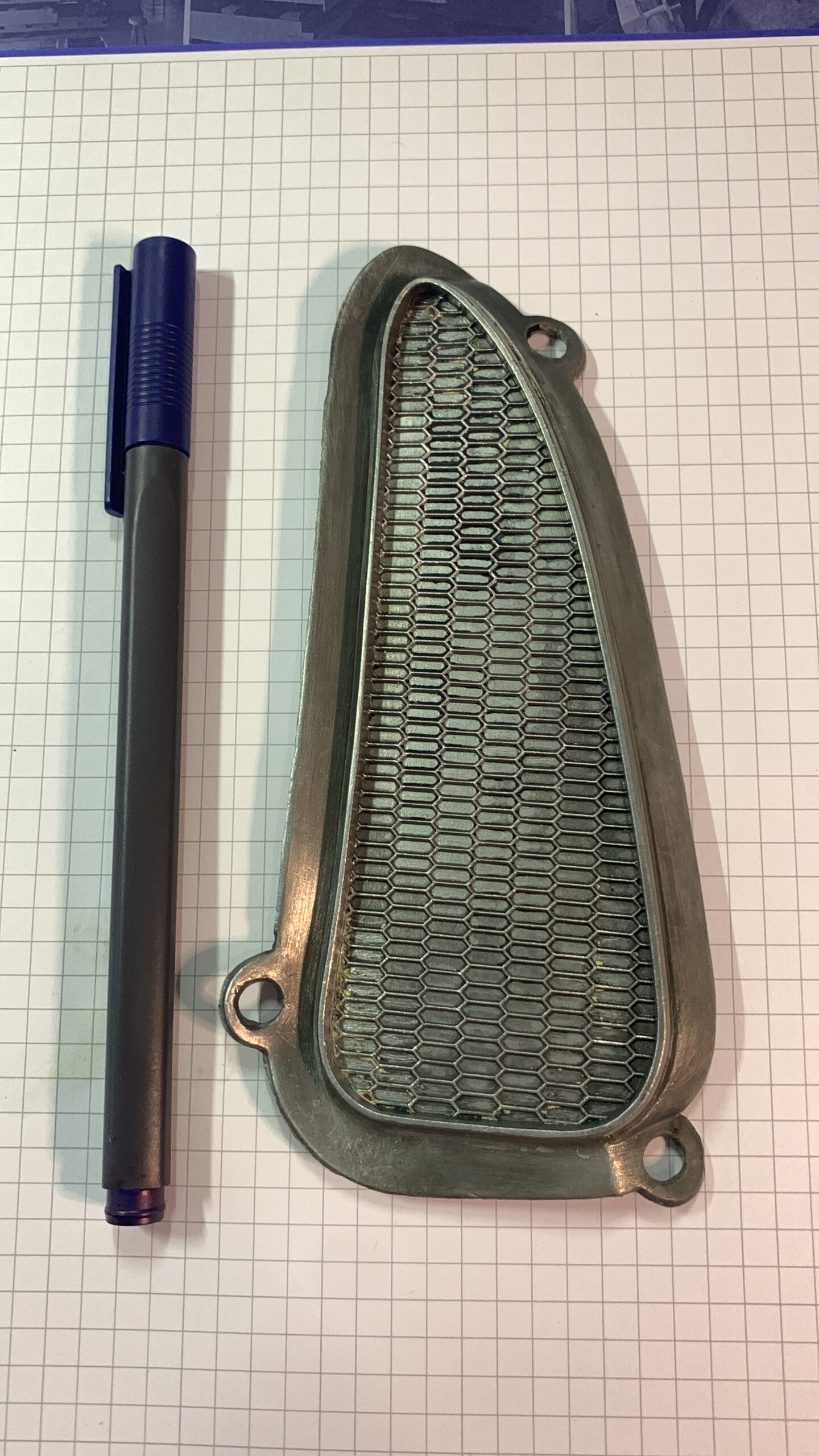
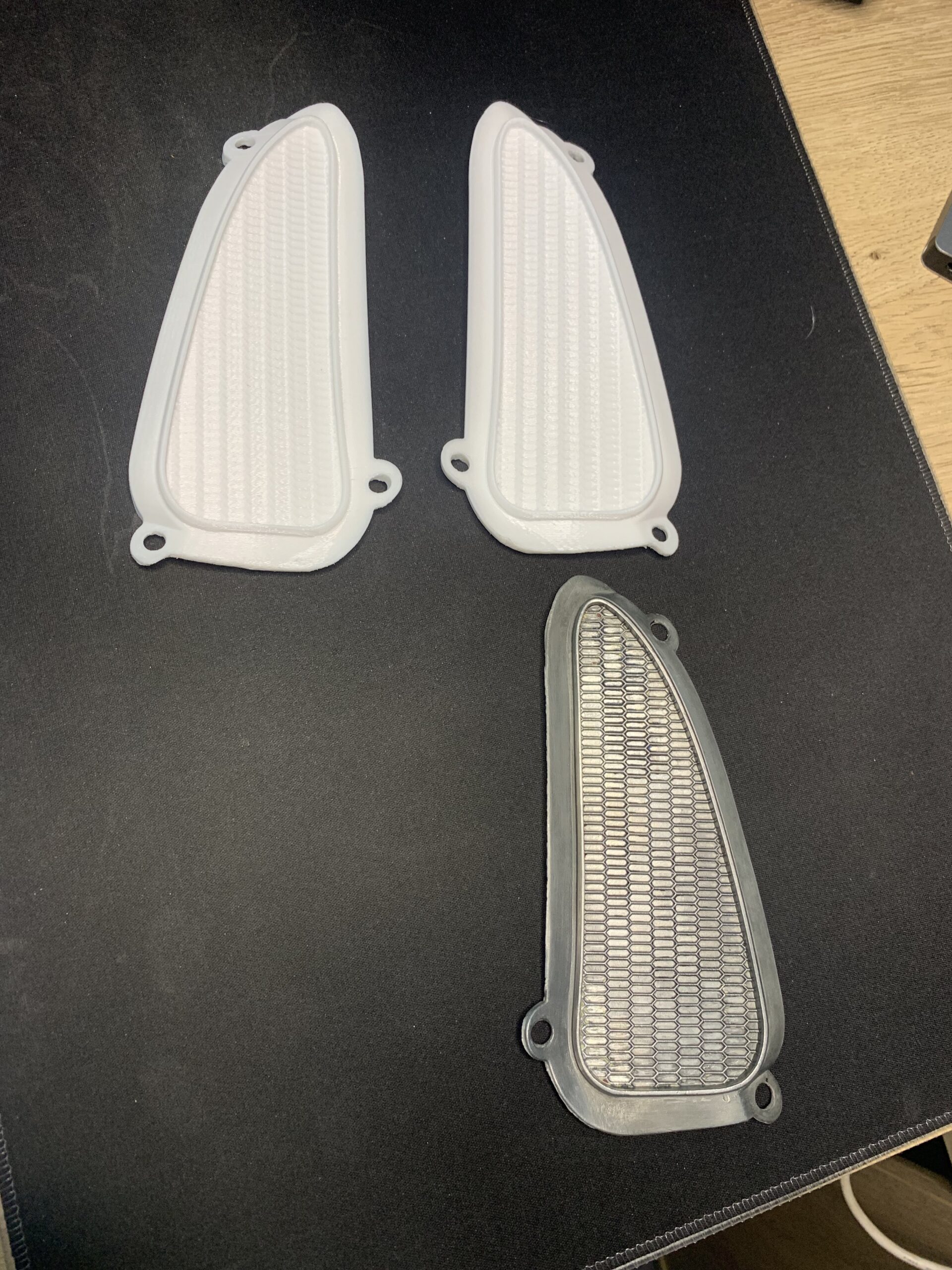
Printhoek 3D was tasked with recreating a classic Mustang A-Side Scoop a part that’s no longer in production and virtually unobtainable in Namibia. Using reverse engineering techniques, our team scanned and digitally reconstructed the existing side scoop to reproduce its mirror image and restore the vehicle’s complete symmetry.
This approach eliminates the need for lengthy international sourcing, allowing restorers and collectors to reproduce discontinued components locally, accurately, and on demand.
3D Scanning & Reverse Engineering of the original scoop
Digital Mirroring to recreate the missing opposite side
High-precision 3D Printing for prototype and final fitment
On-Demand Reproduction through a secure digital parts library
This project highlights how digital manufacturing empowers local car restorers to preserve automotive heritage. By converting physical parts into reusable 3D data, clients can now maintain their own digital component libraries, ensuring future accessibility without storage or import delays.
Client: Private Client
Industry: Automotive
Service: Reverse Engineering • CAD Reconstruction • Additive Manufacturing • Replacement Part Manufacturing
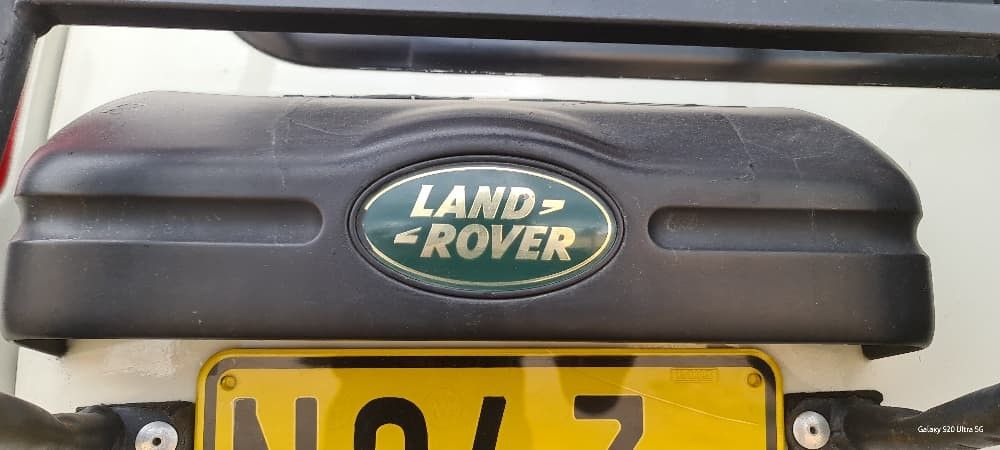
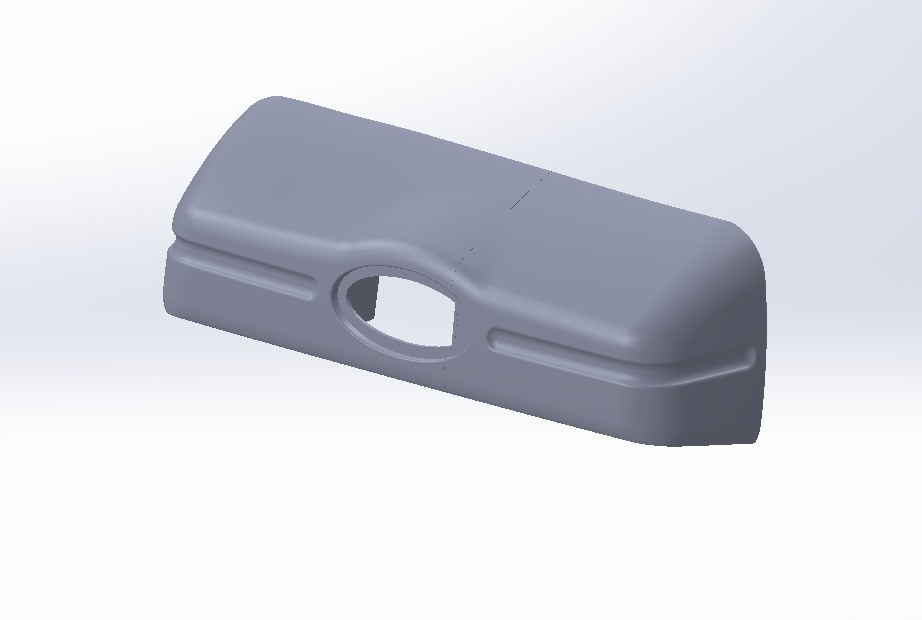
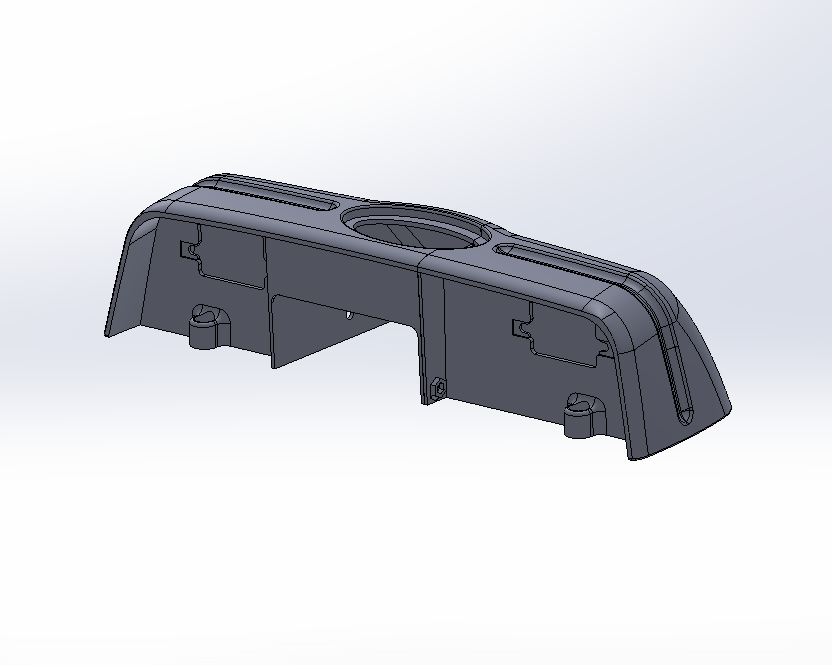
Printhoek 3D was commissioned to recreate a tailgate handle cover for a Land Rover Discovery 2 after the original exterior component became damaged or difficult to source.
The part needed to do more than match the general appearance of the original cover. It had to fit the existing tailgate area, align with the surrounding trim, and maintain the required clearance around the handle mechanism.
PH3D worked from the available reference geometry, rebuilt the part in CAD, and manufactured a replacement using additive manufacturing. The design process focused on fitment, mounting compatibility, surface profile, and integration with the existing vehicle bodywork.
The final part gave the client a local replacement option for an exterior vehicle component that would otherwise be difficult to replace through normal spare-part channels.
This project shows how reverse engineering can support older vehicles where small exterior parts are unavailable, damaged, or impractical to import.
By recreating the Discovery 2 tailgate handle cover locally, Printhoek 3D helped the client restore the vehicle component without replacing a larger assembly or relying on uncertain spare-part availability.
Client: Ricky’s Custom Cars
Industry: Automotive Customization & Restoration
Service: 3D Scanning • Product Design • Custom Part Fabrication
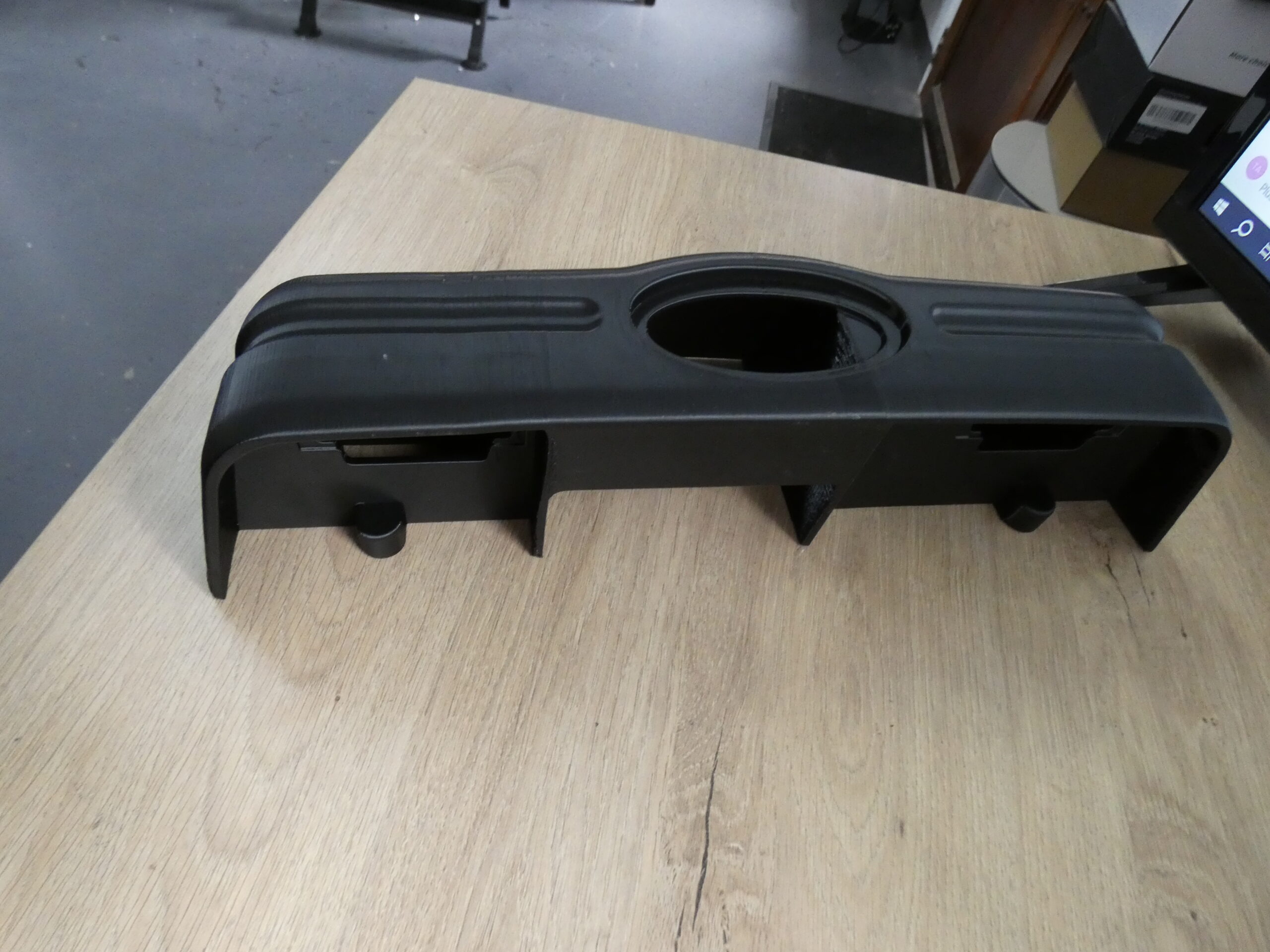
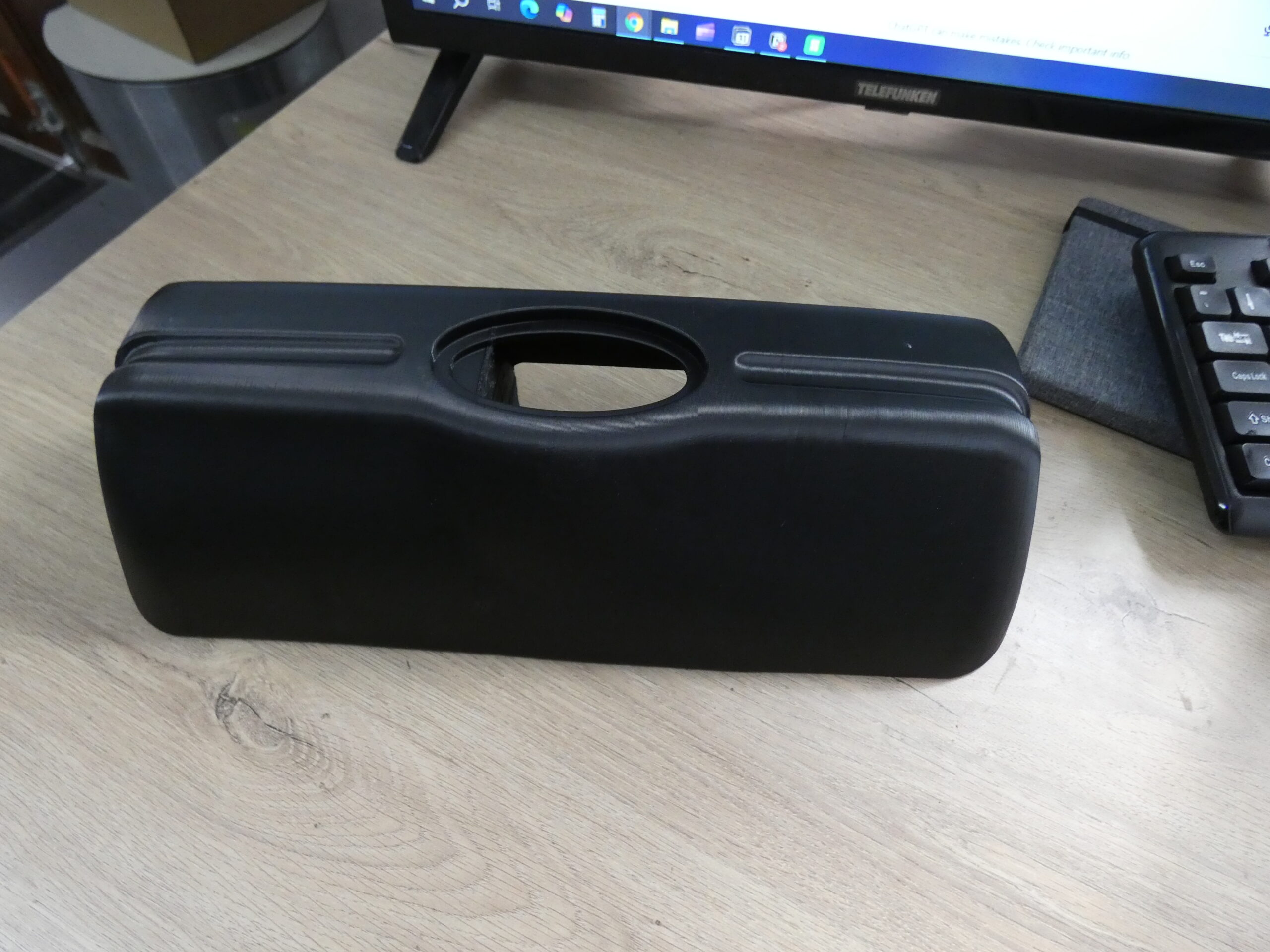
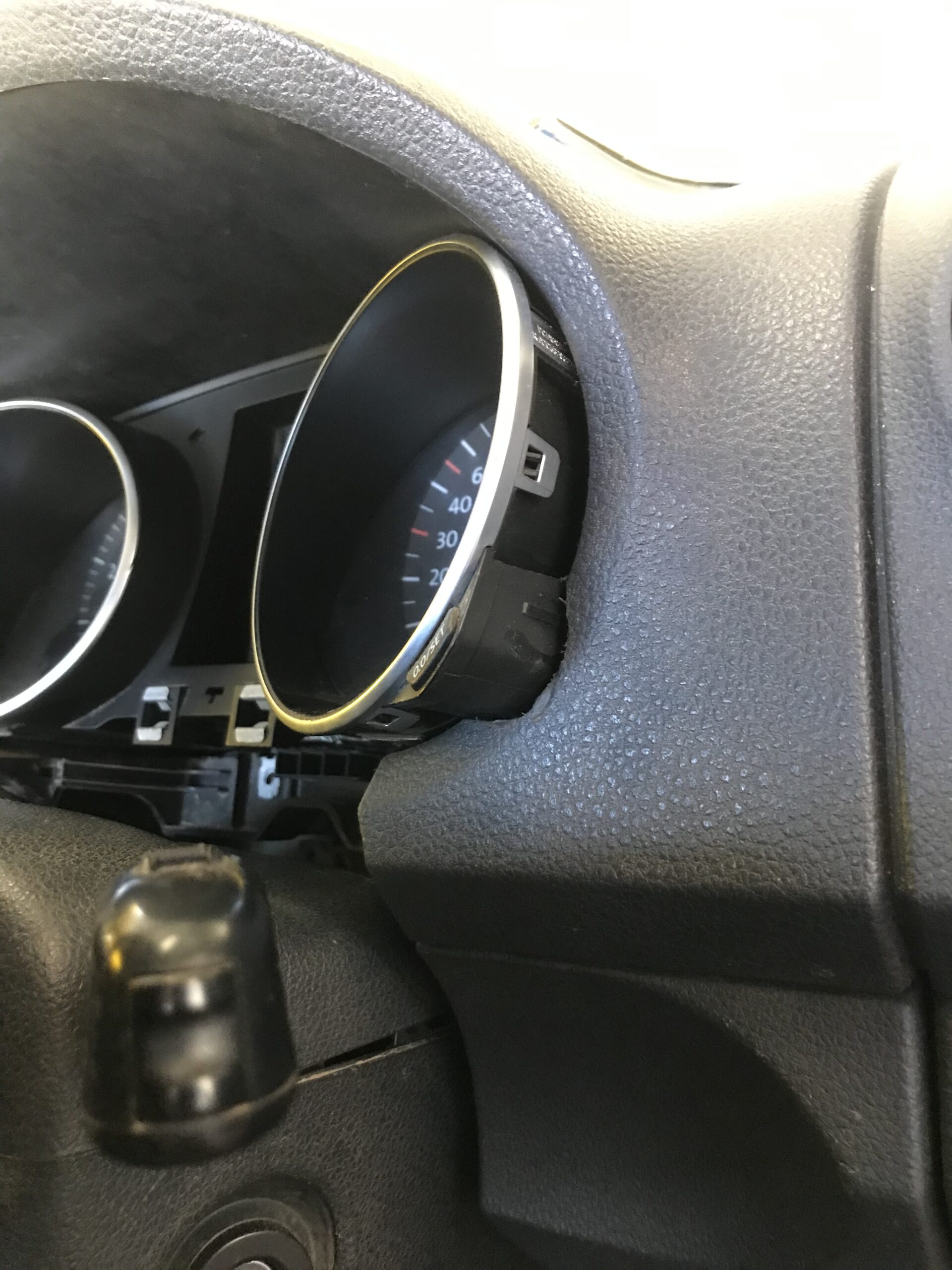
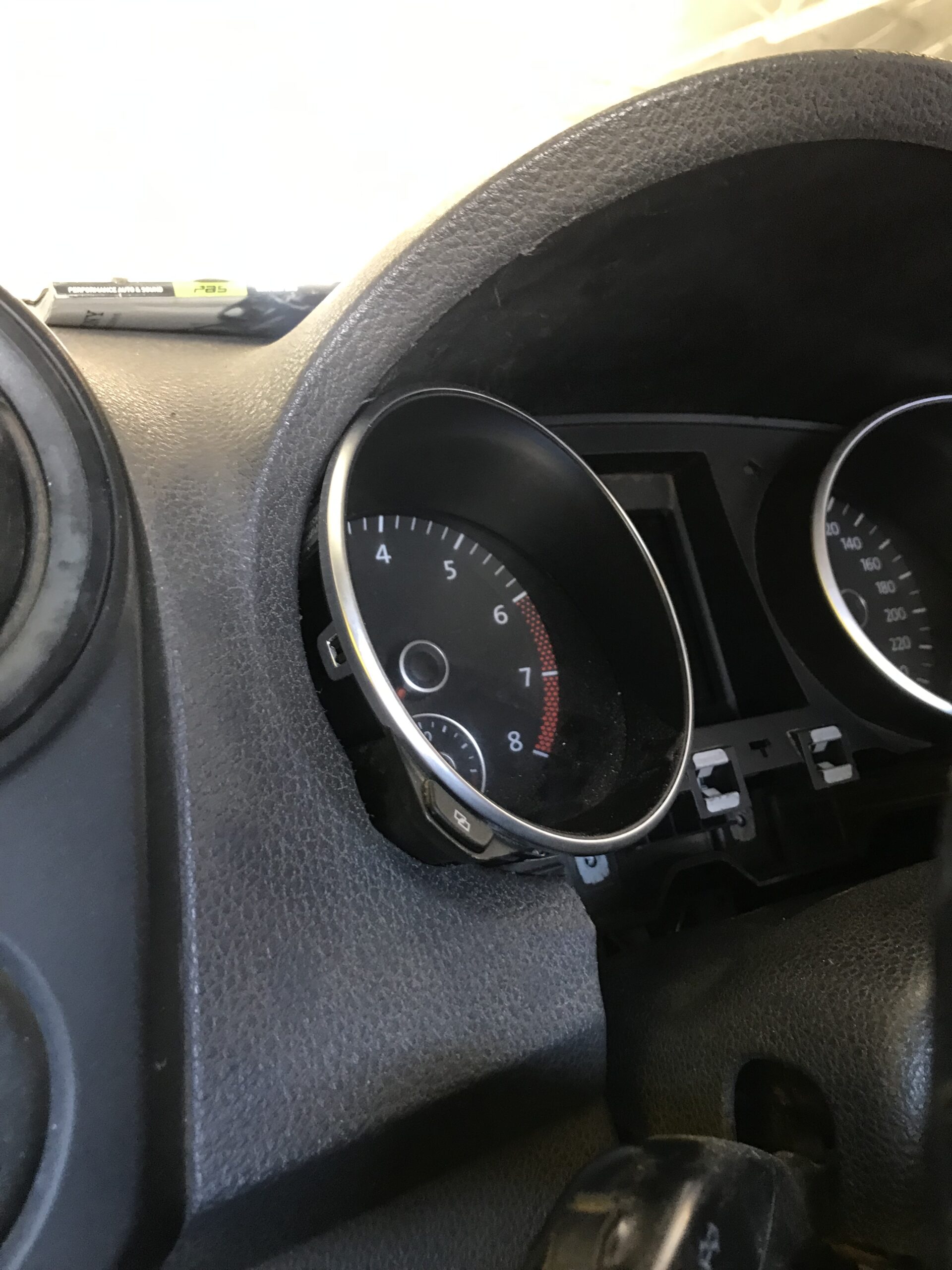
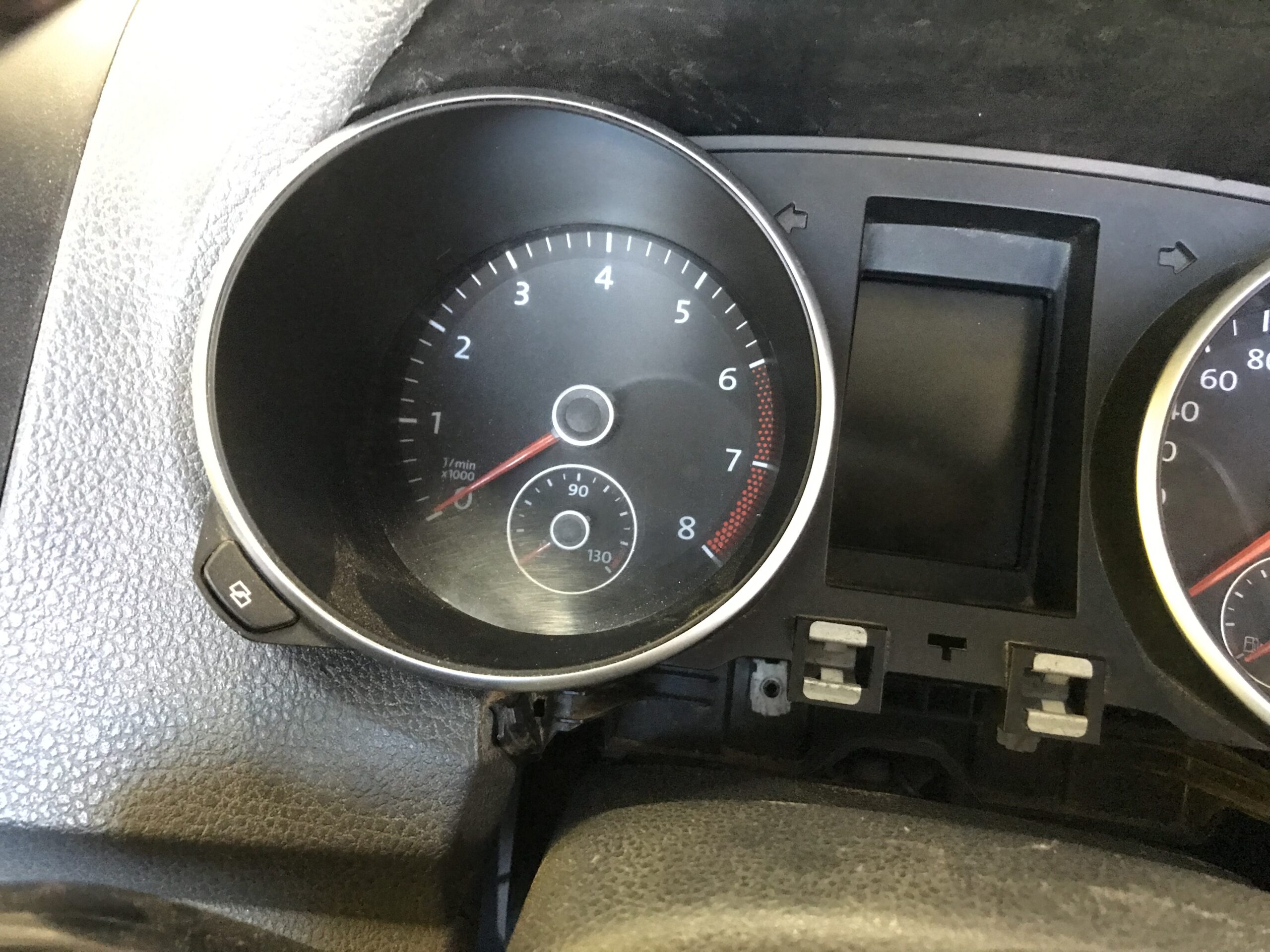
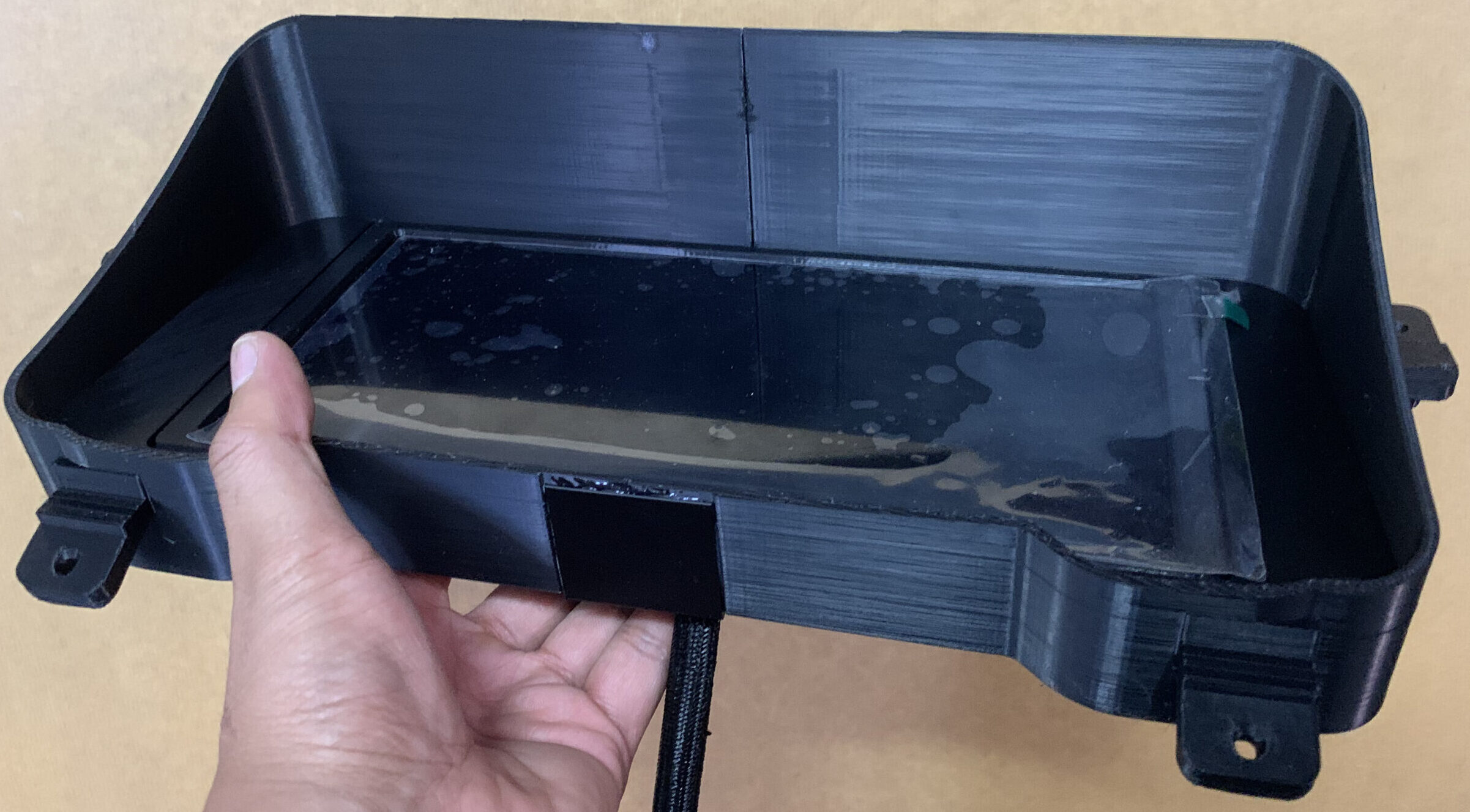
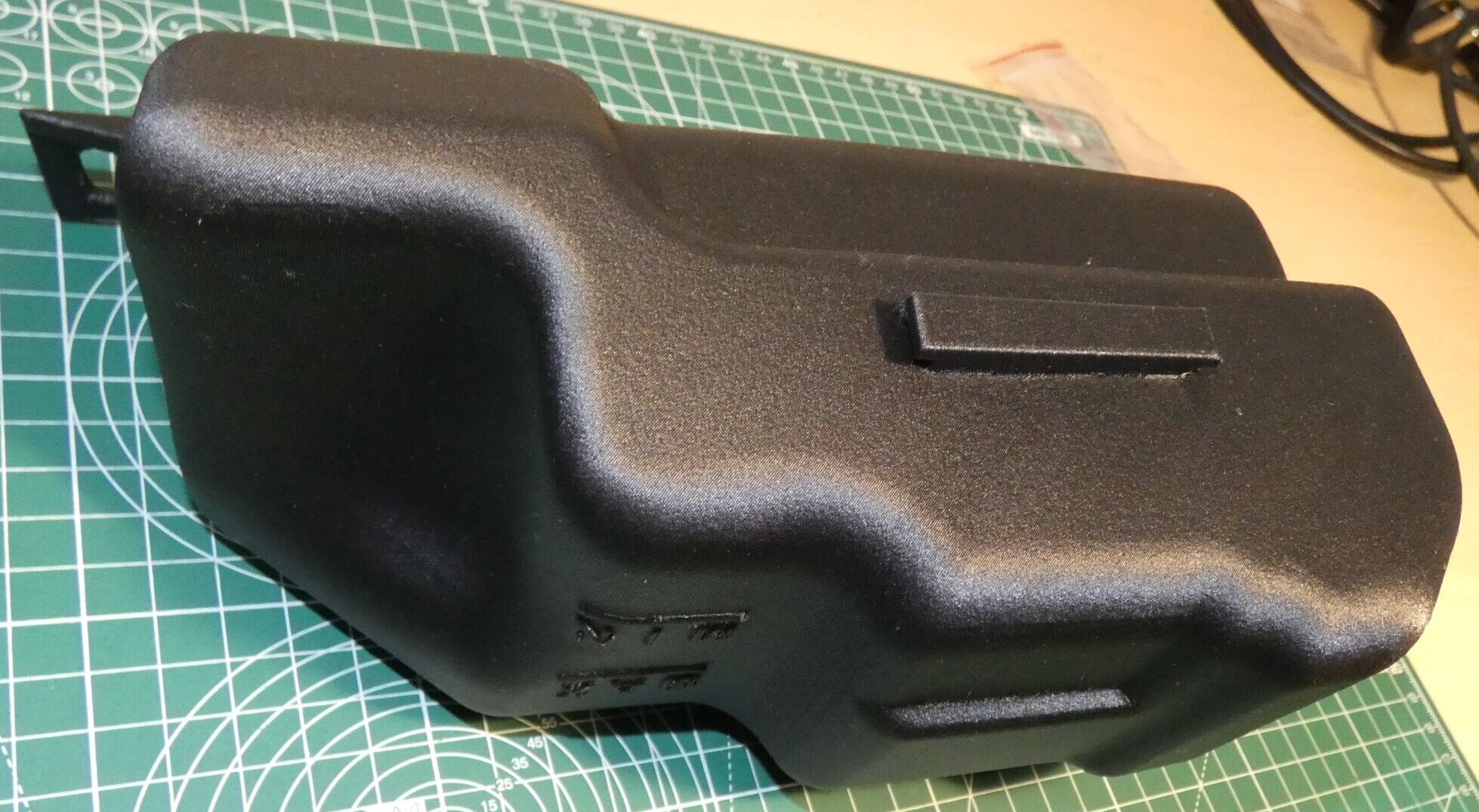
For this project, Printhoek 3D collaborated with Ricky’s Custom Cars, a Namibian automotive customization specialist, to design a bespoke housing for a modified odometer cluster in a Volkswagen Amarok.
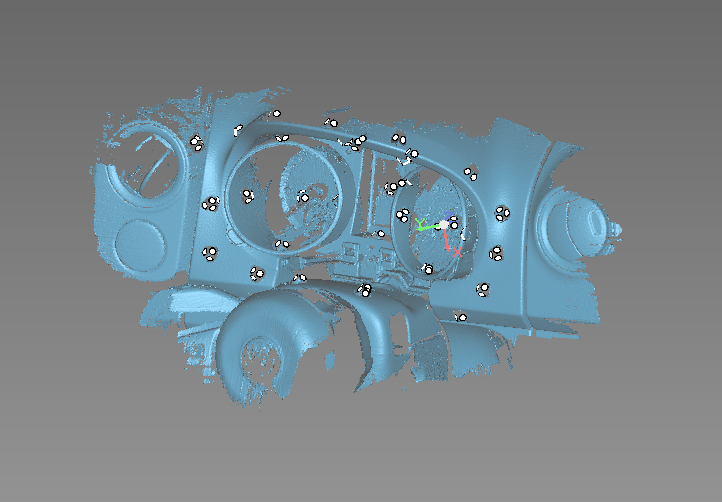
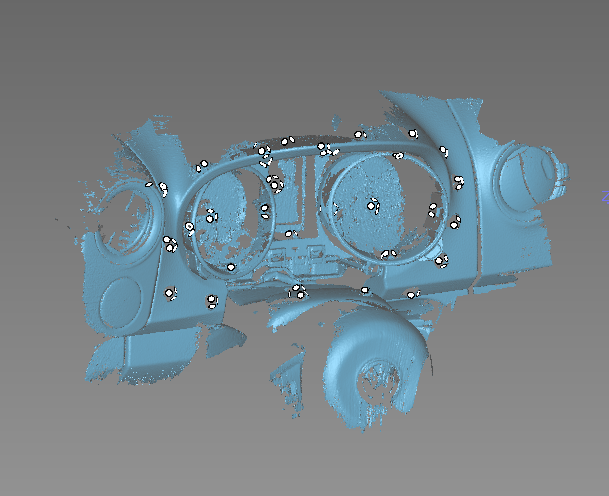
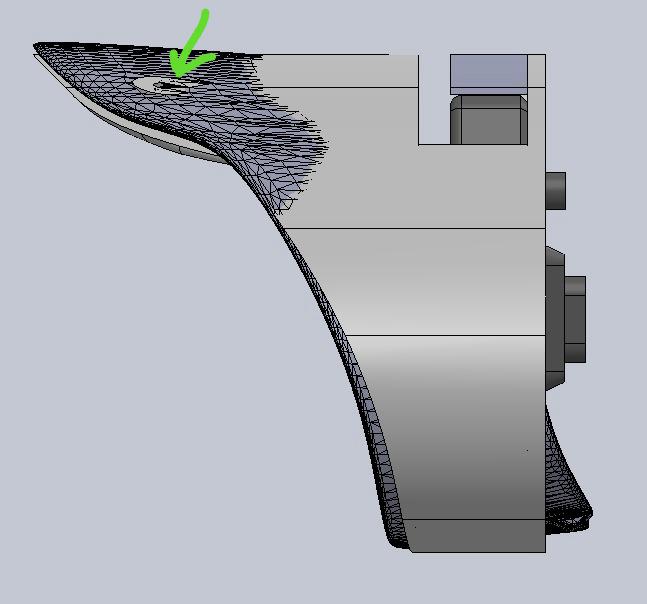
The client had installed a non-standard odometers that extended beyond the dashboard surface. To achieve a clean, factory-fit appearance while maintaining the unique custom setup, our team conducted a 3D scan of the dashboard console behind the steering wheel and used that data to design a precision-fit cover and housing.
The new component not only concealed the protruding gauges but also complemented the vehicle’s aesthetic blending custom craftsmanship with OEM-level refinement.
3D scanning of dashboard geometry for perfect fitment
Custom housing design for non-standard odometers
High-accuracy 3D printing with durable polymer finish
Enhanced visual integration maintaining OEM-like quality
Functional and aesthetic upgrade to existing dashboard layout
Through this project, Printhoek 3D demonstrated how additive manufacturing and design engineering can elevate automotive customization delivering seamless integration between aftermarket modifications and professional-grade design.
The result: a functional, visually cohesive dashboard upgrade that retains the Amarok’s factory elegance while highlighting the client’s custom craftsmanship.
Client: Private client
Industry: Automotive Customisation
Service: 3D Scanning • Reverse Engineering • CAD Design • 3D Printing
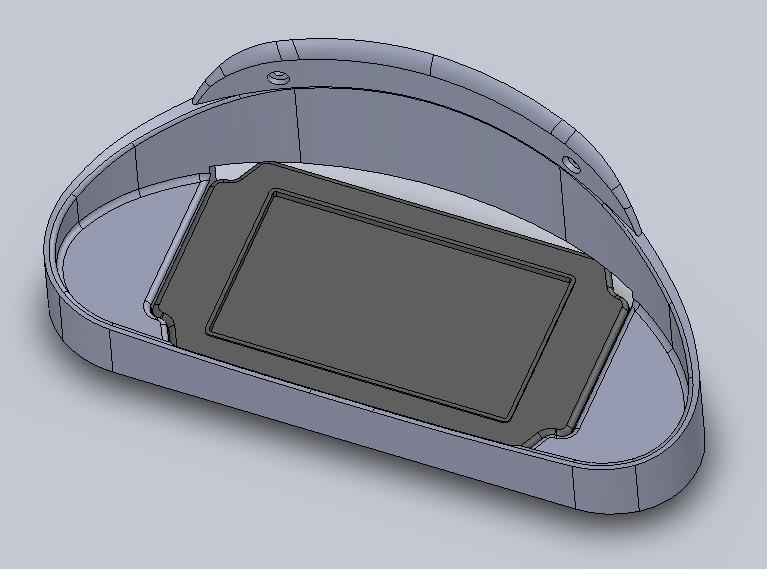
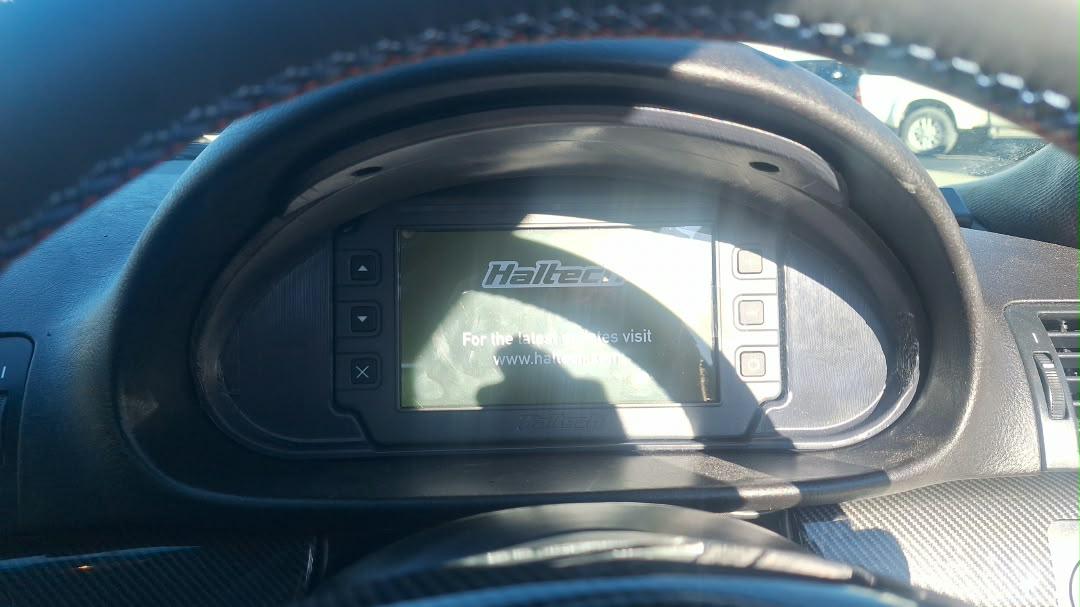
During a BMW M3 rebuild, the client wanted to replace the original analogue instrument cluster with a Haltech iC-7 digital display. The new housing needed to accommodate the display while matching the original cluster’s outer shape and fitting the dashboard.
An existing online design was initially trialled. Although it fitted, it left gaps and did not achieve the fit required. Printhoek3D therefore 3D scanned the original analogue cluster and used its geometry as the reference for a custom design.
The scan data guided the reverse engineering and CAD development of a housing tailored to the vehicle and display. The housing was then 3D printed in ABS and fitted with the Haltech iC-7.
The custom housing achieved a substantially better fit, allowing the client to continue the BMW M3 rebuild with the digital display integrated into the dashboard.
Sanding, priming and painting were planned with Blue Chip Panel Beaters to refine the surface finish. The photographs show the retrofit before that finishing stage.
Client: Confidential (Automotive Supplier)
Industry: Automotive & Mechanical Engineering
Service: 3D Scanning • Reverse Engineering • Metal Additive Manufacturing
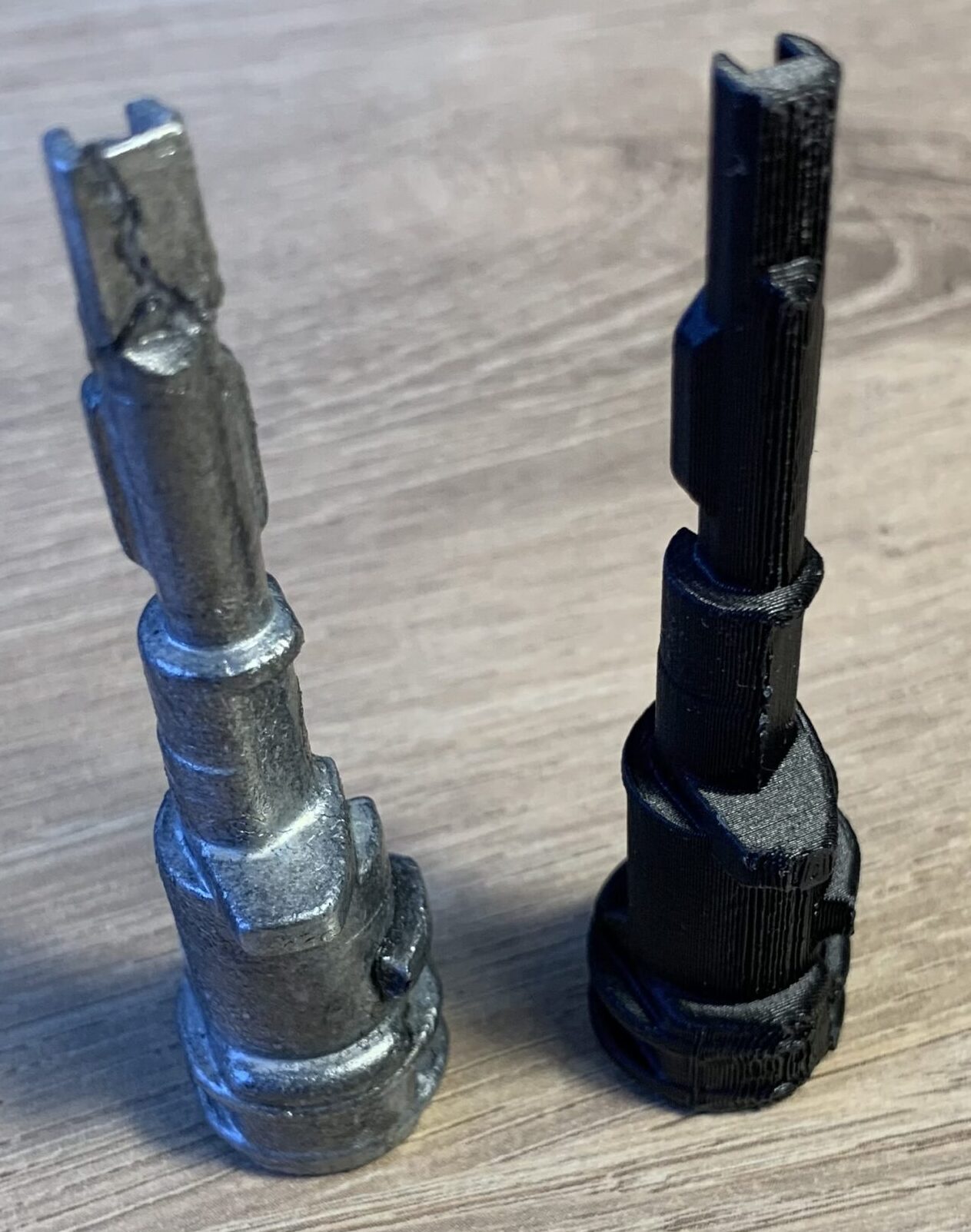
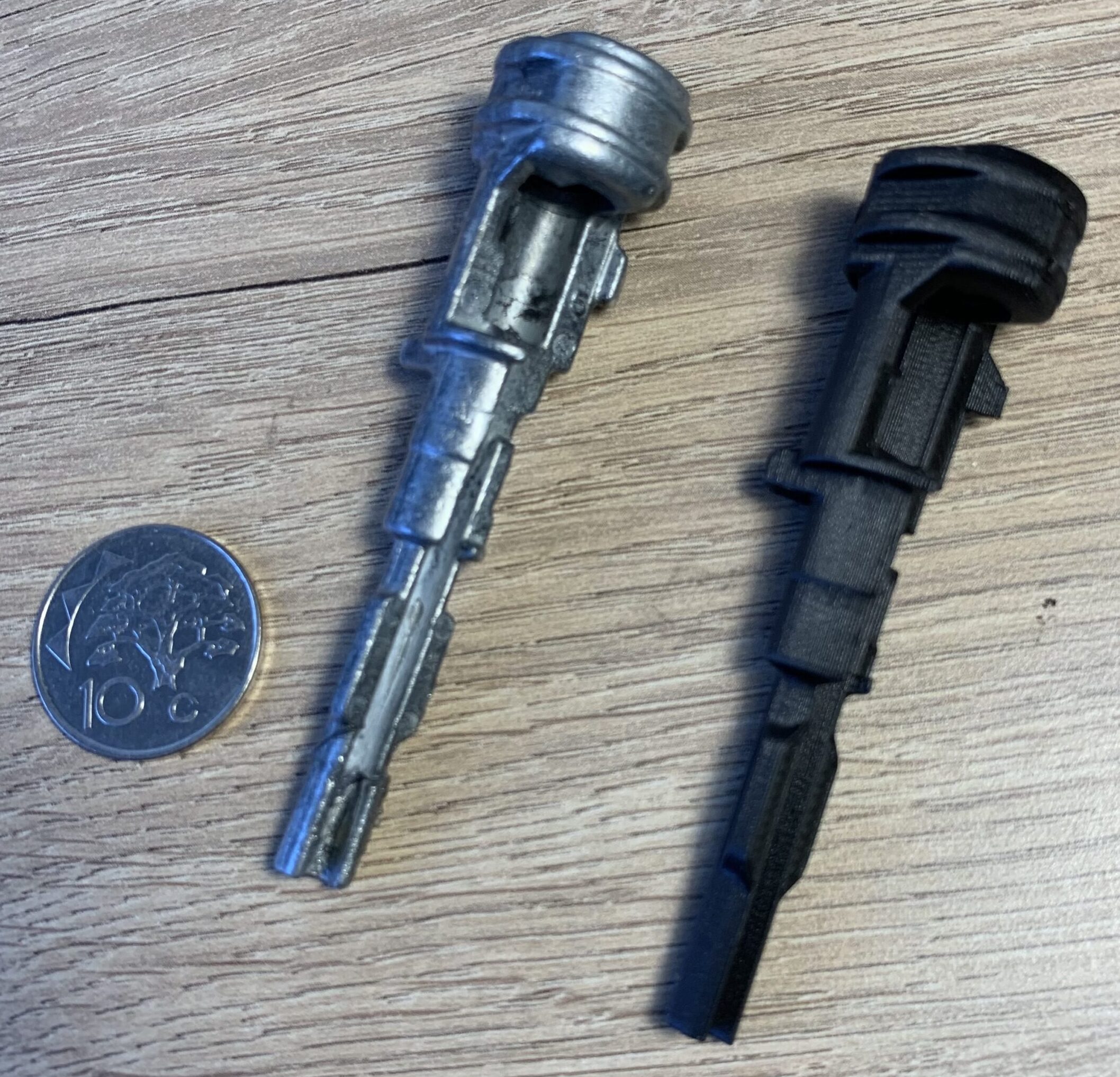
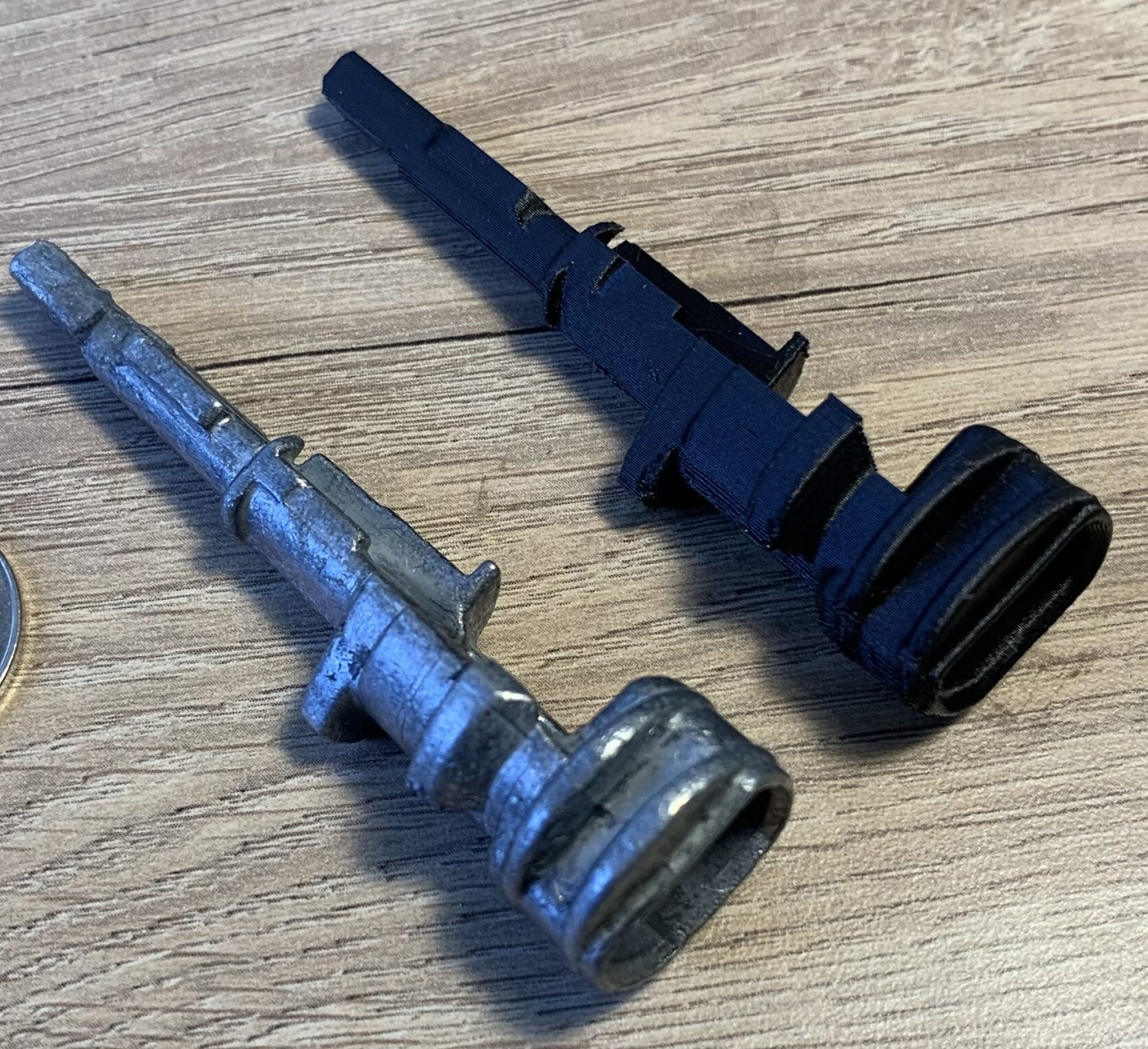
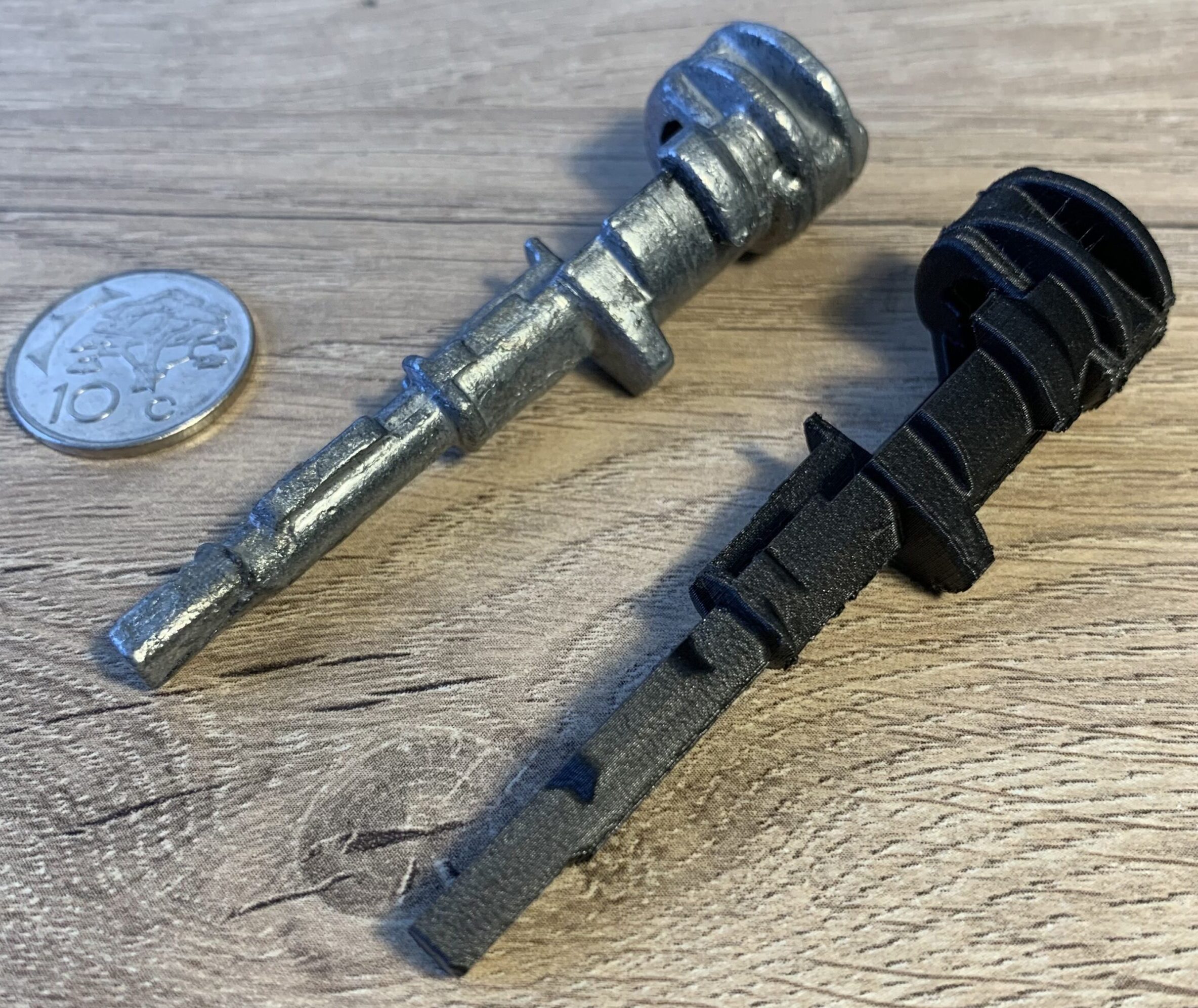
Printhoek 3D was approached to restore a damaged ignition switch component that formed part of a larger automotive subassembly. The manufacturer quoted an extravagant amount for a complete replacement assembly unit despite the fact that only one small internal part had failed within the assembly.
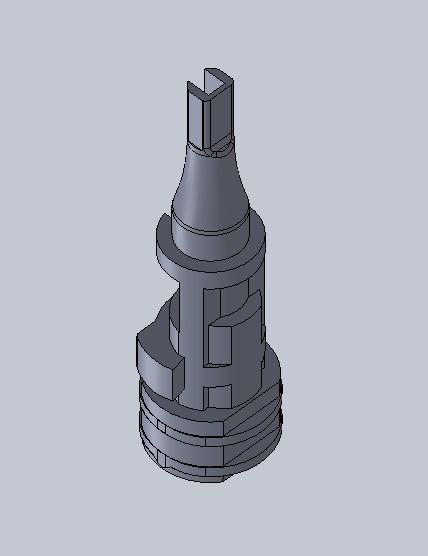
To reduce costs and downtime, our team performed 3D scanning on the broken component, carefully reconstructing the geometry after reassembly with adhesive for scanning. The model was then reverse-engineered and optimized for metal 3D printing.
Since Namibia currently lacks local Direct Metal Laser Sintering (DMLS) infrastructure, the digital files were sent to one of our international manufacturing partners for production. Two versions were created one in stainless steel and another in titanium each precisely dimensioned to match the original component’s tolerances.
3D scanning and reverse engineering of broken ignition switch
Manufactured in stainless steel and titanium via DMLS technology
Collaborative production with international additive partners
Significant cost reduction versus full assembly replacement
This project showcases how digital reverse engineering and metal additive manufacturing can offer practical, cost-efficient solutions in the automotive and mechanical sectors.
By restoring functionality through targeted replacement rather than full-unit substitution, Printhoek 3D helped clients save thousands of dollars.
Client: Confidential
Industry: Automotive Restoration
Service: 3D Scanning • Reverse Engineering • CAD Modelling • Additive Manufacturing
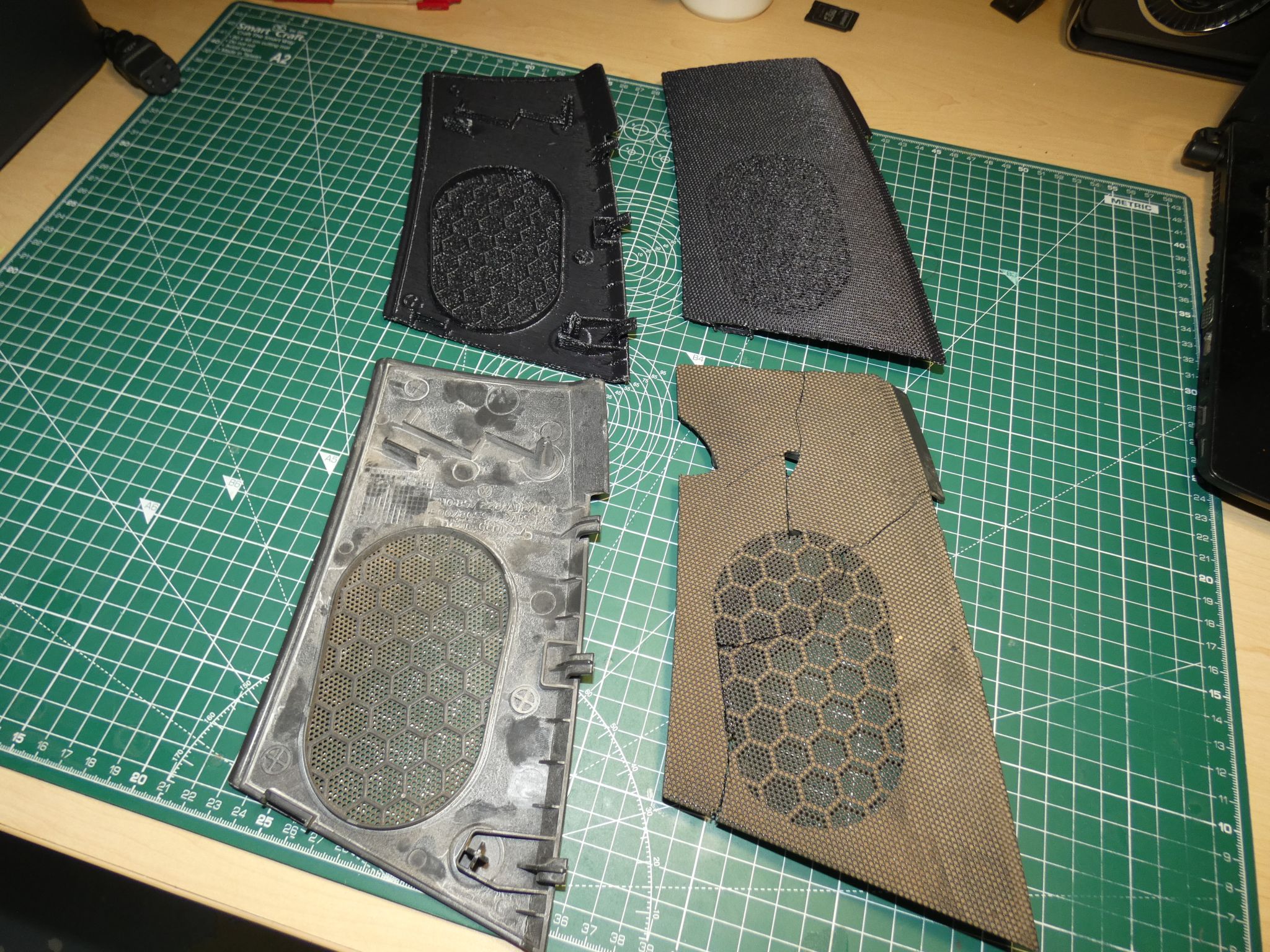
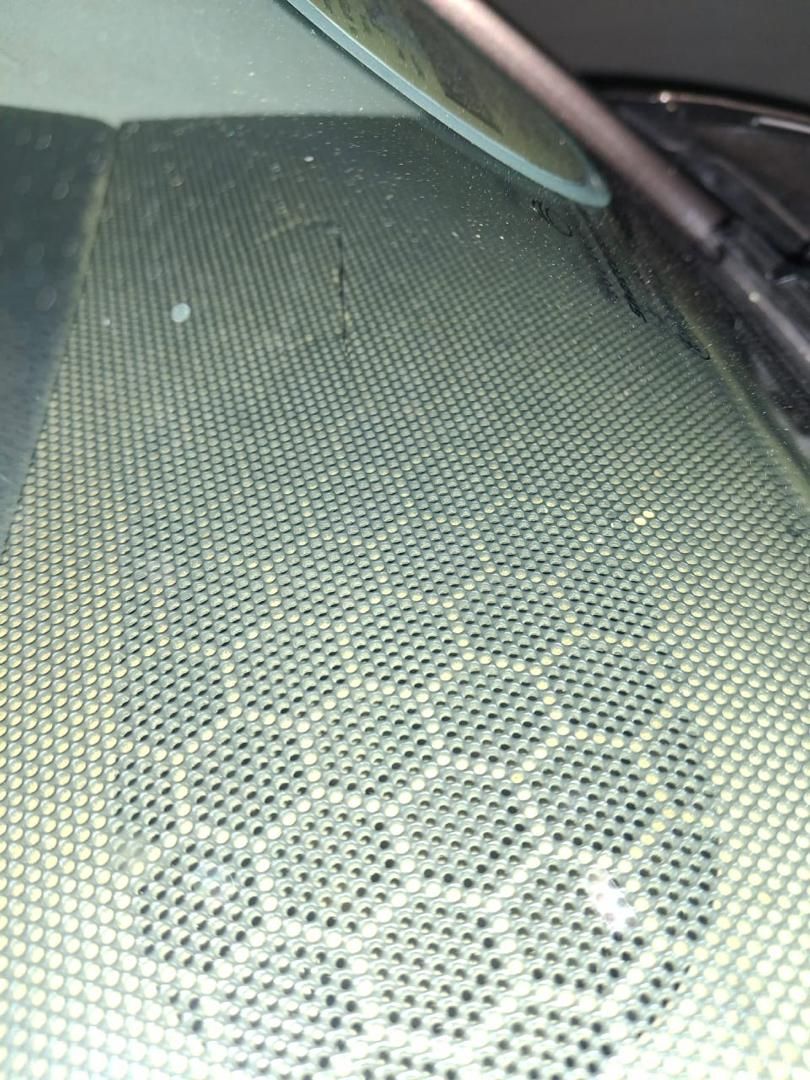
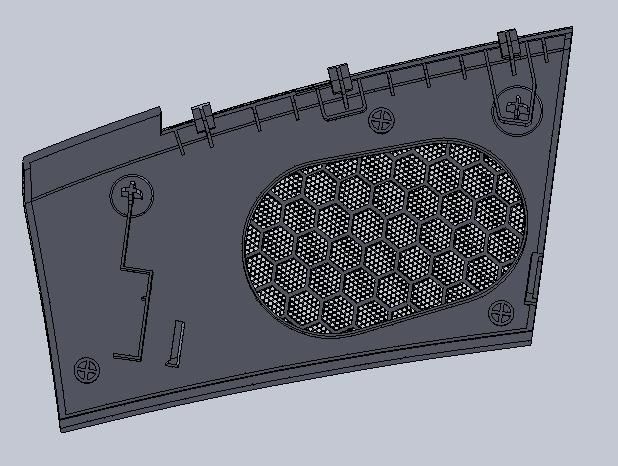
A client required a replacement for an obsolete vehicle interior trim panel that could no longer be sourced from scrapyards or overseas suppliers.
The original component was damaged, but one side of its geometry remained intact. Instead of estimating the missing features from the fractured section, Printhoek3D captured the surviving geometry and used it as the reference for reconstruction.
The complete side was digitally mirrored and reverse engineered to recreate the missing contours, mounting features and overall appearance of the original panel.
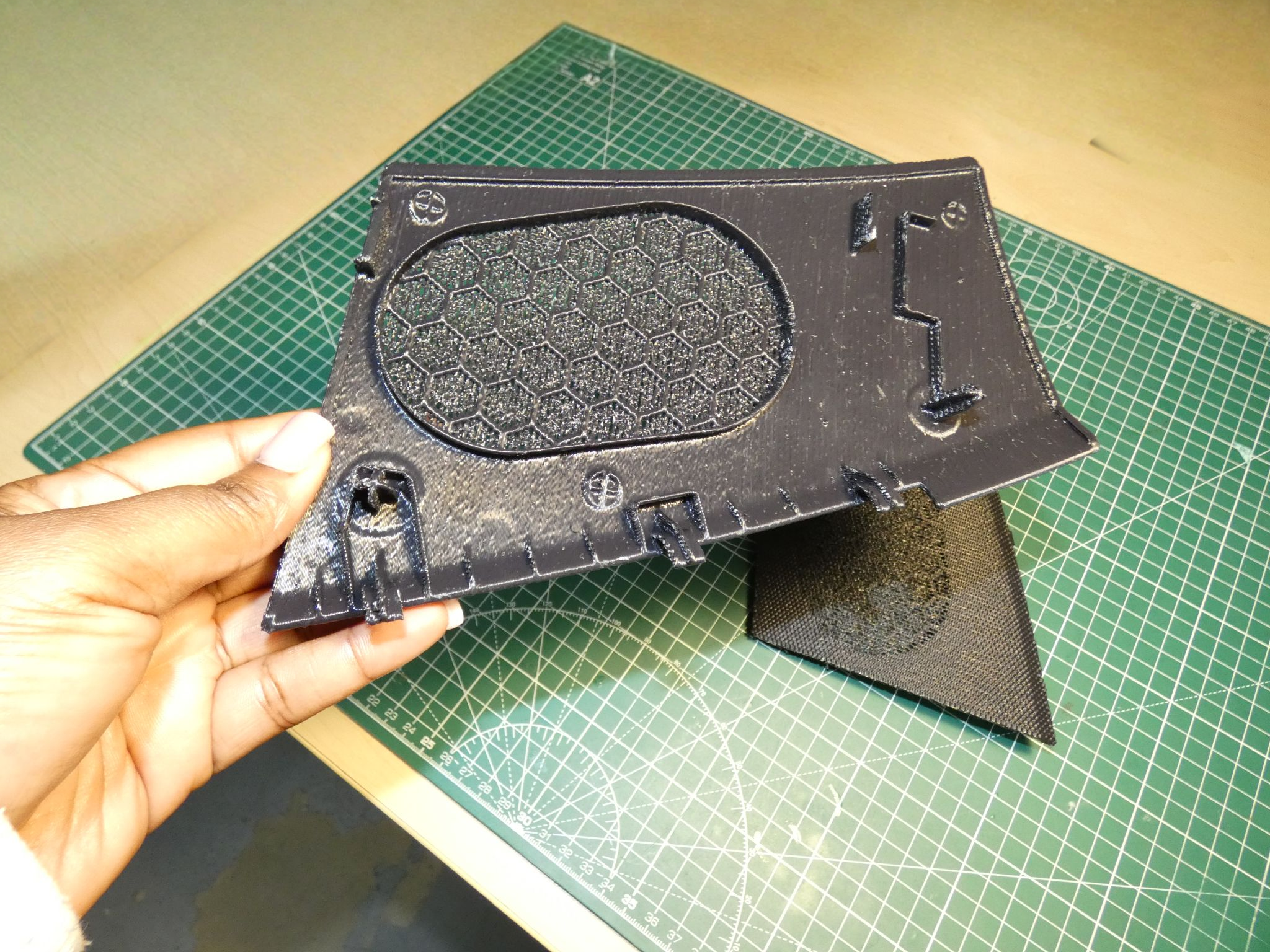
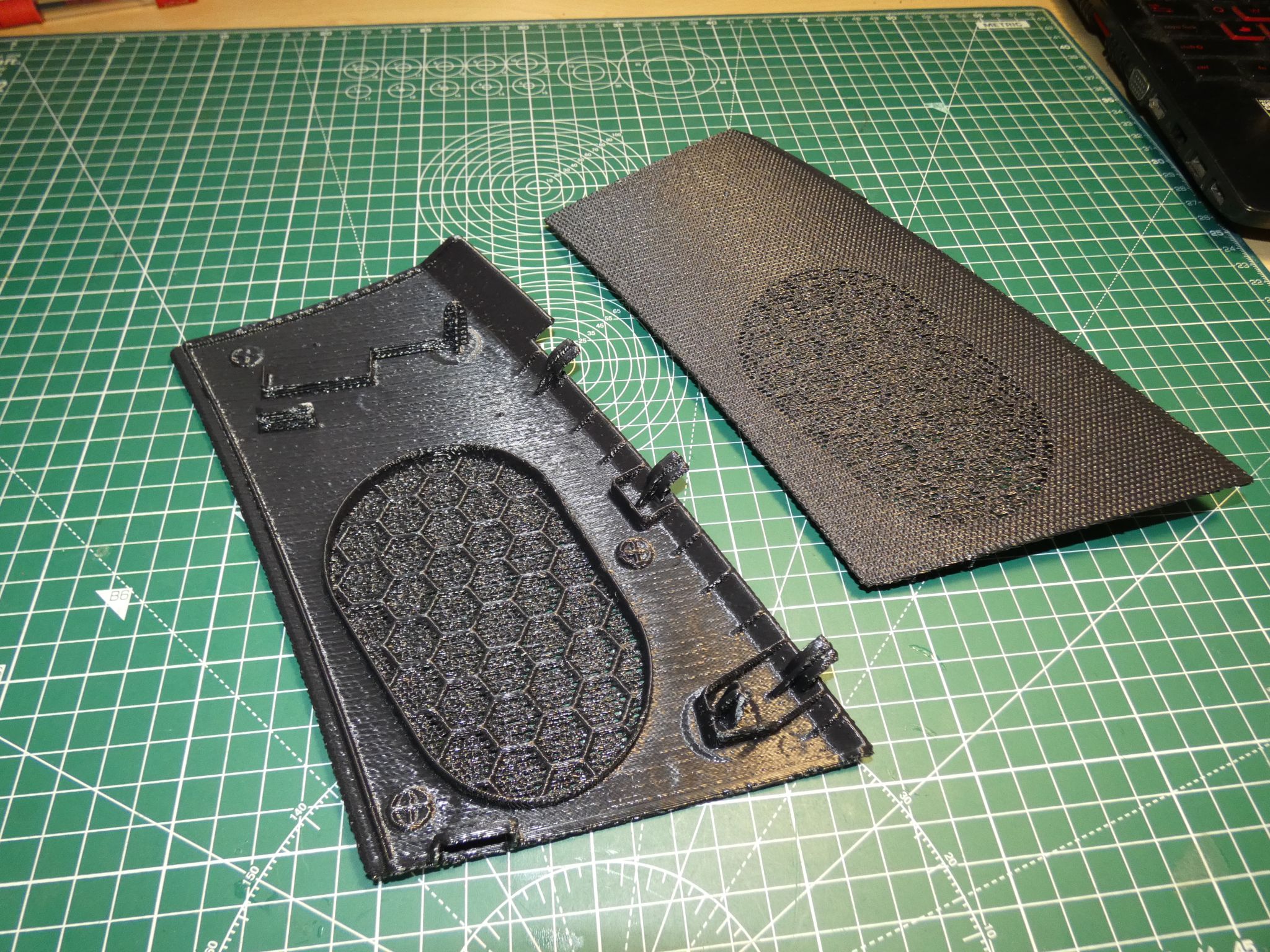
Functional prototypes were manufactured and checked against the original component. Following fitment validation, a final replacement was produced for installation.
The completed replacement restored the function of an interior component that was no longer supported by available spare-part inventory.
Using the intact side as the design reference removed unnecessary estimation and allowed the missing geometry to be reconstructed from the vehicle’s original engineering.
The project demonstrates how 3D scanning, digital mirroring and additive manufacturing can extend the usable life of a vehicle when conventional replacement channels have been exhausted.
Client: Mad Tuning
Industry: Automotive Customization & Electronics Integration
Service: 3D Scanning • Reverse Engineering • Product Design • Retro Fitting
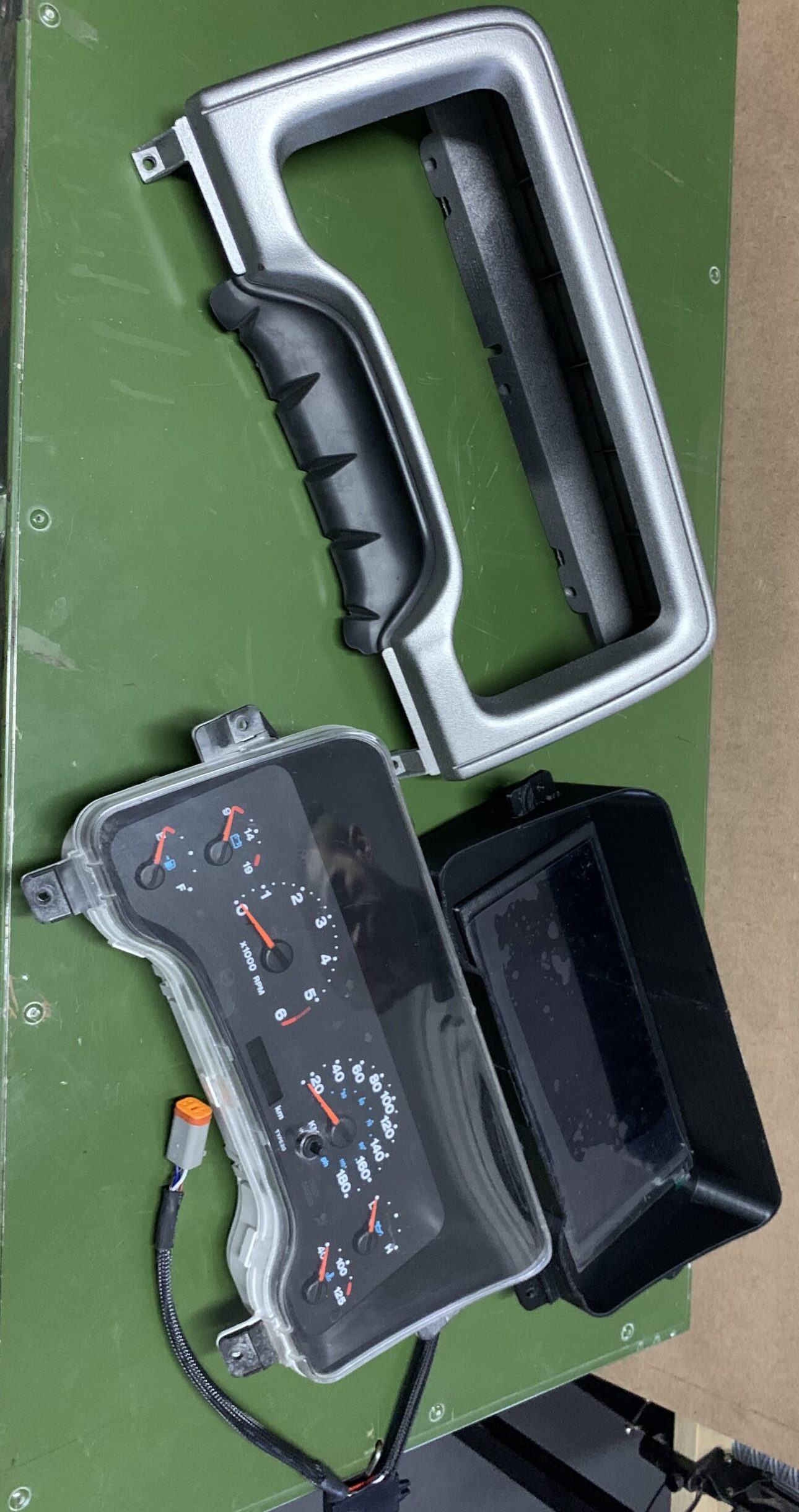
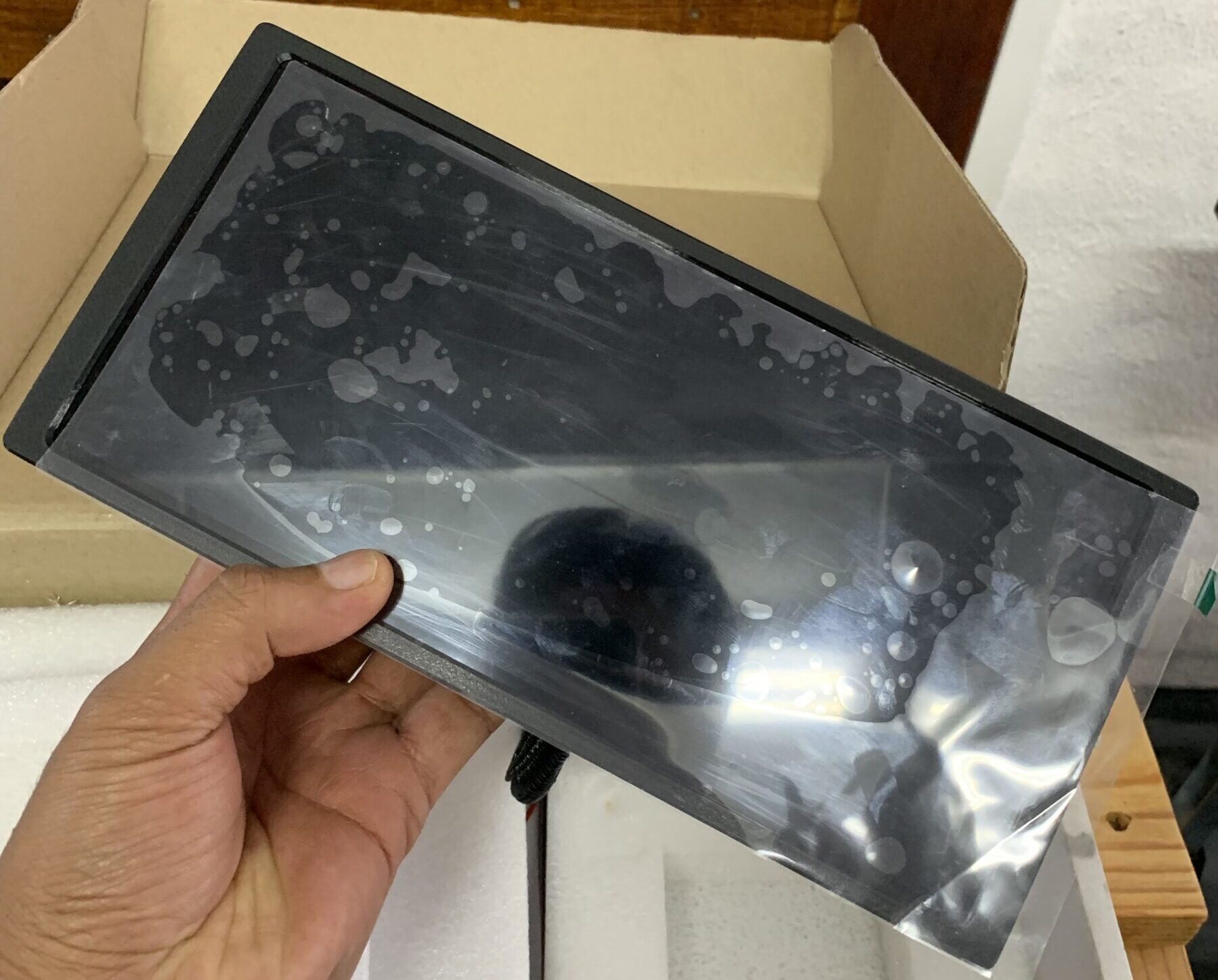
In collaboration with Mad Tuning, Printhoek 3D was commissioned to retrofit a Jeep dashboard by replacing its traditional analog odometer with a modern digital LCD display. The project aimed to modernize the interior aesthetics while maintaining the rugged visual identity of the Jeep brand.
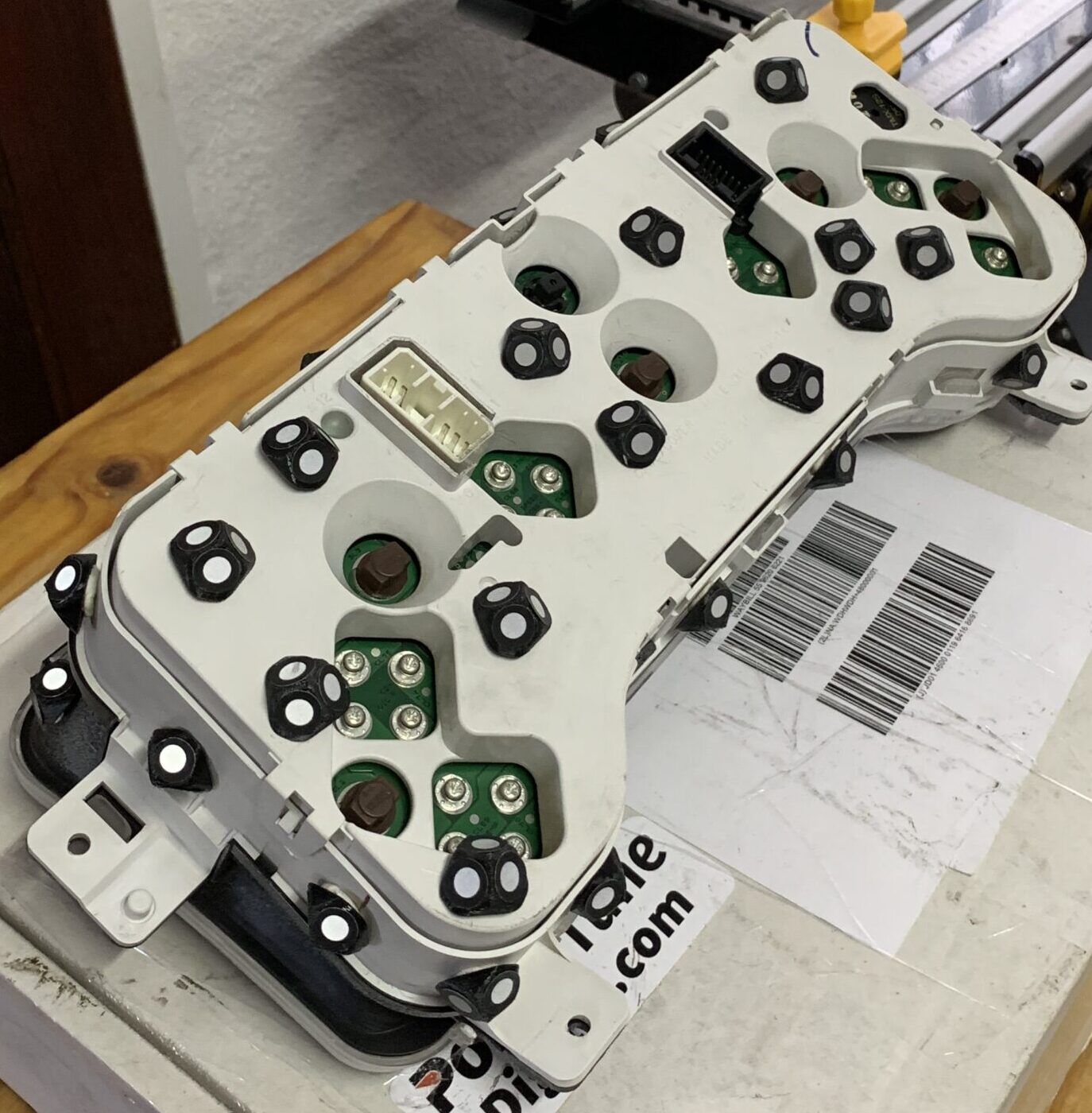
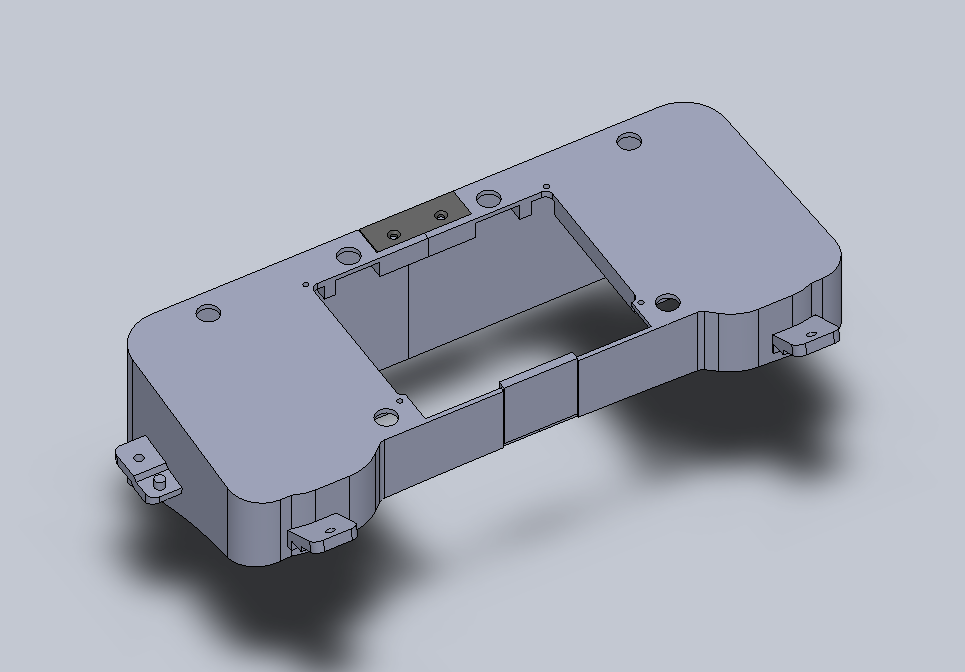
Our team 3D-scanned the existing odometer housing to capture exact dimensions and reverse-engineered the mounting structure for a seamless fit. The replacement LCD module was precisely modelled and digitally integrated into the original frame using advanced CAD techniques and Boolean surface adjustments.
Due to build volume limitations at the time, the redesigned assembly was printed in two interlocking parts, later joined to form a unified, factory-style enclosure that preserved both the original design and mechanical fit.
3D scanning and reverse engineering of Jeep analog odometer housing
Custom CAD integration of modern LCD screen
Refined mechanical design preserving original dashboard layout
Seamless old-to-new technology integration for a professional retrofit
The Jeep Digital Odometer Retrofit showcases how reverse engineering, custom mechanical design and additive manufacturing can blend legacy vehicle craftsmanship with modern technology.
By reimagining the odometer cluster using custom design and 3D printing, Printhoek 3D and Mad Tuning delivered a result that bridges classic durability with contemporary innovation proving that modernization doesn’t have to compromise identity.
Client: Private Client
Industry: Automotive
Service: Reverse Engineering • CAD Reconstruction • Additive Manufacturing • Replacement Part Manufacturing
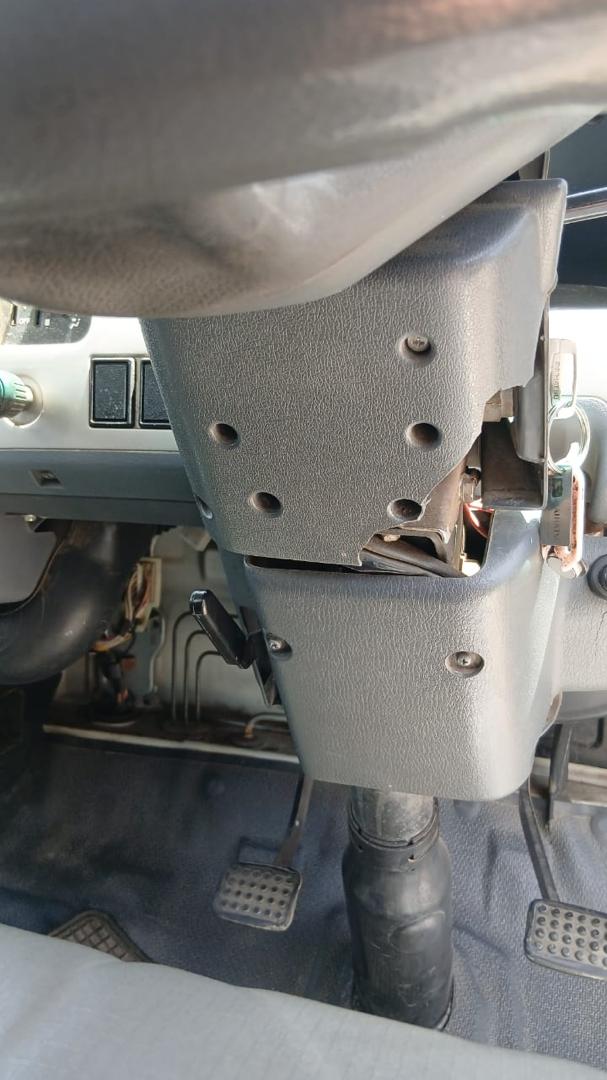
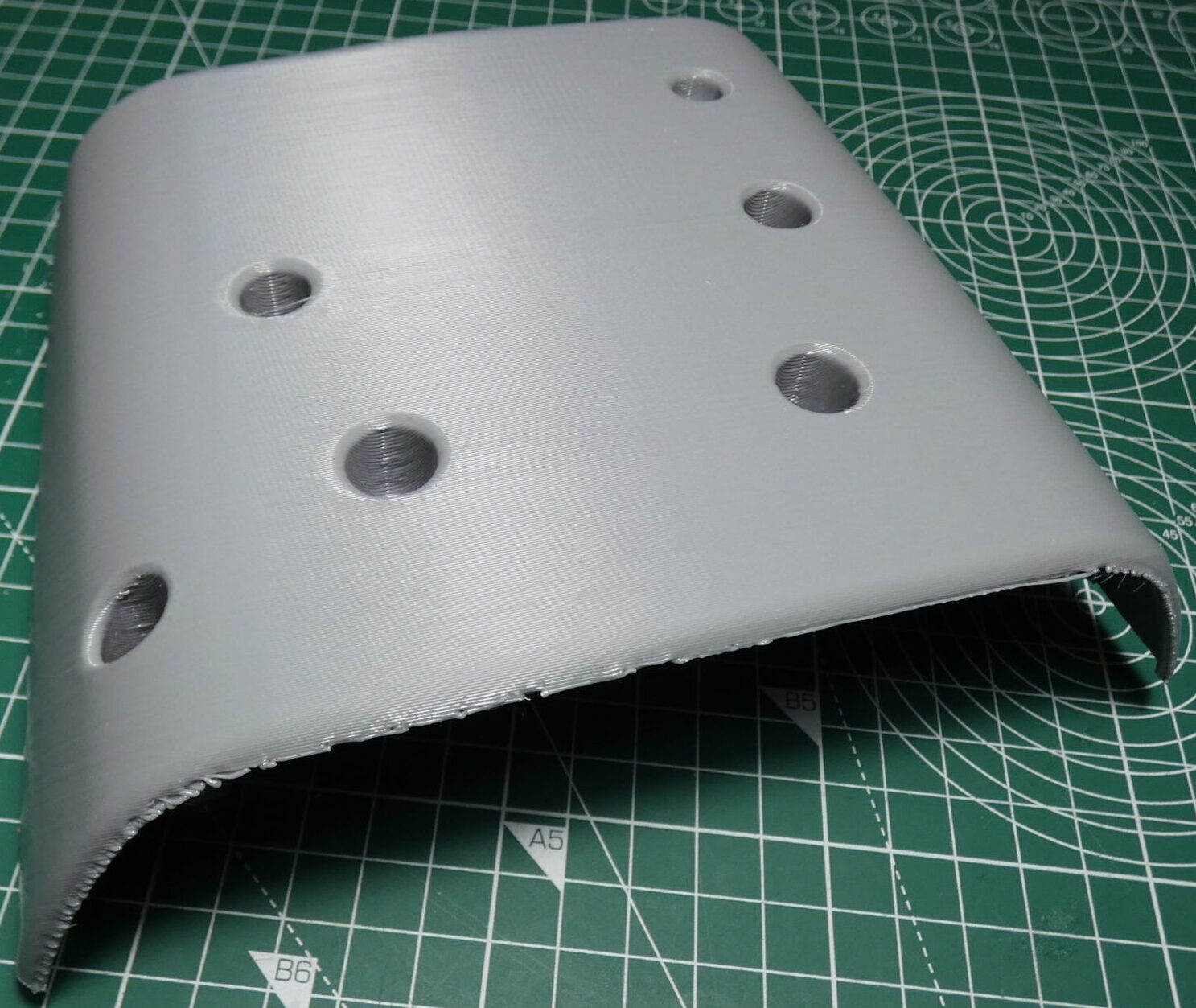
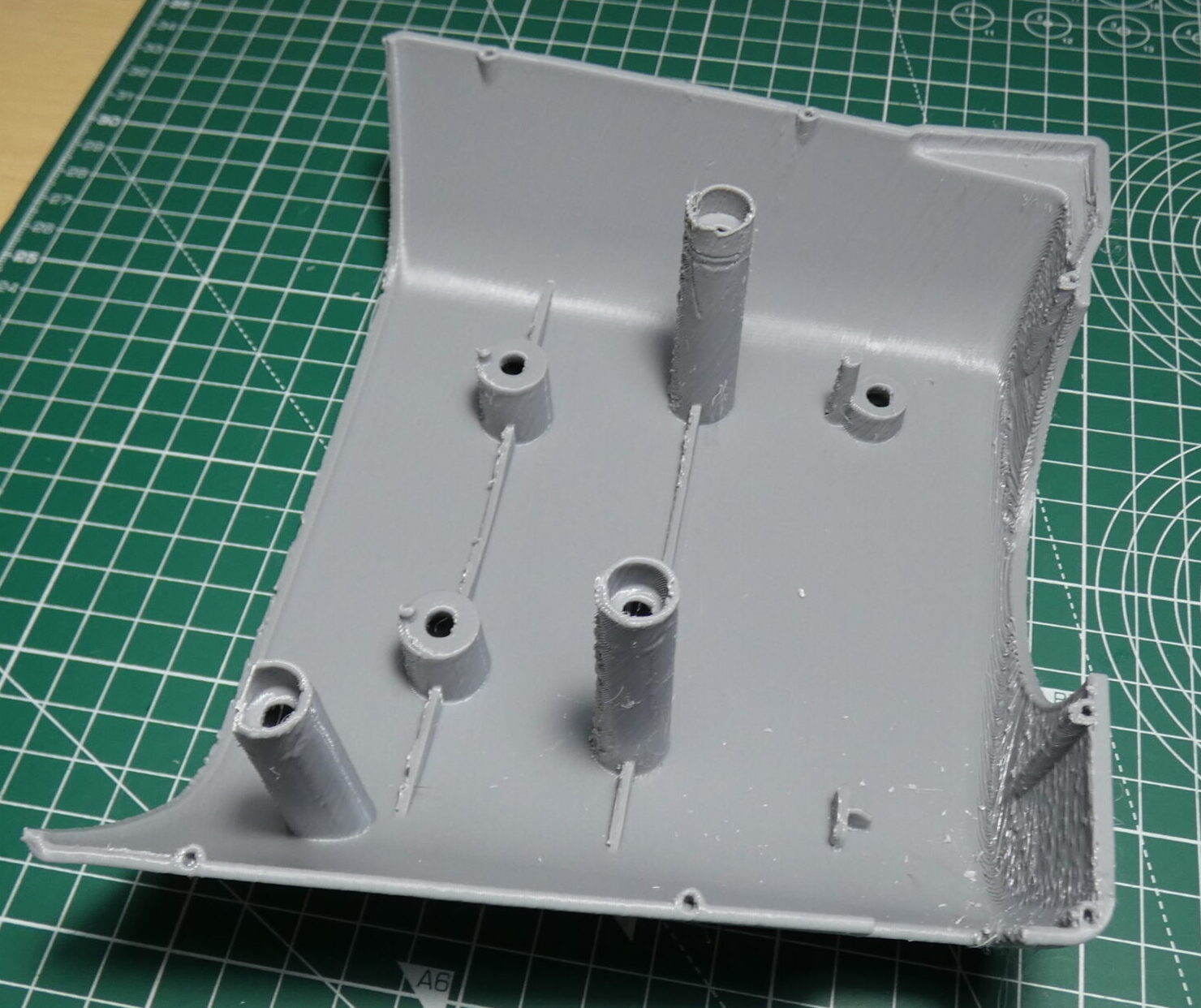
Printhoek 3D was commissioned to recreate a steering column cover for an older Daihatsu after the original component became difficult to replace through normal spare-part channels.
The project required more than producing a visual copy. The replacement cover needed to match the steering column area, align with the existing surrounding trim, and maintain the correct fit around the original mounting and clearance points.
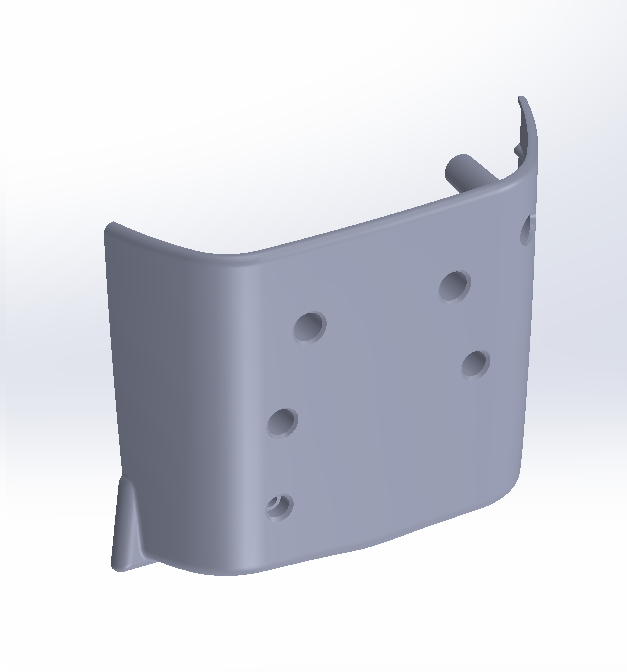
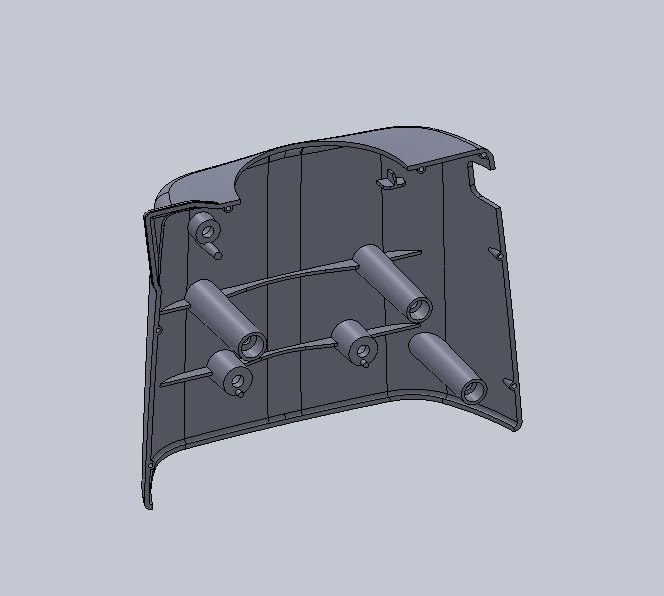
PH3D worked from the available reference part, rebuilt the component geometry in CAD, and manufactured a replacement through additive manufacturing. The design process focused on fitment, alignment, wall thickness, mounting compatibility, and visual integration with the existing vehicle interior.
The final part gave the client a local replacement option for a component that would otherwise be difficult or impractical to source.
This project shows how reverse engineering can support older vehicles where small interior components are unavailable, damaged, or no longer practical to import.
By recreating the steering column cover locally, Printhoek 3D helped the client restore the vehicle interior without replacing larger assemblies or relying on uncertain spare-part availability.
Client: Baierkraft Namibia
Industry: Mobility / Utility Vehicles
Service: Prototype Manufacturing • Additive Manufacturing • Assembly Support • Design Validation
Printhoek 3D was commissioned to manufacture and assemble large-format prototype components for Baierkraft Namibia’s ORYX 300 utility motorbike development.
The objective was not cosmetic presentation. The prototype components were produced to support validation before moving further into production decisions, tooling investment, or final manufacturing refinement.
At this stage, additive manufacturing allowed the design to be tested while it was still flexible. The parts supported geometry confirmation, assembly testing, review of ribs and wall thicknesses, and early identification of potential weaknesses before committing to more expensive production methods.
For a utility vehicle intended for heavy-duty use, the value of prototyping is risk reduction. Structural assumptions, joining features, and fitment details can be checked before the design is locked in.
This project shows how additive manufacturing supports product development before production decisions become expensive.
By manufacturing functional prototype components, Printhoek 3D helped Baierkraft Namibia validate geometry, test assembly behaviour, and identify design improvements before moving further into production.
Client: Private Client
Industry: Automotive
Service: Reverse Engineering • CAD Development • Additive Manufacturing • Replacement Part Manufacturing
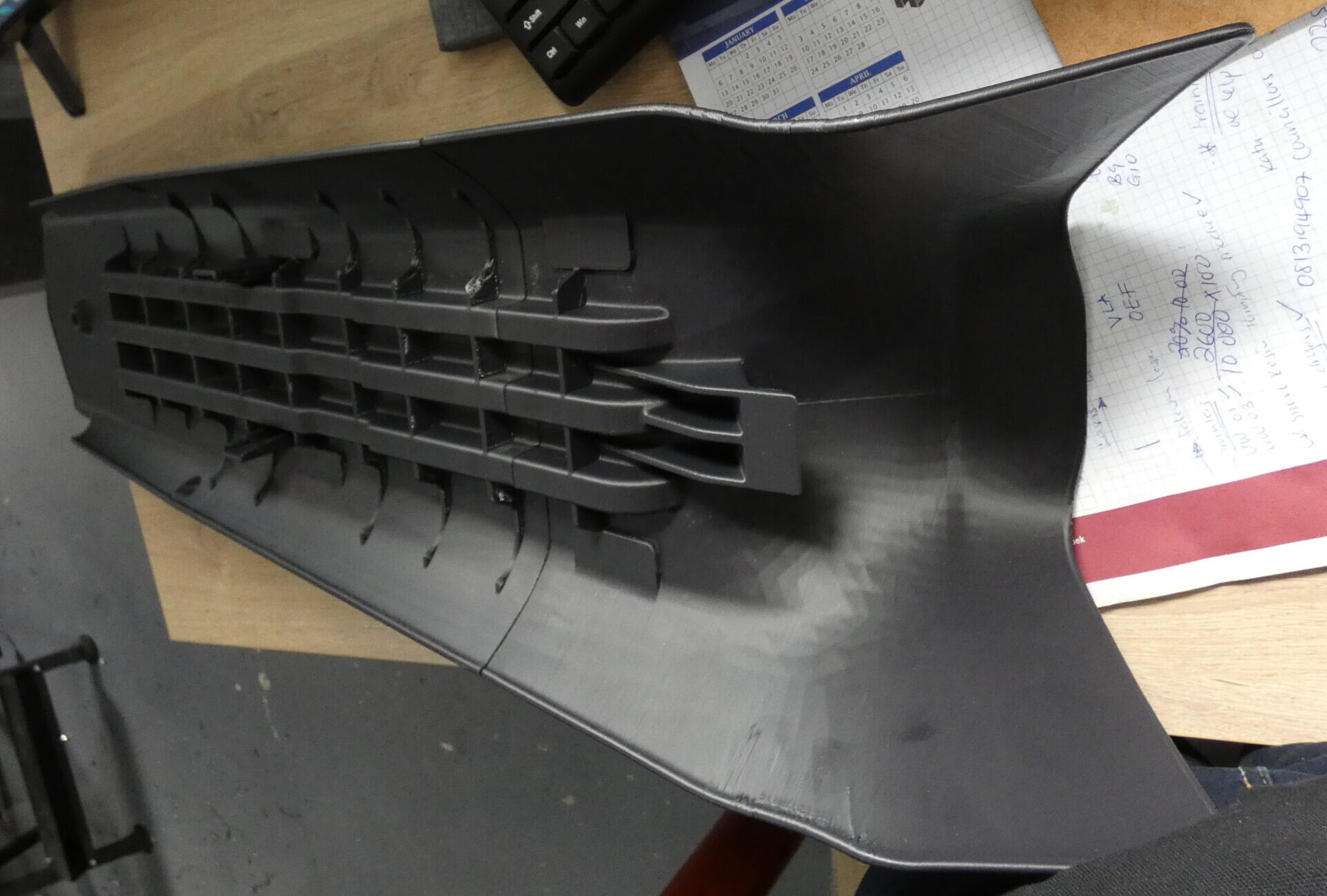
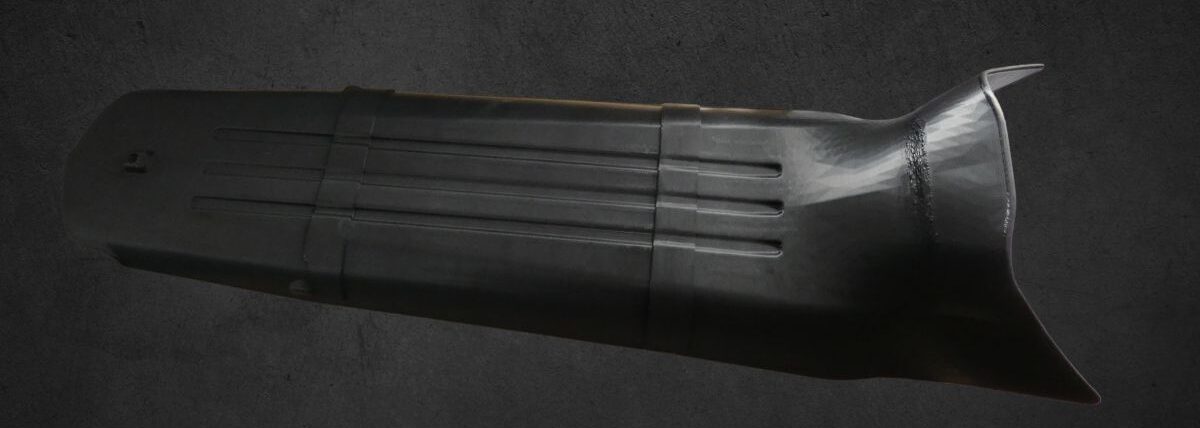
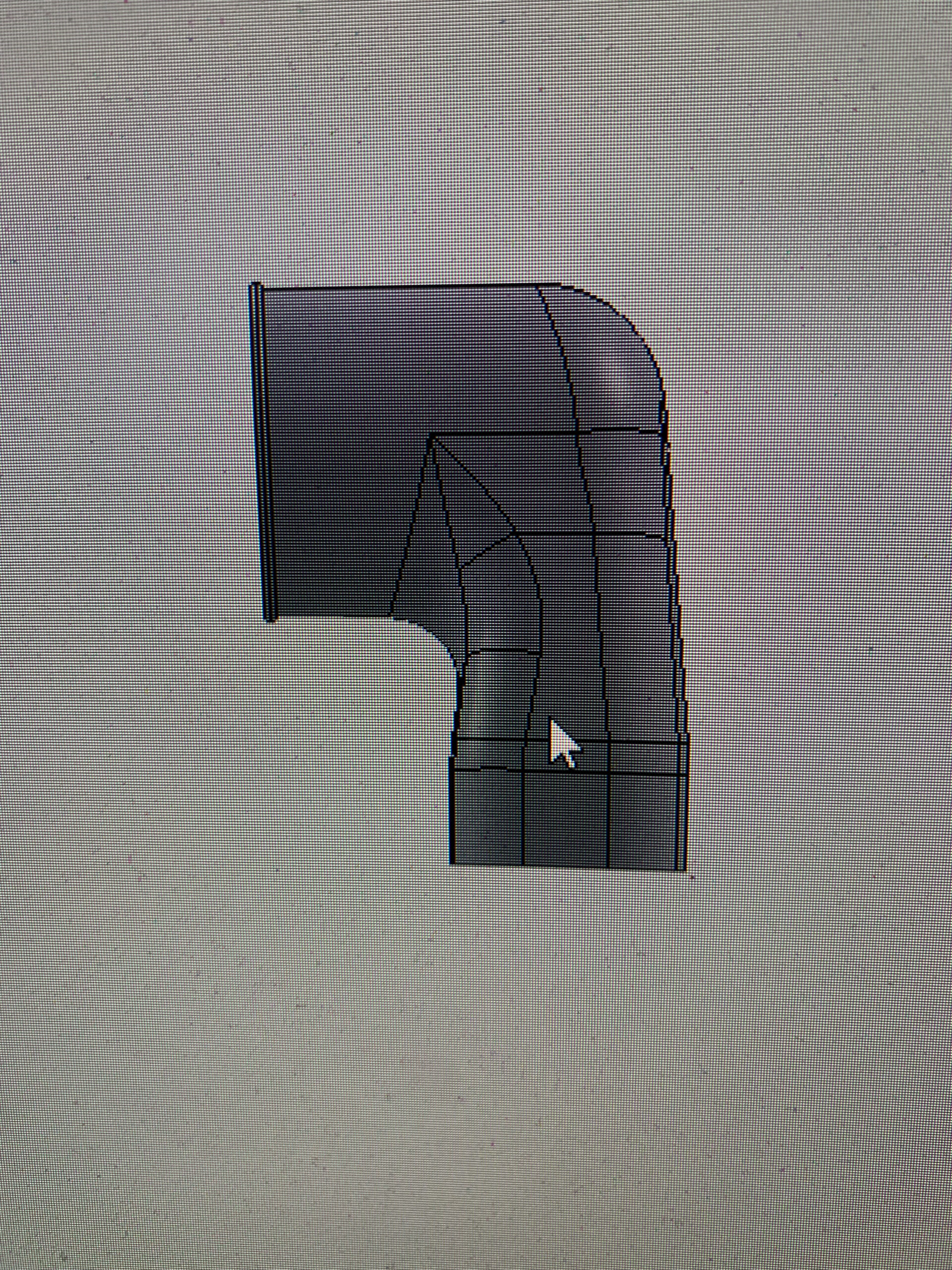
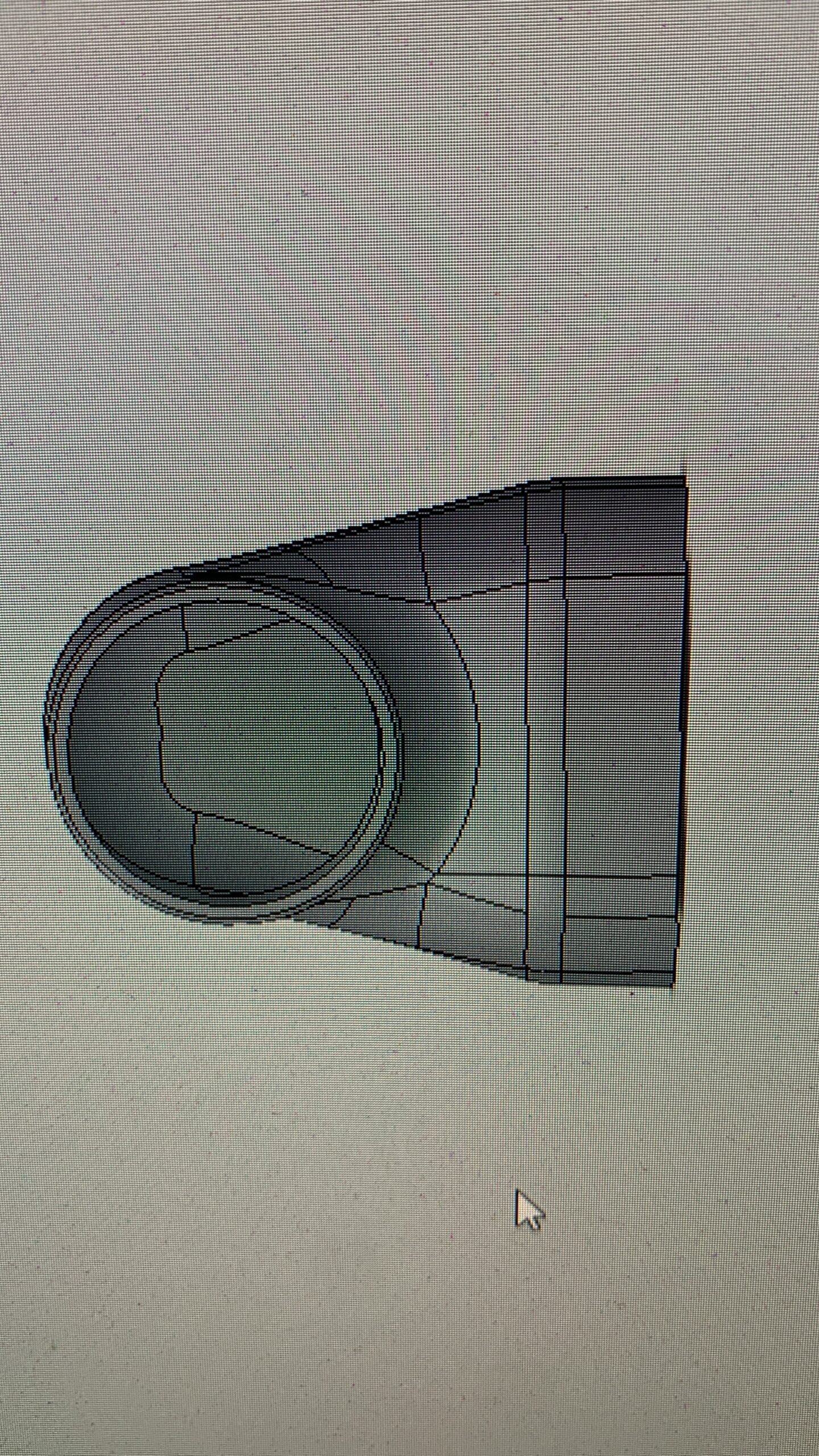
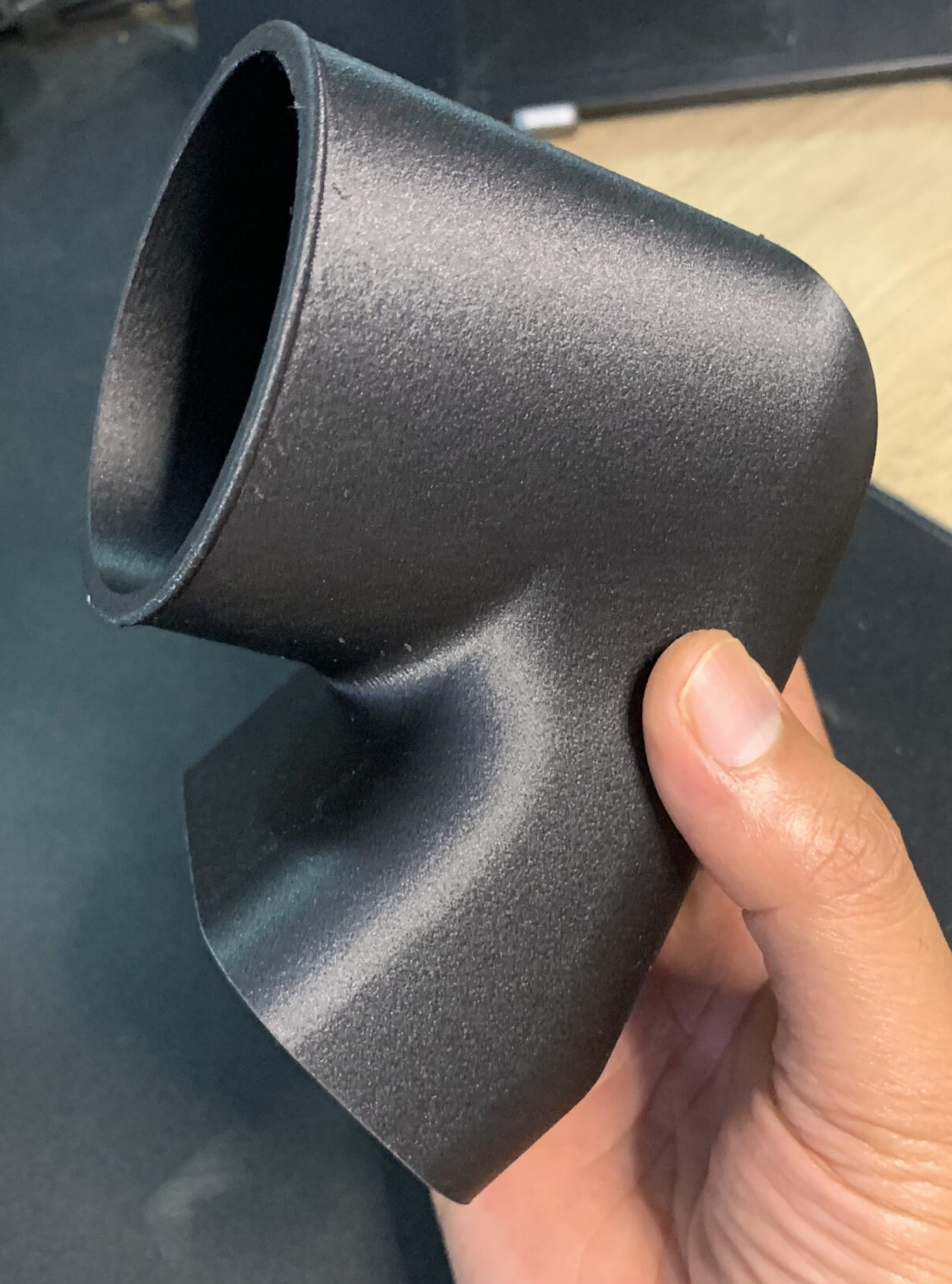
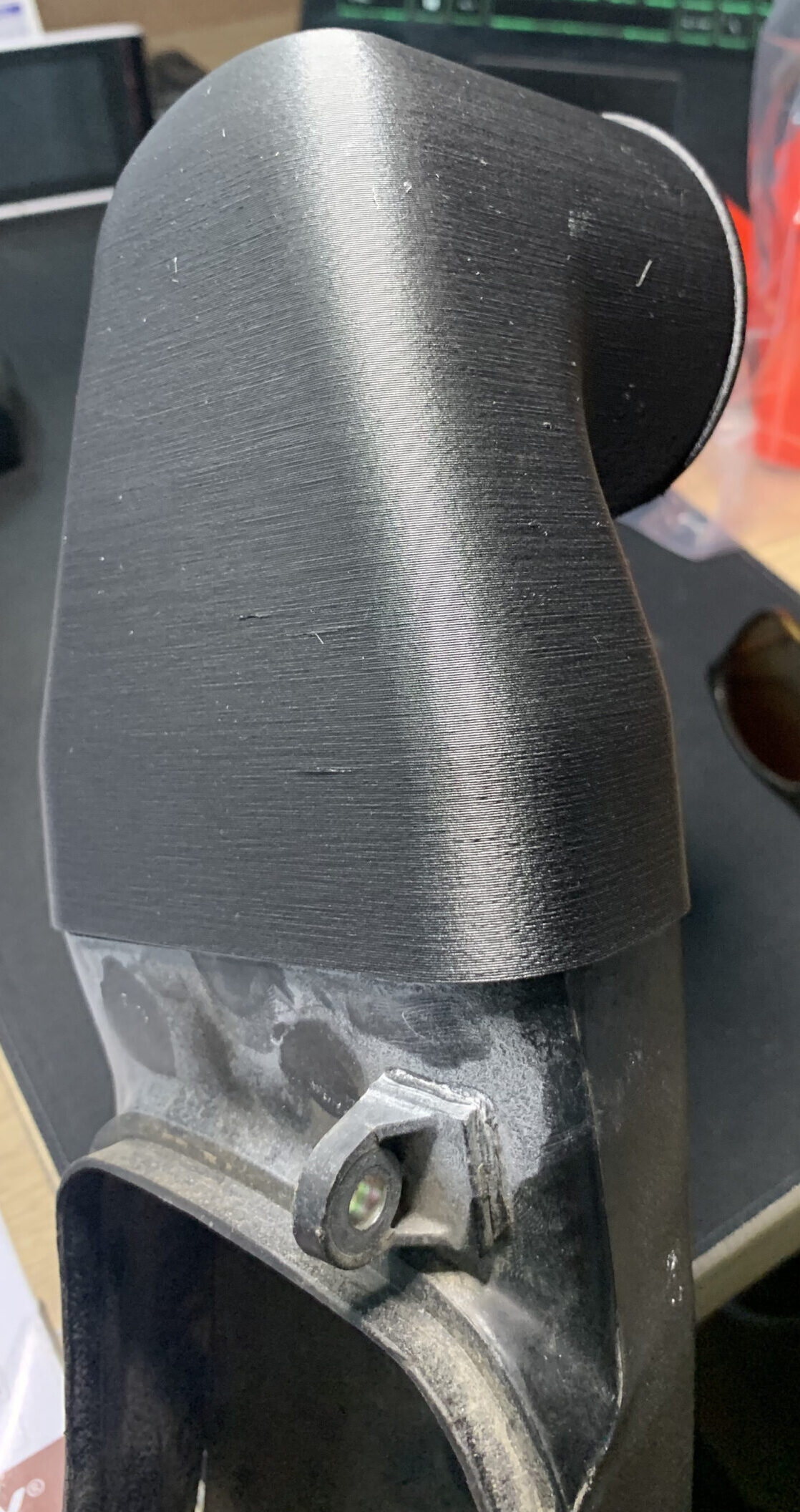
Printhoek 3D was commissioned to recreate custom snorkel bend components for a Land Rover where the required replacement geometry was not available as a standard part.
The project required a part that could do more than match the original shape visually. The bend needed to maintain the required airflow path, fit within the available vehicle clearance, and connect properly with the surrounding intake components.
PH3D worked from the required fitment and geometry constraints to develop a printable replacement part. The design process focused on connection interfaces, wall thickness, bend geometry, clearance, and functional use within an automotive environment.
The final parts were manufactured in nylon carbon fibre, selected for strength, rigidity, and suitability for demanding functional use.
This project shows how additive manufacturing can support functional automotive replacement parts when standard components are unavailable or unsuitable.
By designing and manufacturing the snorkel bend locally, Printhoek 3D helped the client restore a functional intake connection without relying on uncertain spare-part availability or custom imported components.
Client: Rage Hobbies Namibia
Industry: Automotive & RC Engineering
Service: 3D Scanning • Reverse Engineering • Mechanical Design • Additive Manufacturing
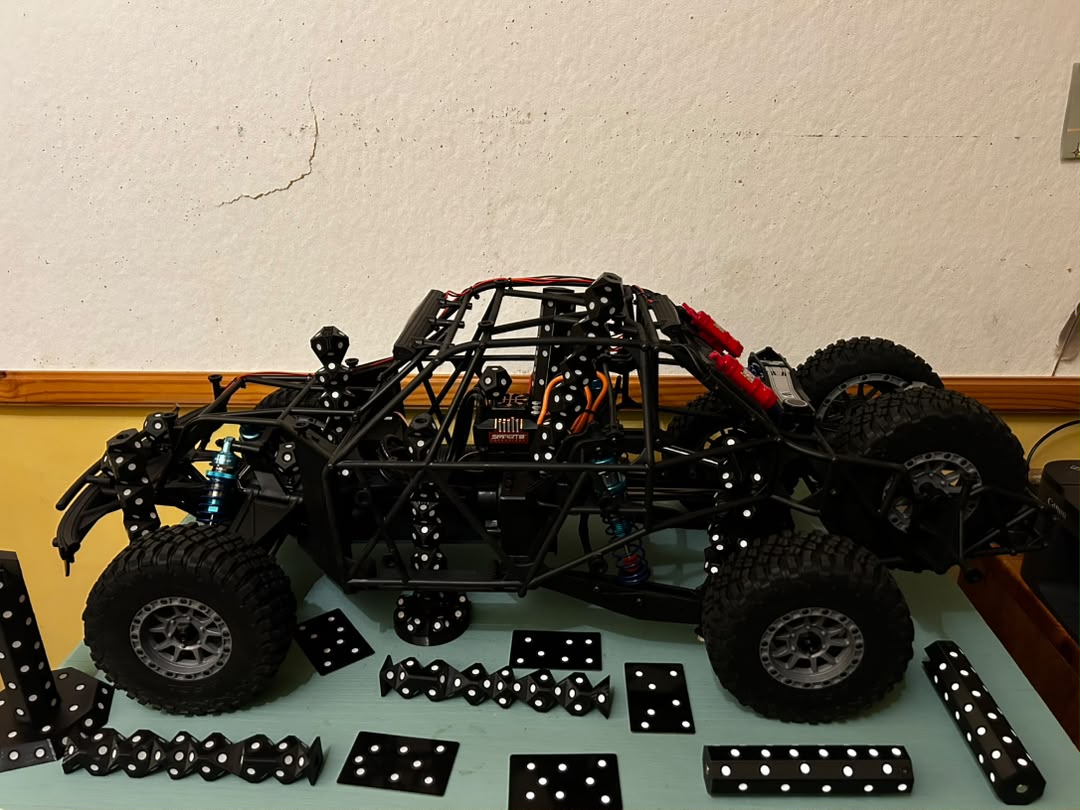
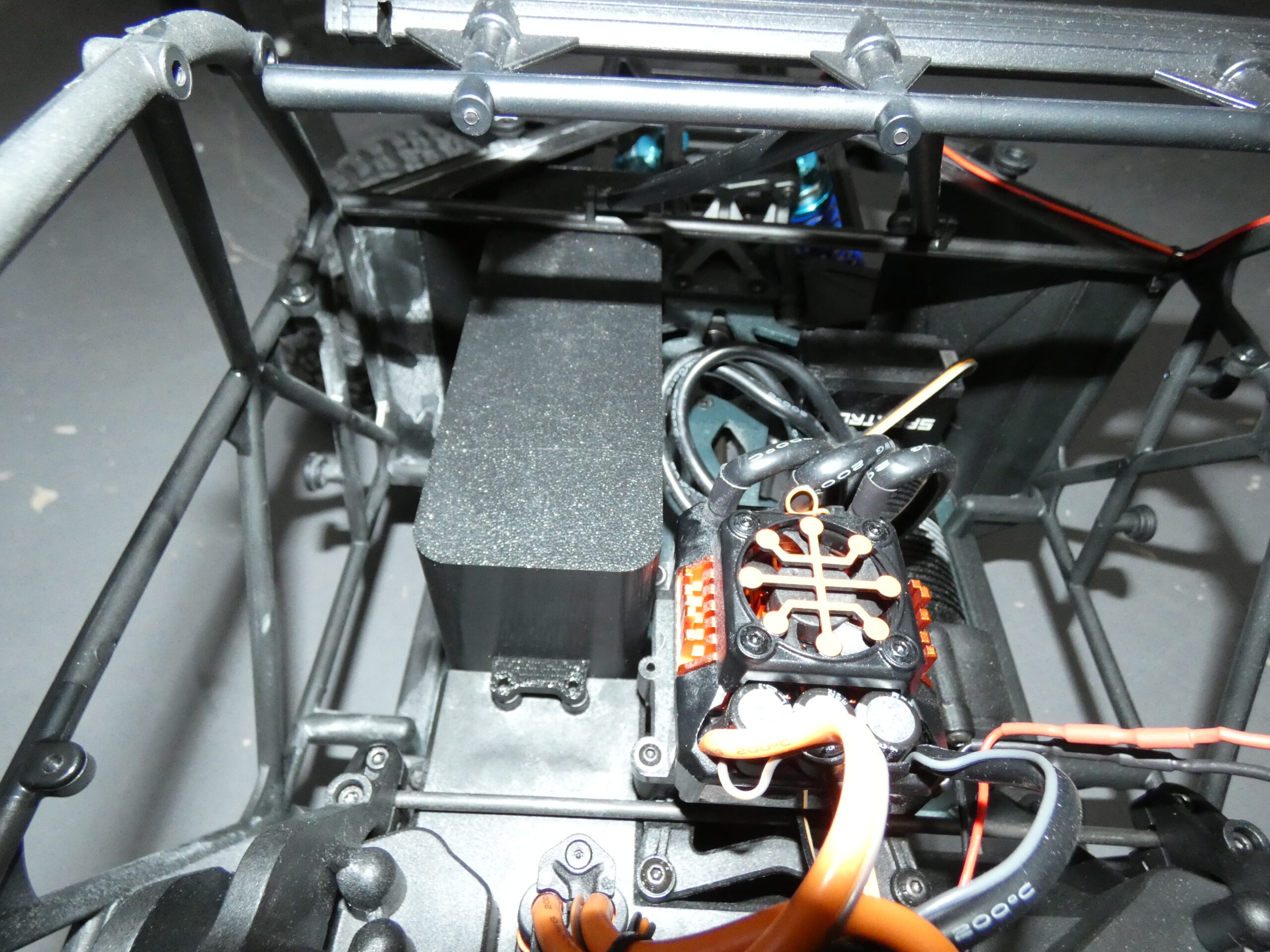
Rage Hobbies Namibia wanted to fit a larger battery to a Losi 1/6 Super Baja Rey 2.0 4WD Brushless Desert Truck to increase its operating time.
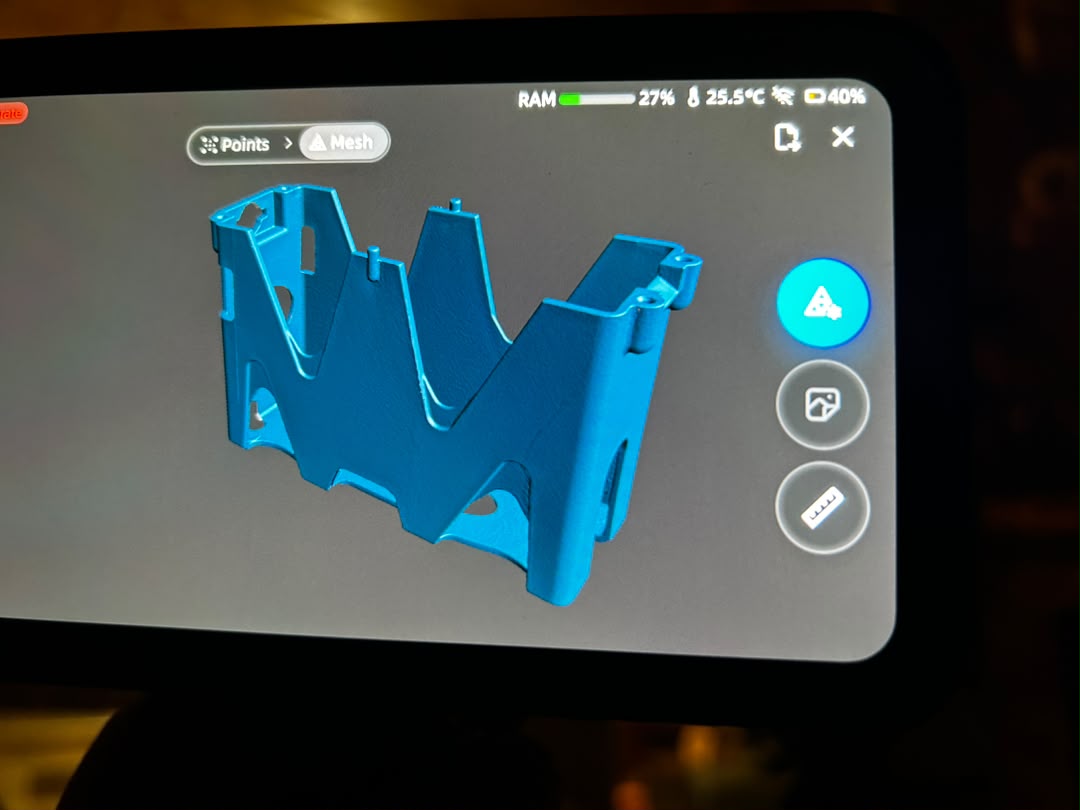
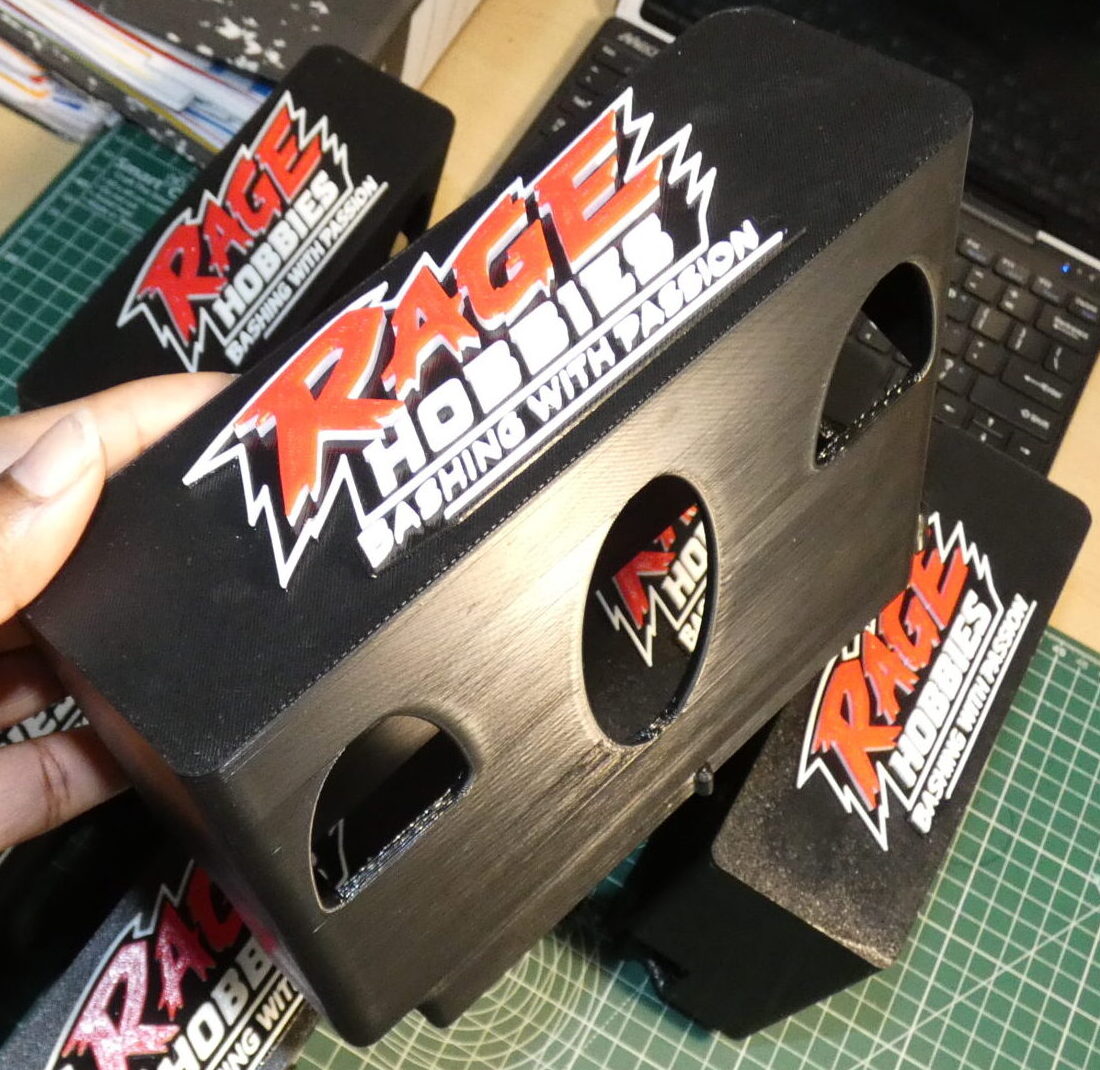
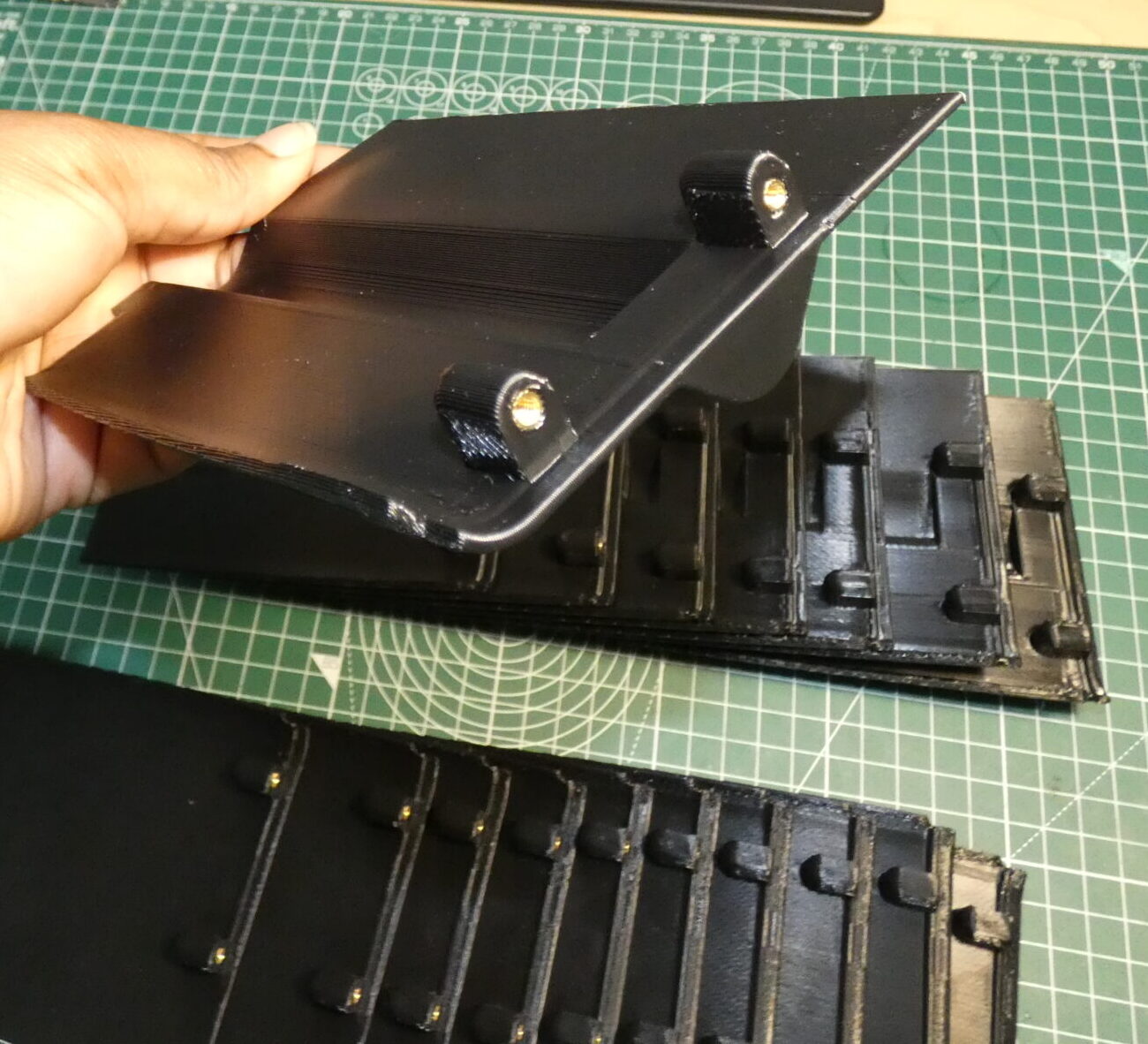
Printhoek3D was tasked with modifying the existing battery case so that it could accommodate the larger battery. The surrounding chassis geometry was captured through 3D scanning and used as the reference for the redesign.
The modified case had to provide sufficient internal space while maintaining the required clearances around the chassis, suspension, electronics and mounting interfaces.
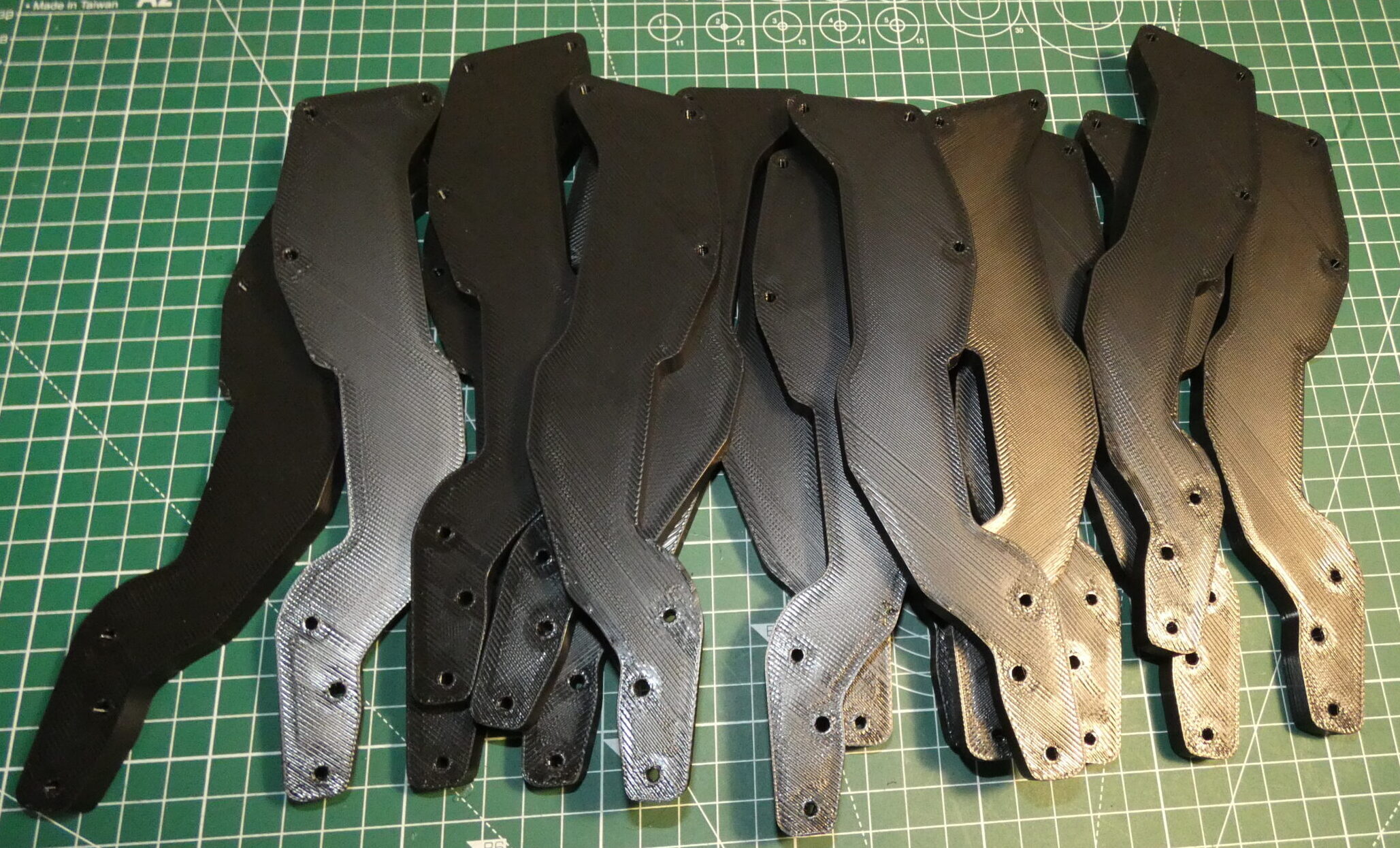
Changing the battery case also affected adjacent components. Longer dust panels were developed to suit the modified case, while suspension lift plates were designed and manufactured through additive manufacturing.
The complete assembly went through several design iterations before the battery case and supporting components achieved the required fit.
The completed battery-case modification allowed the client to fit a larger battery and increase the vehicle’s operating time.
By redesigning the case and the components affected by its increased size, Printhoek3D delivered a modification that functioned as part of the existing vehicle rather than as an isolated replacement.
The project shows how changing one enclosure can create a chain of dimensional and mechanical requirements throughout the surrounding assembly.
Client: Private Client
Industry: Automotive
Service: Metrology-Grade 3D Scanning • Reverse Engineering • CAD Reconstruction • Additive Manufacturing
Printhoek 3D was commissioned to recreate a discontinued refrigerant tank for an older Nissan bakkie after the original component could no longer be sourced.
The supplied part was damaged and incomplete, which meant the replacement could not be produced by simply copying the existing geometry. The remaining structure had to be captured, interpreted, and rebuilt around the original functional requirements of the part.
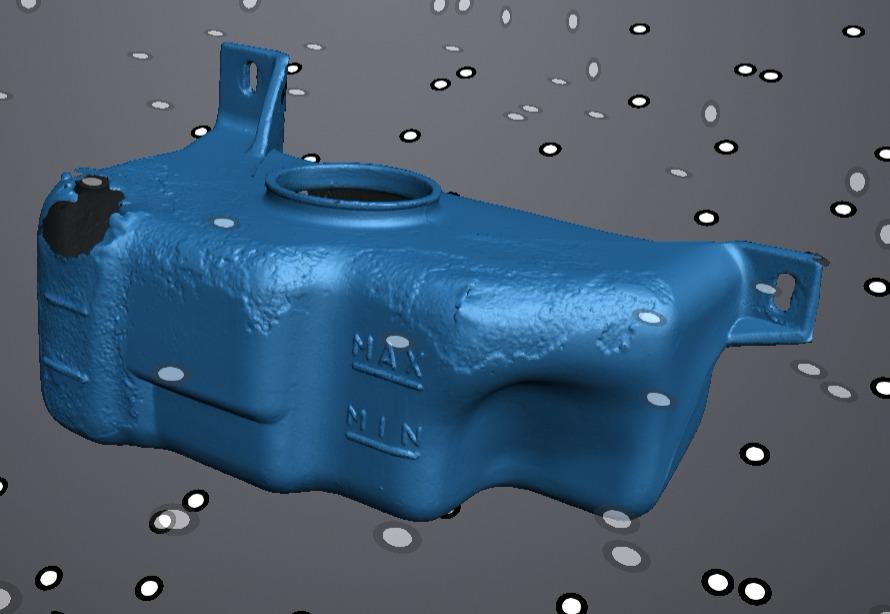
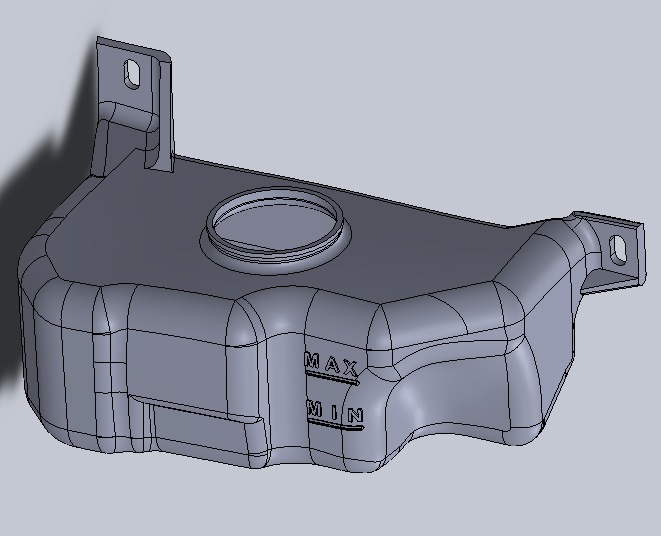
Using metrology-grade 3D scanning, PH3D captured the surviving geometry and used the scan data as the basis for CAD reconstruction. Missing and degraded areas were rebuilt with attention to the part’s mounting points, connection interfaces, internal capacity, external clearance, and fitment within the vehicle.
The final replacement was manufactured in nylon carbon fibre, selected for its strength, durability, and suitability for functional automotive use. The client also planned to apply an epoxy coating to improve sealing and long-term resistance.
This project shows how reverse engineering can be used when replacement parts are discontinued, damaged, or unavailable through normal supply channels.
By working from the remaining physical part and rebuilding the missing geometry digitally, Printhoek 3D helped the client move from an unusable original component to a locally manufactured replacement designed around the original fit and function.
Client: Private Client
Industry: Automotive
Service: 3D Scanning • Reverse Engineering • CAD Design • 3D Printing
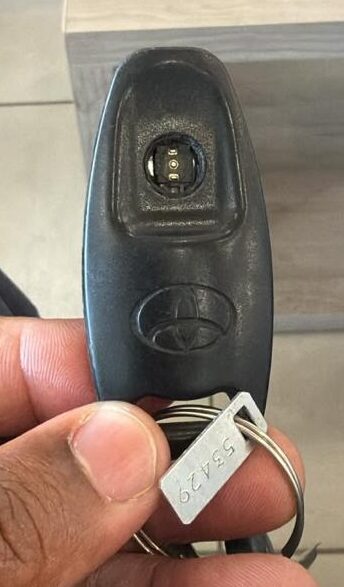
The client’s Toyota Land Cruiser remotes were still working, but the rubber gaskets had lost their integrated button covers. The supplier’s replacement option was a complete remote, making a small component failure unnecessarily expensive.
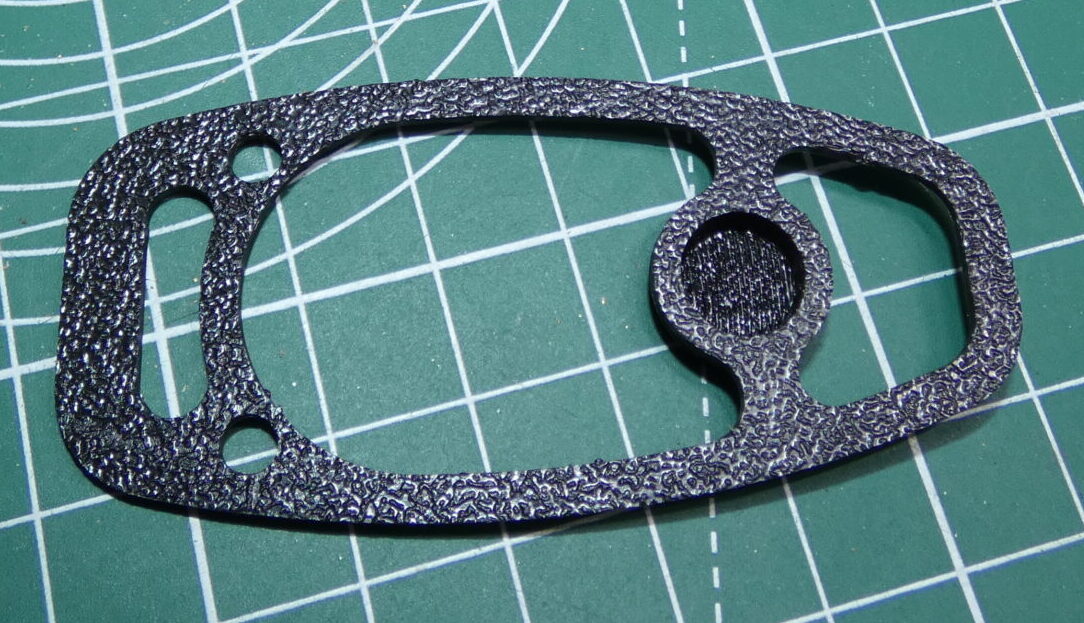
Printhoek3D used a Shining 3D scanner to capture the existing remote housings and gaskets. We used the scan data to reconstruct the gasket geometry in CAD and recreate the missing button cover as an integrated feature.
The replacements were 3D printed in a flexible material with a Shore hardness of 40D, allowing the existing housings and electronics to remain in use.
Captured the housing and gasket geometry using a Shining 3D scanner.
Reverse engineered the gasket to match the existing remote housing.
Reconstructed the missing button cover as part of the gasket.
Produced flexible replacements through 3D printing.
The client avoided the cost of purchasing complete replacement remotes by replacing only the damaged gasket and button component. The project preserved working electronics, reduced unnecessary waste and demonstrated how local reverse engineering and manufacturing can resolve a small component failure economically.
Client: Confidential
Industry: Automotive & Trailer Fabrication
Service: Mechanical Design • Product Development • Retrofit Design • Additive Manufacturing
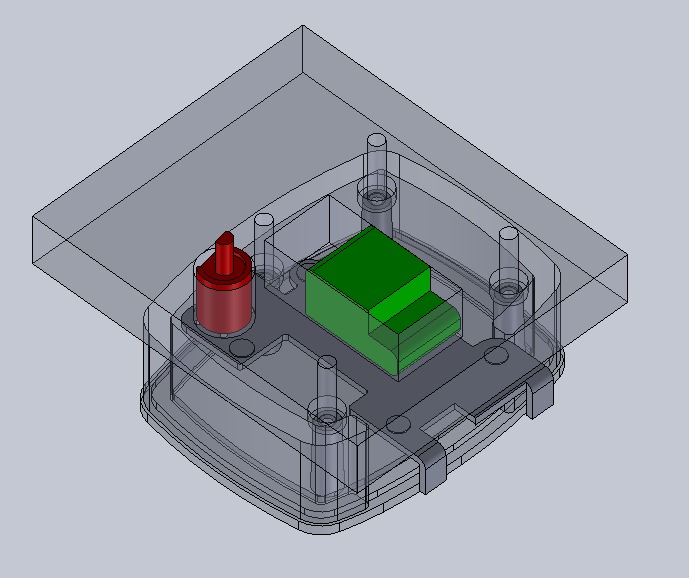
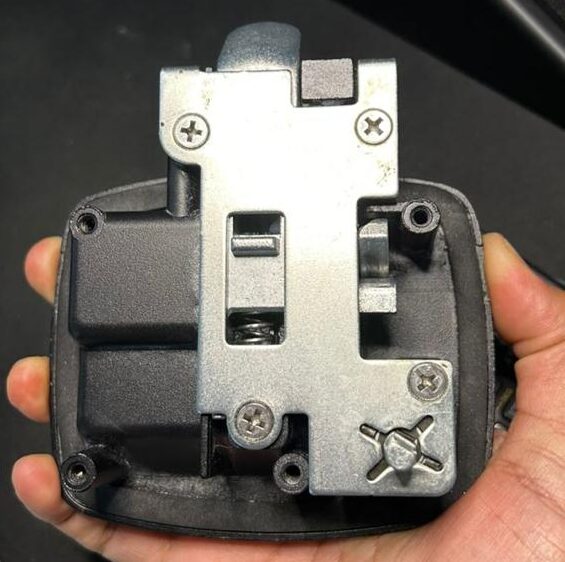
A client manufacturing a custom trailer needed to install a commercially available latch mechanism through one of its panels. However, the trailer panel was too thin for the mechanism to fit and operate as intended.
The purchased latch needed to remain on the outside of the trailer, while part of the supporting assembly had to sit against the inside surface. This created a gap between the latch, panel and internal operating mechanism.
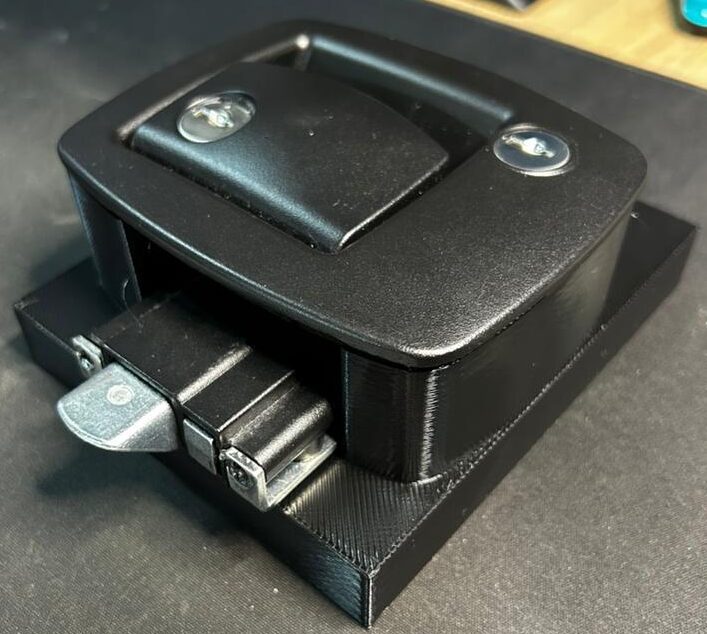
Printhoek3D developed a retrofit adapter assembly around the existing latch and panel geometry. The solution included a riser that positioned the lever at the required height and a second adapter that transferred its movement to the latch mechanism on the opposite side.
The components were digitally modelled as part of the complete assembly to verify their positions, clearances and interaction before manufacturing. The final adapters were then 3D printed and assembled with the purchased latch hardware.
The completed adapter assembly allowed the purchased latch to be installed on the custom trailer despite the panel being too thin for a direct installation.
By controlling the spacing and transferring movement between both sides of the panel, the retrofit maintained the latch’s intended mechanical operation without requiring the client to replace or substantially modify the purchased mechanism.
The project demonstrates how custom additive-manufactured adapters can resolve interface problems between standard hardware and non-standard fabricated structures.

Whitney is an industrial designer redefining the intersection of creativity and advanced manufacturing. At Printhoek 3D, she bridges engineering precision and visual design, ensuring every product reflects both function and identity. Her expertise in digital fabrication and branding enhances the bureau’s capabilities, turning innovation into design that inspires.
Whitney Namwi Ntema
Industrial Designer & Branding Specialist

Daniel is a mechatronic engineer with a strong background in programming, electronics, and product development. He has collaborated with Printhoek 3D on groundbreaking projects such as PET recycling systems and advanced prototyping solutions. Driven by curiosity and problem-solving, he brings research and innovation that turn ambitious ideas into practical technologies.
Daniel James Godfrey
Mechatronic Engineer & R&D Specialist

Justin oversees workshop operations and ensures every print that leaves Printhoek 3D meets uncompromising quality standards. With years of hands-on expertise in additive manufacturing, inspection, and post-processing, he is dedicated to producing precise, reliable results. His eye for detail and commitment to excellence safeguard the bureau’s reputation for world-class precision.
Justin Rain Cole
Workshop & Quality Lead

Gino blends mechanical design expertise with sharp business and financial insight to keep Printhoek 3D operating at peak efficiency. From managing multi-printer farms to implementing real-time tracking systems, he ensures smooth workflows and scalable growth. His ability to connect engineering precision with strategic operations makes him a driving force behind the bureau’s expansion.
Gino Fourie
Head of Operations

Romar is a mechanical engineer and entrepreneur driving Industry 4.0 in Namibia. He founded Printhoek 3D to pioneer advanced additive manufacturing and has over a decade of experience in 3D printing, scanning, and mechanical design. His mission is to push the boundaries of what’s possible, transforming complex engineering challenges into future-ready solutions
Rodolfo Marcial (Romar) Rañola Quitasol
Founder & CEO